
This post contains affiliate links. If you buy through our links, we may earn a commission at no extra cost to you.
The kitchen is the hardest room to clear of cockroaches — and the most important. Here’s the complete step-by-step strategy for eliminating roaches from your kitchen for good.
⭐ What You’ll Need:
• Harris Boric Acid Roach Powder
• Combat Max 12-Month Roach Killing Bait
• Ortho Home Defense Indoor Insect Barrier
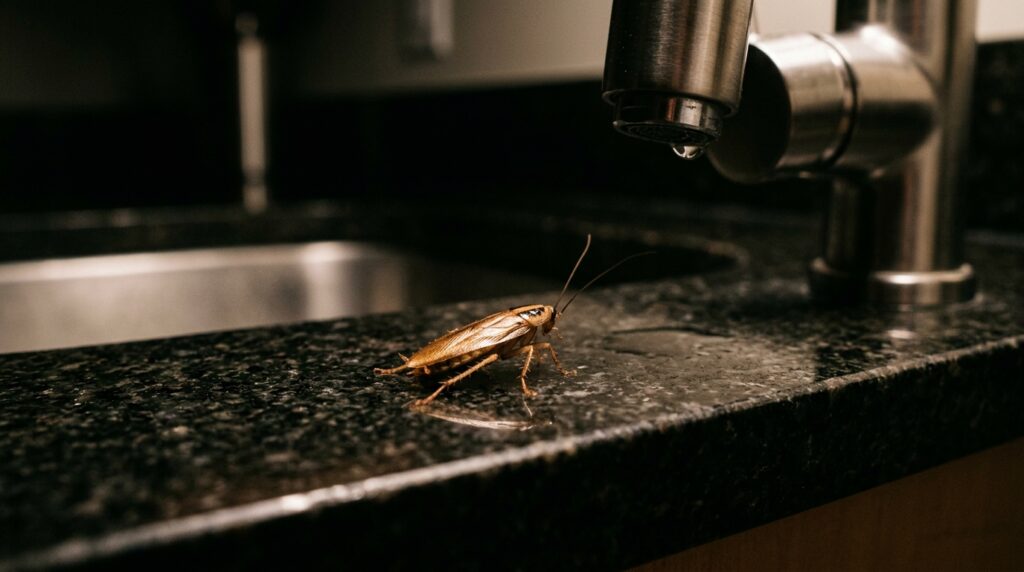
You turned on the kitchen light and something moved. Fast, low to the ground, gone before you could react. Or maybe you opened the cabinet under the sink and there they were — three of them, scattering.
The kitchen is ground zero for cockroach infestations. It has everything they need: warmth from appliances, water from the sink and pipes, and more food sources than most people realize. It’s also the room where most people’s treatment attempts fail, because they reach for a spray and miss the actual colony entirely.
This guide covers exactly how to get rid of cockroaches in the kitchen — the specific products, the exact placement, and the underlying conditions you need to fix so they don’t come back three weeks later.
Quick answer: Gel bait (Advion) applied in small dots inside cabinet hinges, under and behind appliances, and around plumbing is the most effective kitchen treatment. Never spray insecticide in the same areas — it repels roaches from the bait and defeats the treatment. Identify and fix any moisture source under the sink first.
Step 1: Figure Out What You’re Dealing With
Before you place a single product, spend five minutes understanding the infestation. It changes what you buy and where you put it.
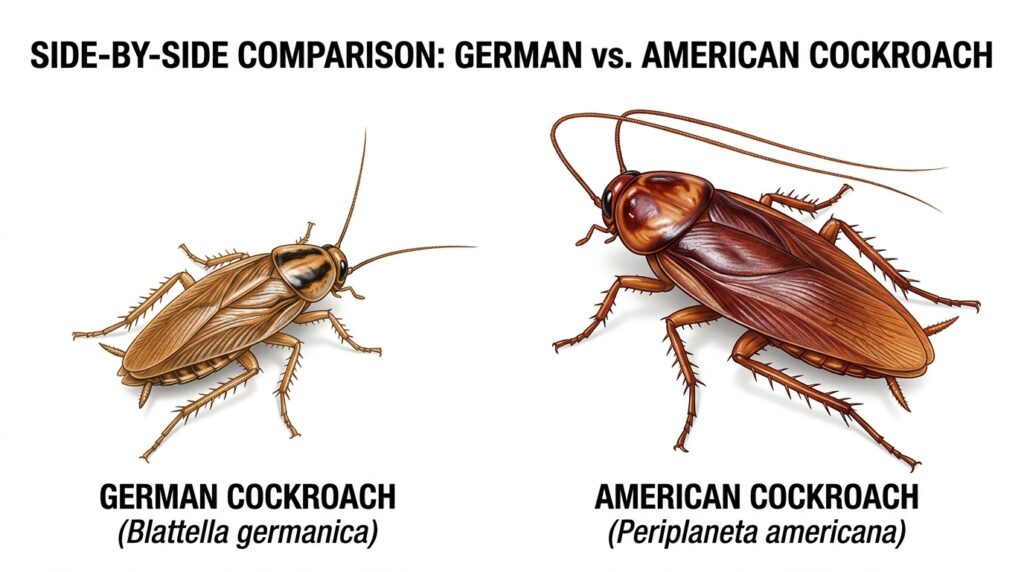
German Cockroaches vs. American Cockroaches
The species determines the strategy:
German cockroaches (most common kitchen pest):
- Small — ½ to ⅝ inch long
- Tan or light brown with two dark parallel stripes behind the head
- Live exclusively indoors, close to food, water, and heat
- Reproduce fast — one female produces hundreds of offspring in her lifetime
- Seeing them during daylight = the colony is large and overcrowded
American cockroaches (the big ones):
- Large — 1.5 to 2 inches, reddish-brown
- Primarily live outdoors and in sewers; enter kitchens through floor drains and gaps
- Occasional sightings are common and don’t always indicate an infestation
- More of a structural/entry-point problem than a colony problem
Most kitchen infestations are German cockroaches. The treatment steps below are optimized for them, though they work for both species.
Map the Infestation Before Treating
Place sticky glue traps in 4–5 spots overnight: under the sink, under the refrigerator, inside a lower cabinet, and behind the stove. Check them in the morning. The trap with the most catches tells you where the colony is centered — that’s where you focus treatment first.
Step 2: Find and Fix the Moisture Source
This step comes before any product application. Cockroaches need water more urgently than food — a German roach dies within a week without moisture. A leak under the sink can sustain a colony indefinitely, regardless of what treatment you apply on top of it.
Check these spots in your kitchen for moisture:
- Under-sink cabinet floor — look for soft wood, water stains, or a visible drip from supply lines or drain connections
- Supply line connections — the small braided hoses that connect to the shut-off valve under the sink develop slow weeping leaks over time
- Dishwasher door seal and base — water that seeps under the dishwasher creates a warm, damp environment directly against the kitchen floor
- Refrigerator drip pan — collects condensate from the defrost cycle. Pull out the refrigerator and check underneath; many homeowners have never looked
- Condensation on cold water pipes — in humid summer conditions, cold supply lines sweat. Over time this creates a reliable moisture zone
Fix every leak you find before treating. Sealing a pipe takes 20 minutes and makes every other step significantly more effective.
Step 3: Apply Gel Bait — The Core Treatment
Gel bait is the most effective cockroach treatment available to homeowners, and the kitchen is exactly where it works best. The principle: roaches eat the bait, return to their harborage, die there, and their colony mates consume them — spreading the kill through the population you never see.
Best choice: Advion Cockroach Gel Bait
Advion is the professional-grade standard. Its attractant formula draws roaches away from competing food sources, and its active ingredient (indoxacarb) has the right kill speed — slow enough for horizontal transfer to occur, fast enough to clear a colony within weeks.
Where to Place Gel Bait in the Kitchen
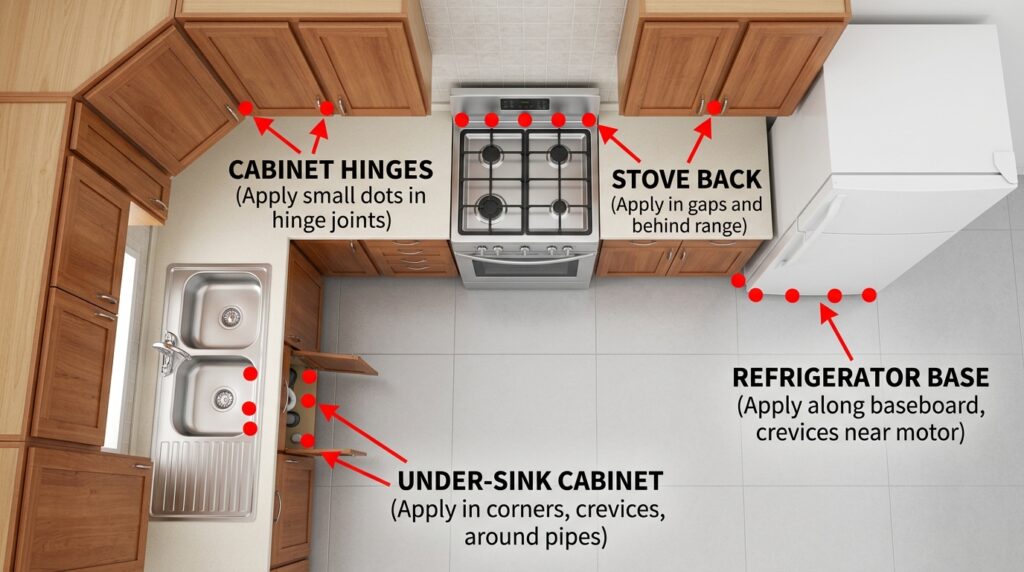
Placement is everything. Most people apply bait on open counters or floors where it dries out fast and gets ignored. The correct locations are the tight, dark, warm spots where roaches actually live:
High-priority placements:
- Inside cabinet door hinges — one small dot on each hinge. This is the single most effective placement for German cockroaches.
- Along the back wall inside lower cabinets — apply dots every 6–8 inches at the wall-floor junction
- Under the sink, around pipe penetrations — apply dots on the cabinet floor near where pipes enter the wall
- Behind and under the stove — pull the stove out 6 inches if possible and apply dots along the floor and on the back panel near the pilot light area
- Under the refrigerator — slide out and apply along the floor where the motor sits
- Inside the dishwasher kick plate area — remove the bottom panel and apply dots inside
Application rules:
- Pea-sized dots only — roughly ¼ inch. Never large globs.
- Every 6 inches in active areas; every 12 inches in less-active areas
- Do NOT apply on open counters or anywhere that gets wiped regularly
- Do NOT apply near surfaces you’ve recently sprayed — pyrethroids repel roaches from gel bait
- Replace every 3 months or when it dries out
Step 4: Add Boric Acid in Voids
Boric acid works differently from gel bait — it doesn’t attract roaches, it kills them when they walk through it. That makes it useless on open surfaces but highly effective in the enclosed voids where cockroaches travel between their harborage and the kitchen.
Best choice: Harris Boric Acid Roach Powder
Kitchen-specific boric acid placements:
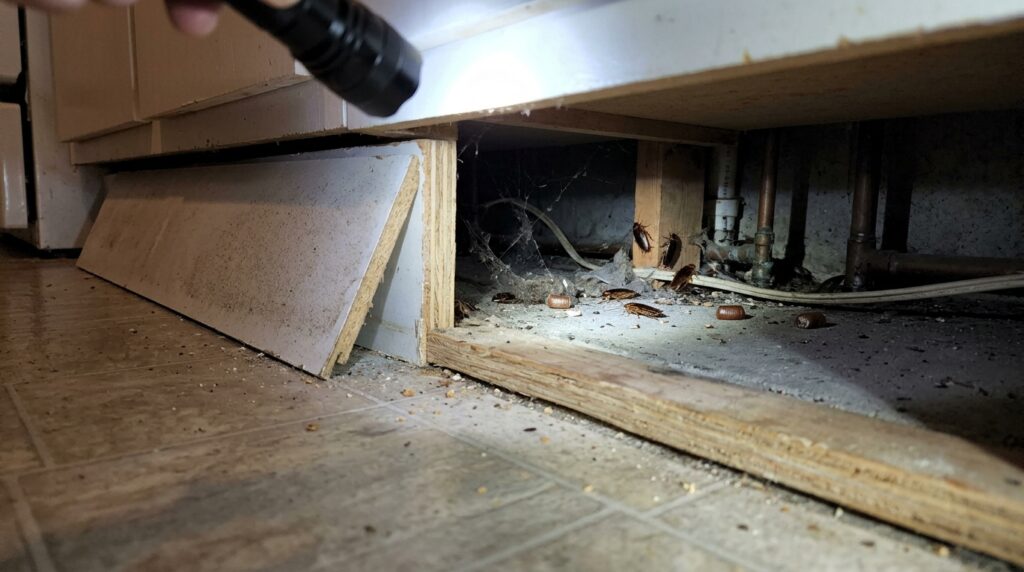
- Behind kitchen cabinets — remove the kick plate at the base of lower cabinets to expose the void between the cabinet and the wall. Apply a thin dusting along the floor of this void. Roaches use this space as a highway.
- Under the stove in the void space below the oven cavity — accessible from the bottom drawer if your stove has one
- Behind the refrigerator motor — apply a thin line along the floor under the motor housing
- Inside electrical outlets on the kitchen walls — turn off the breaker, remove the outlet cover, and apply a small amount inside the box
The critical rule: thin is better than thick.
A visible pile of boric acid powder repels roaches — they can see it and walk around it. The correct application is nearly invisible: a very light dusting that barely coats the surface. Use the puffer applicator that comes with Harris to blow it in rather than pouring.
Keep boric acid dry. Under the sink is NOT a good location for boric acid — moisture makes it clump and lose effectiveness. That’s gel bait territory.
Step 5: Eliminate What’s Sustaining Them
Even the best bait treatment loses effectiveness if roaches have abundant competing food sources. These aren’t general cleanliness tips — they’re the specific kitchen conditions that sustain a colony:
Food Sources
- Grease accumulation behind the stove — pull the stove out once a year and clean the gap. This is one of the largest single food sources in any kitchen.
- Inside the range hood — grease accumulates on filters and interior surfaces. Clean the filter and wipe down the interior.
- Cabinet hinge gaps and the void at the back of lower cabinets — food debris falls into these spaces and is never cleared in normal cleaning
- Dry goods in cardboard or thin plastic — transfer flour, rice, cereal, and sugar to sealed hard containers. Cockroaches chew through paper and thin plastic easily.
- Pet food — never leave a pet food bowl out overnight. Feed indoors, bring dishes in after meals.
Water Sources
- Any standing water in the sink overnight — a glass left full, a wet dish towel
- The dish drying rack — wipe dry or empty overnight
- Condensation on cold drink glasses left out
Harborage
- Cardboard boxes stored in or near the kitchen — cockroaches use corrugated cardboard as both food and nesting material
- Clutter under the sink — the more space available under the sink, the larger the colony it can support. Clear it out.
Step 6: Seal the Entry Points
For German cockroaches already inside, sealing is a prevention measure for after treatment. For American cockroaches coming in from outside or through sewer pipes, sealing is part of the active fix.
Kitchen-specific entry points to seal:
- Gaps around plumbing pipes under the sink — even a small gap between the pipe and the wall plate is a highway. Use expanding foam or caulk.
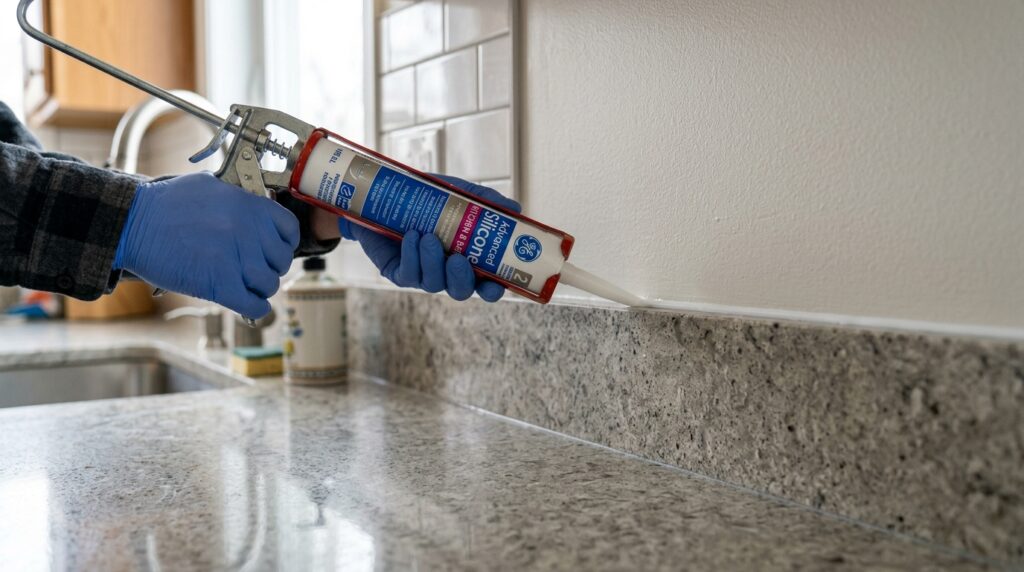
- The gap between the backsplash and the countertop — a thin bead of silicone caulk seals this permanently
- Gaps at the base of the stove and refrigerator — these appliances often sit slightly elevated; seal any gap at the floor level
- Floor drain — if your kitchen has one, add a drain cover with a one-way valve
- Gaps around electrical outlets on shared walls — roaches travel through wall voids between units in apartments; foam around outlet boxes on shared walls
A tube of clear silicone caulk and an hour of work eliminates most of these entry points. It’s one of the highest-ROI steps in the entire process.
What Not to Do in the Kitchen
These are the mistakes that cause most DIY kitchen roach treatments to fail:
Don’t spray insecticide in the kitchen interior.
Pyrethroid sprays (Raid, most store-brand roach sprays) repel cockroaches from treated surfaces. If you spray the interior of your cabinets or under the sink, roaches avoid those areas — including any gel bait you placed there. Sprays are for the exterior perimeter only. Never mix spray and bait in the same zone.
Don’t use roach bombs or foggers.
Foggers release pesticide mist that settles on open surfaces — counters, floors, shelving. Cockroaches live in enclosed harborage areas the mist can’t reach. Foggers scatter roach colonies deeper into walls without eliminating them, and leave residue on food preparation surfaces.
Don’t apply gel bait too thick.
Large globs of bait dry out fast, get ignored by roaches, and have to be scraped off. Small, fresh pea-sized dots applied frequently outperform large applications every time.
Don’t stop treatment when you stop seeing roaches.
Cockroach egg cases (oothecae) hatch 3–4 weeks after the adults die. If you end treatment early, a second wave of nymphs emerges into an environment with no active bait. Keep bait in place for at least 60 days after the last sighting.
What to Expect: Timeline
Days 1–3:
Bait is placed, boric acid applied in voids, moisture sources fixed, obvious entry points sealed. You may see more roach activity than usual — bait draws them out. This is normal.
Days 4–14:
Roach sightings begin decreasing. Replace any bait that has dried out. Check glue trap counts — declining numbers confirm treatment is working.
Weeks 3–4:
Activity should be minimal. Egg cases from before treatment begin hatching — you may see a small second wave of tiny nymphs. Keep bait fresh and in place.
Week 6+:
If treatment was consistent, the infestation should be resolved. Continue monitoring with sticky traps monthly. Keep Combat Max maintenance bait in place indefinitely
When to call a professional:
If you have significant activity after 6 weeks of consistent gel bait treatment with Advion, the infestation may be too large or too entrenched. A pest control professional has access to commercial-grade products and can treat wall voids directly with insecticide and IGR injections.
Frequently Asked Questions
How did roaches get into my kitchen?
The most common way is hitchhiking — German cockroaches travel on grocery bags, cardboard boxes, and secondhand appliances. Toasters, microwaves, and coffee makers bought used are among the most common single sources of infestations. American cockroaches enter through floor drains, gaps around pipes, and under poorly-sealed doors. A clean kitchen doesn’t prevent either route.
Can I keep cooking in my kitchen while treating for roaches?
Yes. Gel bait is applied inside cabinet hinges, behind appliances, and around plumbing — not on food preparation surfaces. Wash hands after handling bait products and keep boric acid away from food and food prep areas. Cooking normally is not a problem and doesn’t interfere with treatment.
Why do I keep seeing roaches even after spraying?
Sprays kill roaches you can see but don’t reach the colony in harborage. German cockroaches spend about 75% of their time in tight, enclosed spaces that contact sprays can’t penetrate. Additionally, pyrethroid sprays cause roaches to scatter and go deeper into walls, which can spread the infestation. Switching from spray to gel bait will almost always produce better results.
How do I know if the treatment is working?
Sticky glue traps are your best indicator. Place them in the same locations week over week and count the catches. Declining numbers — fewer roaches caught each week — confirm the treatment is working. Increasing numbers or a flat plateau after 2 weeks suggests the infestation is larger than expected or bait needs to be replaced and repositioned.
Final Thoughts
Getting cockroaches out of the kitchen requires three things working together: killing the colony with gel bait, eliminating the harborage conditions that sustain it, and sealing the routes they use to get in. Any one of these alone produces incomplete results.
The most important single action is placing gel bait correctly in tight spaces — cabinet hinges, pipe penetrations, the void behind appliances — rather than on open surfaces. That’s the placement that reaches the breeding females you never see.
Stay consistent for 60 days minimum. The egg cases hatching at week 3–4 are the second wave most people miss.
For a full breakdown of how these products work and when to use each one, see our guide on the best roach killers: baits, gels, and sprays compared. Dealing with an apartment situation? Our guide on German cockroaches in apartments covers the shared-wall problem specifically.