
This post contains affiliate links. If you buy through our links, we may earn a commission at no extra cost to you.
Not all mouse traps are equal. Here’s a straight comparison of every major type — what works, what doesn’t, and which trap is right for your specific situation.
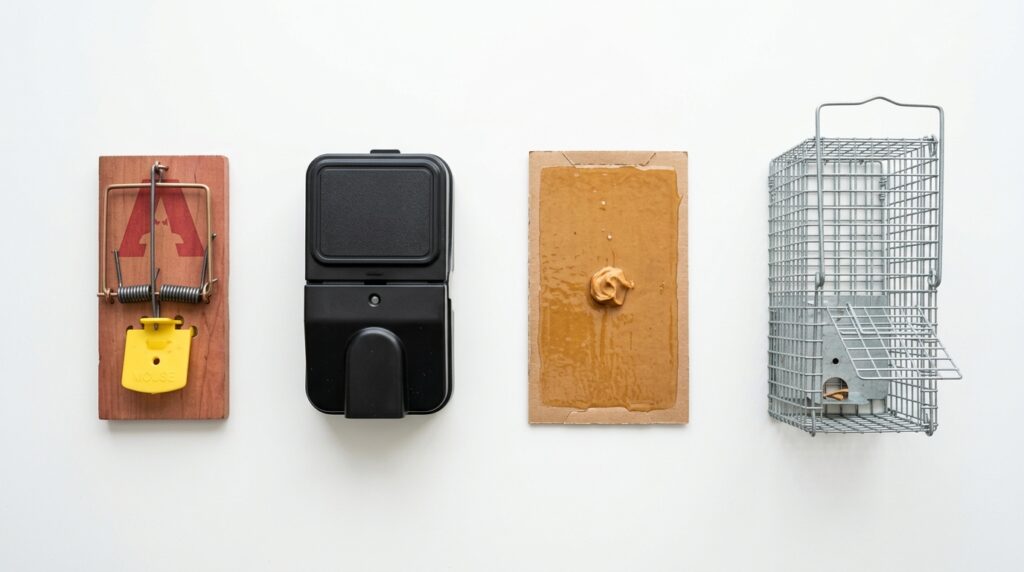
⭐ Quick Picks by Situation:
• Best overall: Victor Easy Set Mouse Trap
• Best electric: Victor Electronic Mouse Trap
• Best for monitoring: Catchmaster 72MAX Glue Boards
• Best live catch: Havahart 1020 Live Animal Trap
Walk into any hardware store and you’ll see at least a dozen different mouse traps. Snap traps, electric traps, glue boards, live catch cages, “no-see, no-touch” models, multi-catch stations. They range from $1.50 to $40, and the marketing on every box promises the same thing: it works.
Most of them do work — with the right expectations. The problem is choosing the wrong trap for your situation, placing it incorrectly, or buying the right trap and using the wrong bait. This guide cuts through the noise.
Quick answer: For most homeowners dealing with an active mouse infestation, snap traps — specifically the Victor Easy Set in multi-packs — are the best starting point. They’re fast, cheap, reliably lethal, and easy to set. Electric traps are a cleaner alternative if you don’t want to see or handle the mouse. Glue boards are for monitoring. Live traps require a release plan and have the lowest elimination rate.
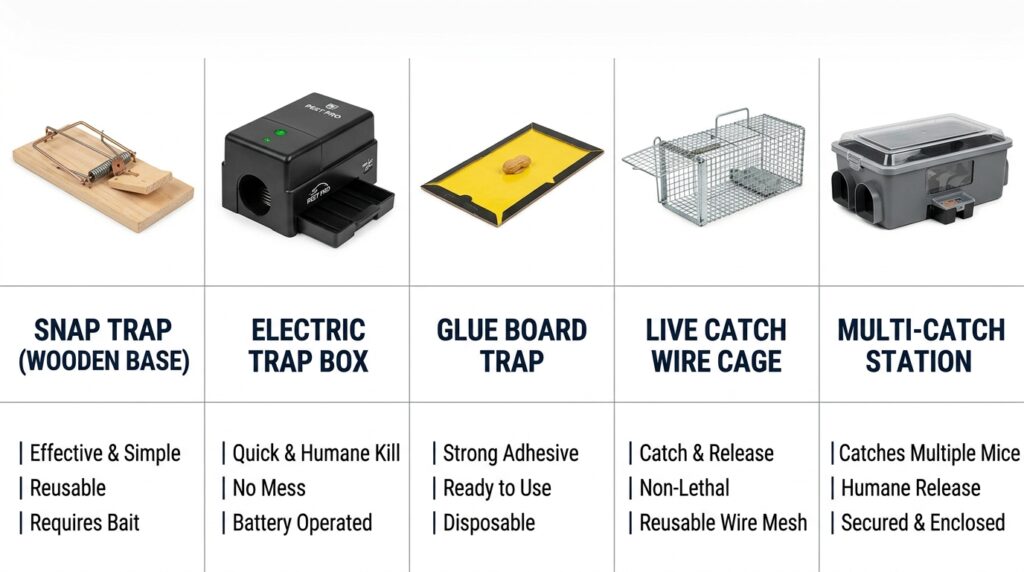
Mouse Trap Types at a Glance
SNAP TRAPS
- Kill method: Spring-loaded bar — instant kill
- Cost: $1–$2 per trap
- Reusable: Yes — indefinitely
- Ease of use: Moderate (requires careful setting)
- Best for: Active infestations, high catch volume, cost-effective elimination
- Verdict: Best overall for most situations
ELECTRIC TRAPS
- Kill method: High-voltage shock — instant, no-contact kill
- Cost: $20–$40 per unit
- Reusable: Yes — hundreds of kills per battery set
- Ease of use: Very easy (bait, place, check indicator light)
- Best for: Users who don’t want to see the mouse; kitchens and living areas
- Verdict: Best premium option — worth the price if handling snap traps is a dealbreaker
GLUE BOARDS
- Kill method: Adhesive — slow (hours to days)
- Cost: $0.50–$1 per board
- Reusable: No — single use
- Ease of use: Very easy (peel and place)
- Best for: Monitoring activity levels; tight spaces where snap traps won’t fit
- Verdict: Monitoring tool, not a primary elimination method
LIVE CATCH TRAPS
- Kill method: None — captures alive
- Cost: $12–$25 per trap
- Reusable: Yes
- Ease of use: Easy to set, requires release plan
- Best for: Users who want no-kill option; single-mouse situations
- Verdict: Lowest elimination rate; humane but labor-intensive
MULTI-CATCH TRAPS
- Kill method: Varies (some kill, some live-hold)
- Cost: $15–$30 per unit
- Reusable: Yes
- Ease of use: Easy — set once, catches multiple mice
- Best for: Attics, basements, garage situations with high population
- Verdict: Niche use — best for high-population areas you can’t check daily
1. Snap Traps — The Gold Standard
Snap traps have been the standard mouse control tool for over a century — not because there’s nothing better, but because nothing offers a better combination of reliability, speed, low cost, and reusability.
Victor Easy Set Mouse Trap — Best Overall
The Victor Easy Set is the trap most professional exterminators recommend to homeowners. The expanded plastic pedal trigger is easier to set than traditional wire-loop models and catches mice reliably without false triggers. The snap is fast enough for a clean kill with minimal suffering.
What we like:
- Kills instantly — no slow death like glue boards
- The “no-touch” disposal design lets you trip the trap with your foot and bag the mouse without handling it
- Multi-packs (6, 12, 24) bring the per-trap cost under $1.50 — you can set the volume that actually works
- Reusable indefinitely with proper cleaning and reset
Placement and bait tips:
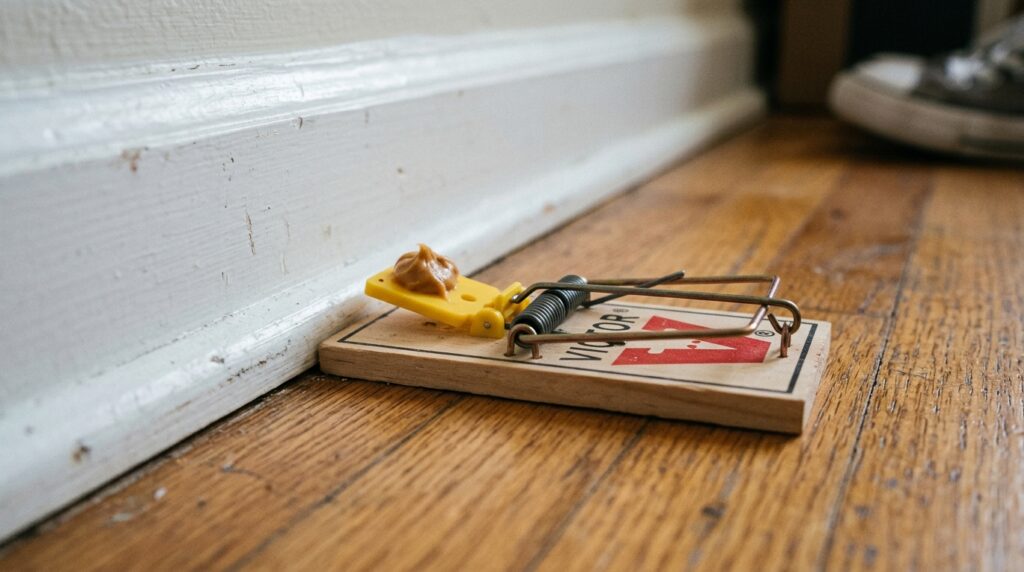
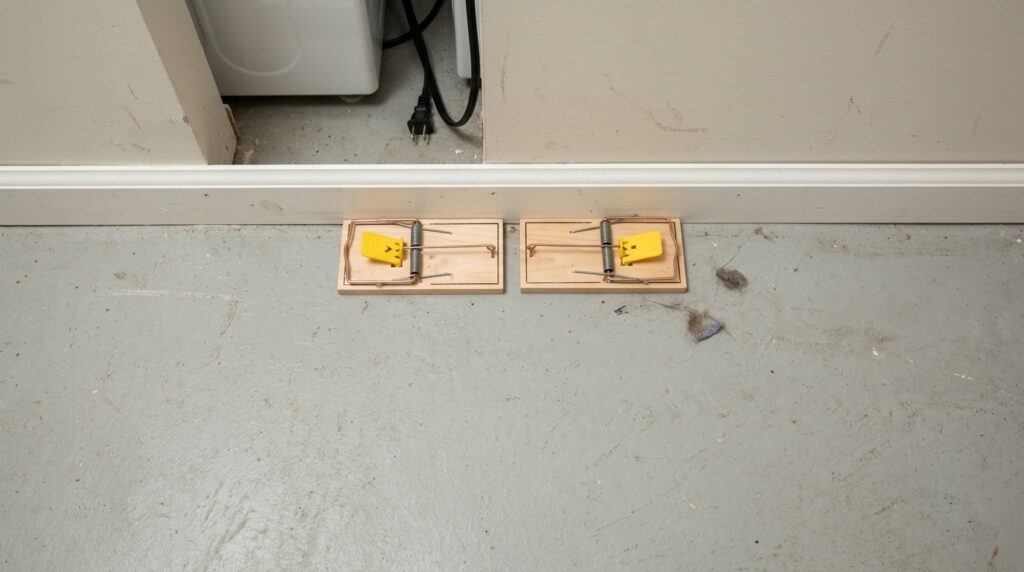
- Always place with the trigger end against the wall — mice run along baseboards and step directly onto the trigger
- Set in pairs with triggers facing opposite directions for mice running in either direction along the wall
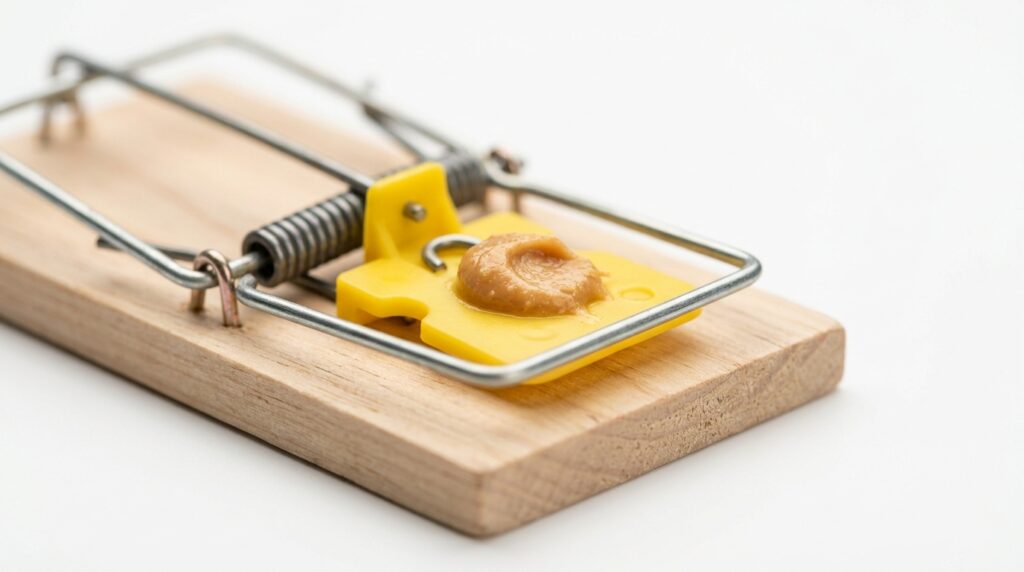
- Peanut butter is the best bait: a pea-sized smear on the trigger. Too much lets mice eat around the edges.
- Set a minimum of 6–8 traps for any active infestation — more traps = faster results
Tomcat Press ‘N Set Mouse Trap — Best for Beginners
If you find traditional snap traps intimidating to set (and accidentally triggering one on your finger is unpleasant), the Tomcat Press ‘N Set uses a push-button mechanism that’s genuinely finger-safe. Slightly lower catch rate than the Victor in head-to-head comparisons, but the ease of use makes it the better choice for first-timers.
2. Electric Mouse Traps — The Clean Kill
Electric traps kill mice with a high-voltage shock delivered the moment the mouse enters the chamber. Death is instant. The mouse is contained inside the trap, so you never see it — you just check the kill indicator light and empty the trap over a trash can.
If handling a snapped trap or looking at a dead mouse is what’s kept you from setting traps, electric is worth the premium.
Victor Electronic Mouse Trap — Best Electric Option
Victor’s electronic trap is the most tested and most recommended electric mouse trap on the market. It runs on 4 AA batteries and delivers a 7,000-volt shock. The kill chamber is sealed so there’s no blood or mess. A green LED blinks when a mouse has been caught. A single set of batteries handles 50+ kills.
What we like:
- True no-see, no-touch: tip the trap over a trash can and the mouse falls out — you never see or touch it
- Works in locations where snap traps are less suitable — kitchen counters (yes, you can place one on the counter), inside cabinets where you might reach in
- Reliable — far fewer false triggers than snap traps
- Safe around children and pets who might accidentally touch the trap (no exposed spring mechanism)
What to know:
- Battery-powered — check batteries regularly, especially in cold locations like garages
- Costs ~10x more per unit than snap traps; buy 2–3 units for a whole-house infestation rather than the 6–12 snap traps you’d normally use
- Bait placement is inside the chamber — use peanut butter at the far end to draw the mouse fully inside before the sensor triggers
3. Glue Boards — Your Monitoring Tool
Glue boards are not a primary elimination tool. They catch mice by adhesion, and death is slow — hours to a day or more. They’re also single-use and can catch non-target animals (birds, beneficial insects, small lizards).
Used correctly, though, glue boards are genuinely useful — as a monitoring system.
Catchmaster 72MAX Pest Trap Glue Boards — Best for Monitoring
Place Catchmaster boards in the same locations each week — under the sink, behind the refrigerator, in the basement — and count catches over 24–48 hours. This tells you which areas have the highest activity (concentrate snap traps there), and whether your treatment is working (catch counts should decline week over week).
When glue boards are the right choice:
- Monitoring: When you need to map infestation activity before committing to a full trap setup
- Tight spaces: In narrow gaps where snap traps won’t fit — behind pipes, inside wall spaces
- High-volume tracking: Count how many mice you catch per location per week to measure progress
When to avoid glue boards:
- As a primary control method — too slow, too messy, too inhumane for systematic elimination
- Anywhere pets or non-target wildlife might walk through them
- In moist environments — humidity reduces adhesive strength significantly
4. Live Catch Traps — When You Don’t Want to Kill
Live catch traps capture mice alive for release elsewhere. They’re the humane option — but they come with a catch (no pun intended): you need a release plan, and the effectiveness depends on where and how far you release.
Havahart 1020 Live Animal Trap — Best Live Catch
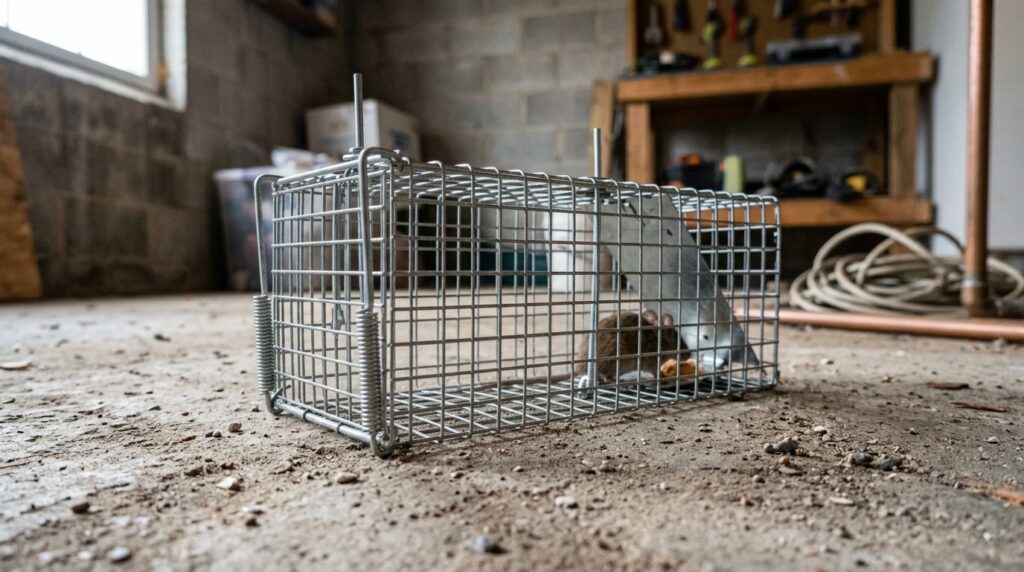
Havahart is the standard for live catch traps. The wire cage design is durable and reusable. Bait goes at the far end; when the mouse reaches it, a treadle triggers the door to close behind it.
What to know about live trapping:
- Release location matters: Mice have a strong homing instinct. Release less than 300 feet from your home and they may return. Aim for at least ½ mile away, across a significant natural barrier (a road, a creek, a park).
- Check daily: A mouse trapped in a live cage without food or water will die within 24 hours — defeating the purpose. Check morning and evening.
- Wear gloves when handling: Mice carry hantavirus and other pathogens. Don’t let a stressed mouse bite you.
- It doesn’t scale: If you have 10 mice, live trapping is an exhausting loop of catch-and-release. For infestations of more than 2–3 mice, snap traps are more practical.
5. Multi-Catch Traps — For High-Population Areas
Multi-catch traps can hold multiple mice between checks, making them useful in high-activity areas like attics, barns, or garages where you can’t check traps every day.
Catchmaster Multi-Catch Mouse Trap — Best Multi-Catch
The Catchmaster multi-catch uses a spinning entry mechanism — mice enter through a hole, try to get to the bait, and are swept into a holding chamber. Some models kill; others hold mice alive for mass release. The “ketch-all” style has been used in commercial settings for decades.
Best for:
- Attics and garages where daily trap checks aren’t practical
- Agricultural settings with consistently high mouse pressure
- Early-stage prevention before a full infestation establishes
Limitations:
- Less effective than snap traps at eliminating mice that have already learned to be cautious (trap-shy mice)
- The holding chamber needs to be emptied regularly
What Bait Works Best in Mouse Traps
The trap is only half the equation. The right bait in the wrong amount — or the wrong bait entirely — produces zero catches.
Ranked by effectiveness:
- Peanut butter — the standard and still the best. Nutty scent carries far, mice have to work to get it (triggering the trap), and it stays fresh for days. Use a pea-sized smear.
- Hazelnut spread (Nutella) — works as well as peanut butter, sometimes better in winter when mice seek high-calorie food. Same application: tiny smear.
- Chocolate — particularly effective for deer mice and field mice that have entered from outdoors. A small square of chocolate bar or a smear of chocolate spread.
- Nesting material — a small piece of cotton ball, dental floss, or string tied to the trigger. Mice gathering nesting material for a new litter pull it off, triggering the trap. Highly effective when mice are actively nesting nearby.
- Sunflower seeds or grain — less effective than the above but useful if you have nut allergies in the household and don’t want peanut products
Common bait mistakes:
- Too much bait — a large glob lets mice eat from the edges without fully stepping on or touching the trigger. Less is more.
- Strong-smelling hand lotion or soap on your hands — mice associate human scent with danger. Wear gloves when setting traps, or handle traps minimally and let them sit for 24 hours before the scent fades.
- Stale bait — replace bait every 3–4 days. Fresh bait smells more strongly and is more attractive.
Trap Placement: Where Most People Go Wrong
The best trap in the world catches nothing if it’s in the wrong place. Placement mistakes cause most DIY trapping failures.
The rules:
- Against the wall, always — mice are thigmotactic (wall-following). They run along baseboards with their whiskers touching the wall. A trap in the middle of the floor catches almost nothing. Place the trigger end touching the baseboard.
- At active locations — where you found droppings, gnaw marks, or flour-test tracks. Not “in the kitchen” generically but at the specific spot behind the stove where you found evidence.
- In pairs facing opposite directions — mice running in either direction along a wall will encounter one of the two triggers.
- Under sinks and behind appliances — these are the highest-value locations in most houses. 2–3 traps per location.
- Enough traps — for a moderate infestation, 8–12 snap traps deployed simultaneously is the minimum. Most homeowners set 2 and wonder why it’s not working.
Locations NOT to use snap traps:
- Anywhere children or pets can reach them — use a trap station (a plastic housing that restricts access) or switch to electric traps in these areas
- In standing water or wet areas — moisture causes snap traps to misfire and corrode
Frequently Asked Questions
How long does it take snap traps to catch a mouse?
In an active infestation with correctly placed traps, you’ll typically catch mice within the first night. If you have no catches after 48 hours, move the traps to different locations — the current placement isn’t on a travel route. Fresh bait also helps; replace it after 3–4 days if no activity.
Can mice become trap-shy?
Yes — mice that have survived a close encounter with a snap trap (or watched a cage-mate get caught) can become wary of traps. Signs of trap-shyness: bait is taken but trap isn’t triggered, or mice are avoiding a previously active trap location. Switch bait type, move the trap a foot in either direction, and try a different style of trap (e.g., from snap to electric).
Is it safe to use snap traps with pets in the house?
Snap traps are dangerous to cats and small dogs that might investigate them. Options: place traps inside a trap station (a plastic housing with mouse-sized entry holes that prevents pet access), position traps inside enclosed spaces like under the sink or inside cabinets that pets can’t open, or use electric traps, which have no exposed mechanism and only trigger when a mouse-sized animal enters fully.
How often should I check and reset traps?
Every 24 hours — ideally daily. A dead mouse in a trap left too long decomposes (odor problem) and warns other mice away. In high-activity areas during peak trapping, check twice daily. Reset traps immediately after a catch. Keep trapping until you’ve had zero catches for 5–7 consecutive days.
Final Thoughts
The best mouse trap is the one you’ll set in the right place, check daily, and use enough of. A single electric trap placed in the middle of the kitchen will outperform a dozen snap traps placed randomly — because placement and volume matter more than product choice.
For most infestations: start with a 6-pack of Victor Easy Set snap traps, set them in pairs against walls at active locations, use peanut butter, and check daily. If handling snap traps is a problem, get 2–3 Victor Electronic traps for the primary hotspots. Add glue boards as monitoring tools.
Traps eliminate the mice you have. To stop new mice from entering, see our guide on how to get rid of mice in your house for the full exclusion strategy — sealing entry points is what makes the fix permanent.