
This post contains affiliate links. If you buy through our links, we may earn a commission at no extra cost to you.
Most spiders in your house are harmless — but that doesn’t mean you want them there. Here’s how to reduce spider populations without nuking every beneficial bug in your home.
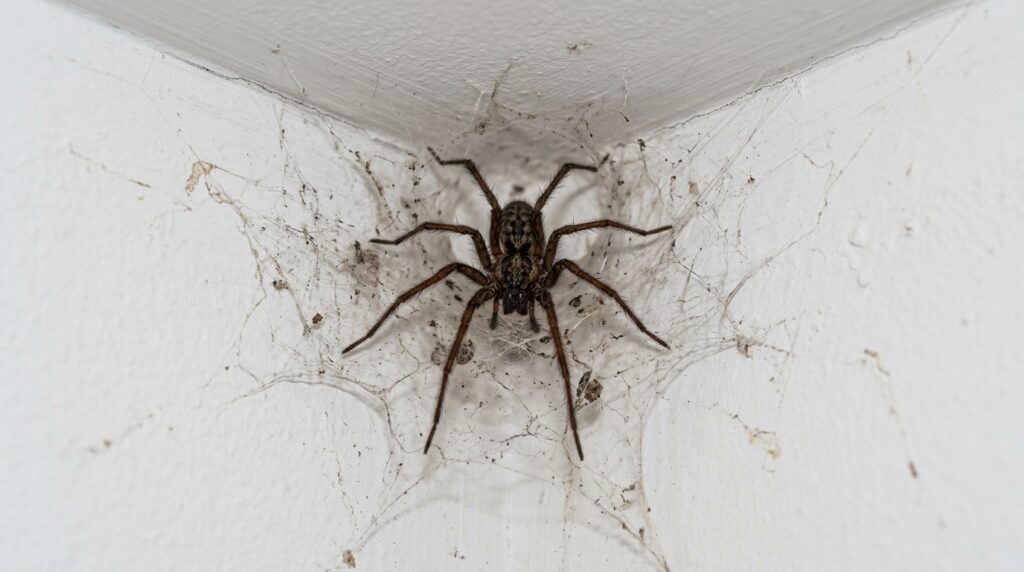
You found a spider in the bathroom. Then one in the bedroom corner. Then a web behind the door you haven’t opened in a week. At what point does “a few spiders” become a problem worth treating?
The honest answer: most house spiders are harmless and actually beneficial — they eat flies, mosquitoes, moths, and other insects you don’t want indoors. But beneficial or not, most people don’t want spiders sharing their living space, and there are effective ways to reduce them without reaching for the heaviest chemical option available.
Quick answer: The most effective spider control is indirect — reduce the insects they feed on, seal entry points, and remove web-building sites. Direct treatments (sprays, dusts) work on contact but don’t prevent reinfestation. Do both for lasting results.
⭐ Our Top Pick:
Miss Muffet’s Revenge Spider Killer — ready-to-use indoor/outdoor spray with a 12-month residual claim. Creates a barrier that kills spiders on contact and repels them from treated areas. Best all-around spider spray for home use.
Why You Have Spiders in Your House
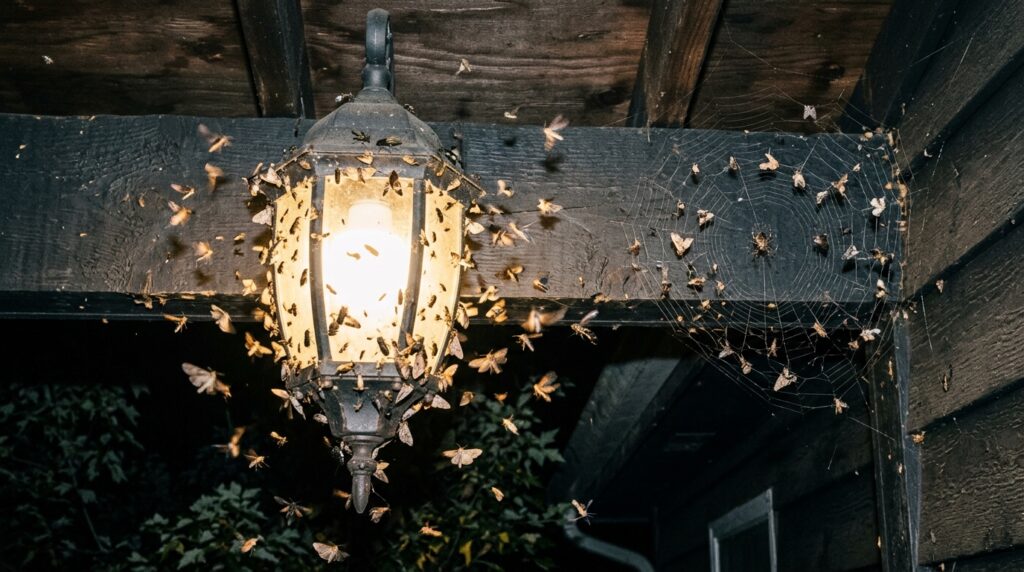
Spiders don’t invade homes the way ants or cockroaches do — they don’t seek food or water directly. They follow their prey. If you have spiders, you have insects they’re feeding on. And if you have insects, you have something attracting those insects: light, warmth, moisture, or organic material.
Common reasons spiders enter homes:
• Following insect prey — flies, moths, gnats, and other small insects
• Seeking warmth as outdoor temperatures drop in fall
• Finding undisturbed areas for web-building and egg sacs
• Entry through gaps in windows, doors, or foundation
Understanding this matters because it changes the treatment approach: killing visible spiders doesn’t address why they’re there. Reducing the insect population they feed on is more effective long-term.
Step 1: Reduce the Insect Population They’re Feeding On
This is the most overlooked step in spider control. Fewer prey insects = fewer spiders. It also addresses the underlying problem rather than just its symptom.
Reduce insects that attract spiders:
• Switch outdoor lights to yellow “bug lights” or LED warm-white — white and blue light attracts flying insects, which attract spiders to windows and entry points
• Fix window and door screens — gaps let in the insects spiders prey on
• Keep outdoor lights off when not needed — motion-activated lights reduce insect congregation
• Reduce moisture indoors — fungus gnats and drain flies thrive in damp conditions and are common spider prey
Step 2: Remove Webs and Egg Sacs
Removing webs disrupts spider activity in two ways: it destroys the infrastructure they use for catching prey, and it removes egg sacs — each containing 20–200 eggs depending on the species. A spider that loses its web multiple times will often relocate.
How to remove webs effectively:
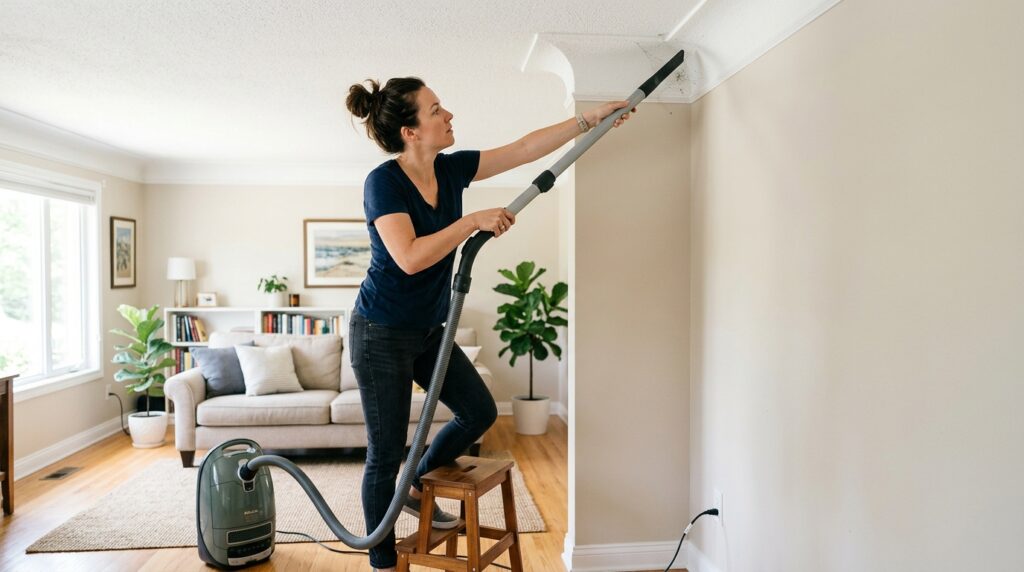
• Use a vacuum with a hose attachment — capture the spider and web in one motion without releasing it
• Check corners, ceiling junctions, window frames, behind furniture, and inside closets
• Outdoors: check around porch lights, window frames, roof overhangs, and anywhere insects congregate
• Dispose of vacuum contents in an outdoor trash bin immediately after
Remove webs consistently every 1–2 weeks. Spiders that can’t establish a stable web in an area will move elsewhere.
Step 3: Apply a Spider Residual Spray
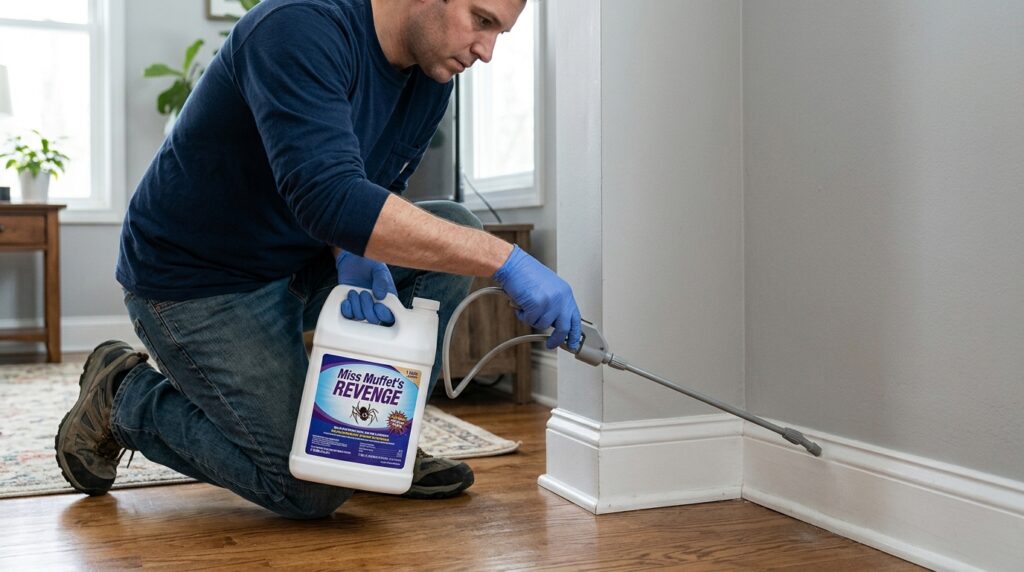
Residual spider sprays kill spiders that walk across treated surfaces and provide a barrier that discourages entry. They’re most effective along baseboards, window frames, door frames, and the perimeter where spiders travel.
Miss Muffet’s Revenge Spider Killer — Best Indoor/Outdoor Spray
Ready-to-use spray with a wand applicator for reaching into corners and under furniture. Claims up to 12 months of residual protection. Effective against most common house spider species.
Best for: Indoor perimeter treatment, basements, garages, and crawlspaces
Apply to: Baseboards, window sills, door frames, corners, and anywhere webs have appeared
Mighty Mint Peppermint Oil Spider Repellent — Best Natural Option
Peppermint oil is the most evidence-backed natural spider repellent. Spiders detect chemicals through receptors on their legs, and peppermint oil appears to interfere with this — studies show spiders avoid areas treated with concentrated peppermint oil. Effective but shorter-lasting than synthetic options; reapply every 2–4 weeks.
Best for: Households preferring natural options; kitchens and food prep areas where chemical sprays aren’t ideal
Step 4: Seal Entry Points
Spiders enter through the same gaps that let in air, water, and other insects. Sealing these reduces all pest pressure simultaneously.
Common spider entry points:
• Gaps around window frames and door frames — caulk any visible cracks
• Torn or ill-fitting window screens — repair or replace
• Gaps around utility lines (cable, gas, electric) entering the wall
• Under exterior doors without door sweeps
• Foundation cracks and gaps where siding meets the foundation
Indoor Habits That Reduce Spider Activity
Spiders thrive in undisturbed clutter — it provides cover, web-building sites, and hiding places. Regular activity in all areas of your home is itself a deterrent.
• Reduce clutter in closets, basements, and garages — cardboard boxes are particularly attractive spider habitat
• Move storage boxes off the floor onto shelves — spiders prefer floor-level hiding spots
• Shake out shoes and gloves stored in garages or basements before wearing — common hiding spots for spiders
• Regularly vacuum under furniture, behind appliances, and in corners
• Keep firewood outside until ready to use — wood piles are prime spider habitat
Identifying Dangerous Spiders
The vast majority of house spiders are harmless. In the US, only two species require real concern:
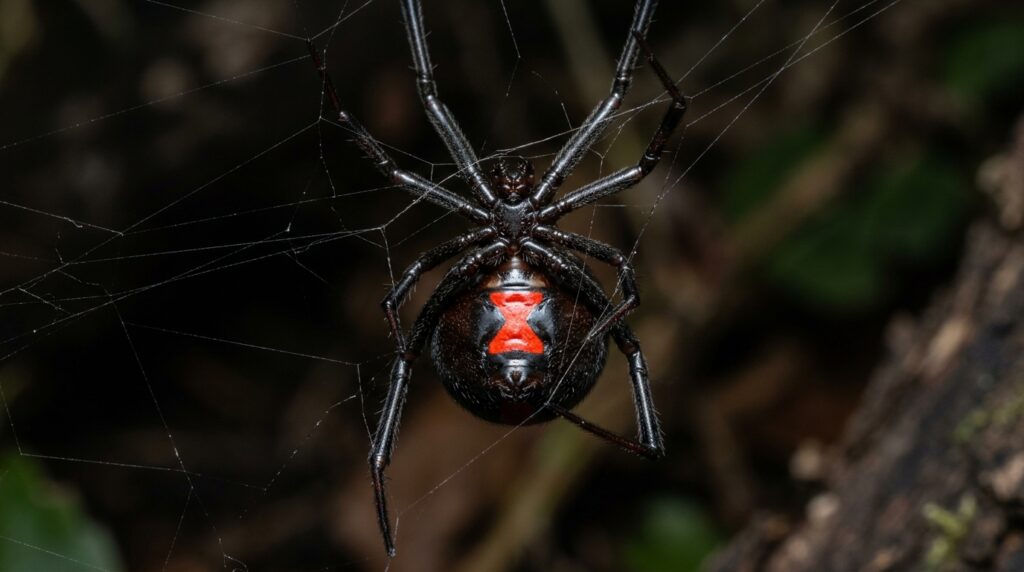
Black Widow (Latrodectus species)
Shiny black body, distinctive red hourglass marking on the underside of the abdomen. Builds irregular, messy webs at ground level — in garages, basements, woodpiles, and outdoor furniture. Bite is medically significant but rarely fatal in healthy adults.
What to do: Don’t handle. Apply residual spray directly to web areas, wear gloves when working in areas where they’re found. If you suspect a bite, seek medical attention.
Brown Recluse (Loxosceles reclusa)
Tan to brown, violin-shaped marking on the cephalothorax (head region), six eyes in three pairs (most spiders have eight eyes). Found primarily in the south-central US — if you’re outside this range, what you’re seeing is almost certainly not a brown recluse. Hides in dark, undisturbed areas: inside boxes, behind furniture, in clothing left on the floor.
What to do: Reduce clutter, use sticky traps in affected areas, apply residual spray to hiding areas. See our detailed guide on brown recluse vs. wolf spider identification.
Frequently Asked Questions
Should I kill spiders in my house?
Not necessarily. Common house spiders (cellar spiders, cobweb spiders, jumping spiders) eat flies, mosquitoes, moths, and other insects. A few spiders in low-traffic areas can reduce the overall insect population in your home. The case for removal is about comfort, not safety — with the exception of black widows and brown recluses.
Why do I suddenly have so many spiders?
Seasonal spikes in spider activity are common in fall — male spiders become more active as they search for mates before winter. What you’re seeing is often existing spiders becoming more visible rather than an actual population increase. Consistent web removal and perimeter spraying addresses seasonal surges.
Does peppermint oil really repel spiders?
Yes, with limitations. Lab studies show spiders avoid areas treated with peppermint oil. Real-world results are more modest — the oil evaporates quickly, especially in ventilated areas, and requires frequent reapplication. It’s effective as part of a broader strategy but not as a standalone solution.
What attracts spiders to my bedroom?
Usually insects — small flies, gnats, or moths that are attracted to bedroom lights. Check for gaps around window frames that let insects in, switch to warm-white LED bulbs (less attractive to insects), and ensure screens are intact. Reducing the insect population in the bedroom removes the food source that draws spiders.
The Bottom Line
Getting rid of house spiders is a combination of indirect and direct control: reduce the insects they eat, remove webs consistently, apply a residual spray to entry points and perimeter areas, and seal the gaps they come through. Done together, this reduces spider populations significantly without requiring heavy chemical treatment.
Seeing large spiders in the basement? Check our guide on how to get rid of spiders in the basement for targeted treatment of below-grade spider habitat.