
This post contains affiliate links. If you buy through our links, we may earn a commission at no extra cost to you.
If you saw a large brown spider in your house, it was almost certainly not a brown recluse. Here’s a clear side-by-side comparison so you know exactly what you’re dealing with.
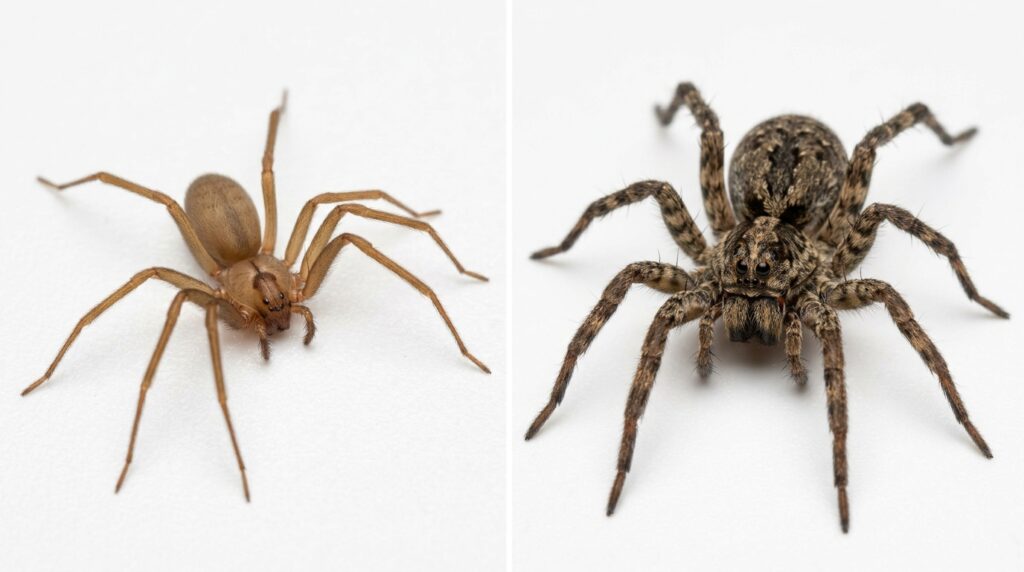
You spot a large brown spider running across the basement floor and your first thought is: brown recluse. It’s one of the most common spider misidentifications in North America — and it matters, because the two spiders require very different responses.
Brown recluses are medically significant spiders with necrotic venom. Wolf spiders are large, fast, and alarming — but completely harmless. Getting the ID right changes whether you’re dealing with a nuisance or a genuine concern.
Quick answer: If the spider is large (body over 1/2 inch), fast-moving, and patterned with stripes or mottled markings, it’s almost certainly a wolf spider. Brown recluses are smaller (body 1/4–1/2 inch), uniform tan to brown with no pattern, and have a distinctive violin-shaped marking on the back and six eyes in three pairs — not eight.
⭐ If You Have Brown Recluses:
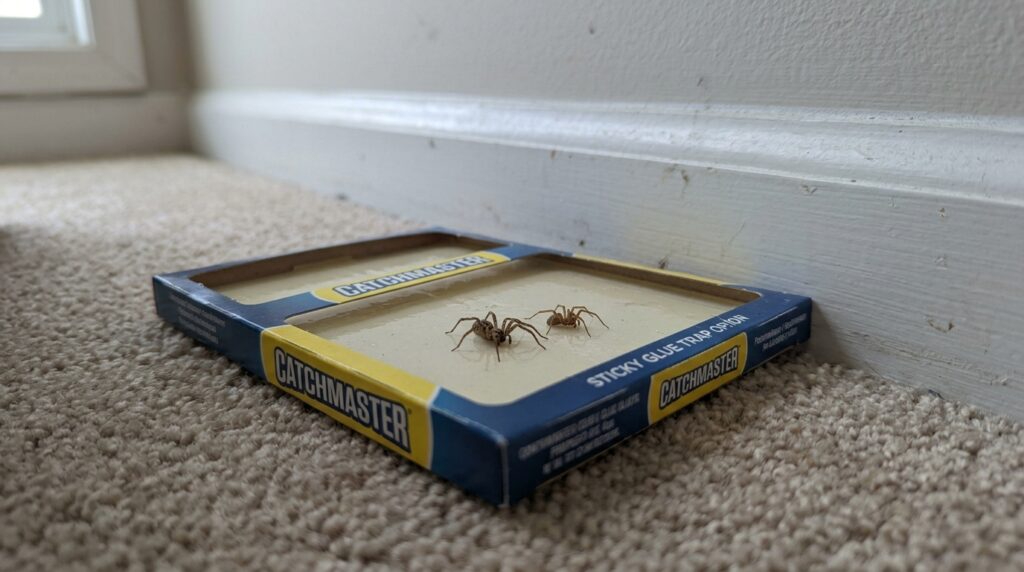
Catchmaster Spider & Insect Glue Traps — sticky boards placed along baseboards and in corners are the most effective monitoring and control method for brown recluses. They’re ground hunters that walk into glue traps reliably. Check weekly.
Quick Identification: 4 Key Differences
1. Size
Wolf spider: Body 1/2–1 inch long (up to 1.5 inches including legs). Noticeably large — the size that startles people.
Brown recluse: Body 1/4–1/2 inch long — smaller than most people expect. About the size of a quarter including legs.
2. Markings and Color
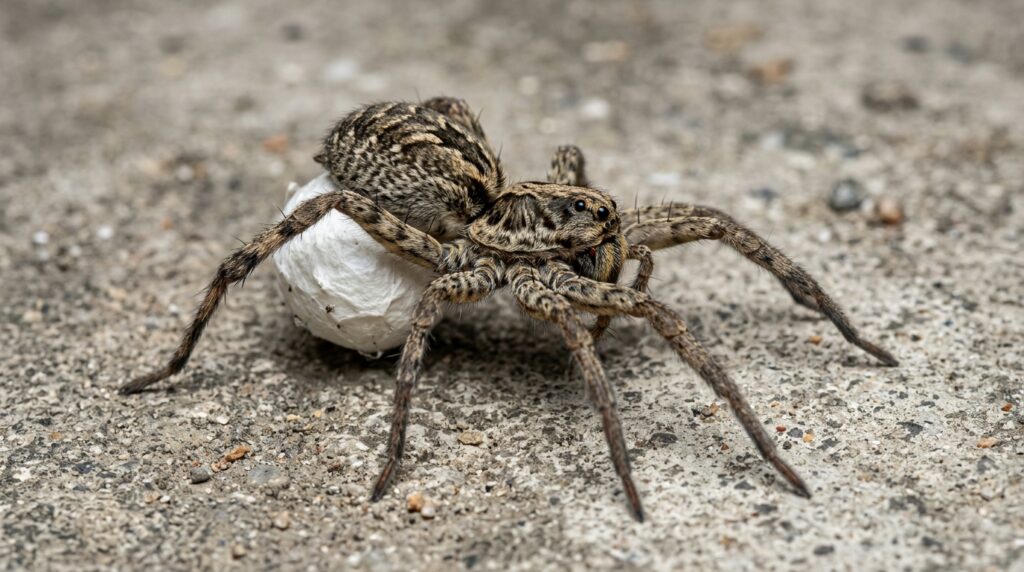
Wolf spider: Patterned — brown, gray, or black with stripes, spots, or mottled markings. Females of some species carry an egg sac on their abdomen.
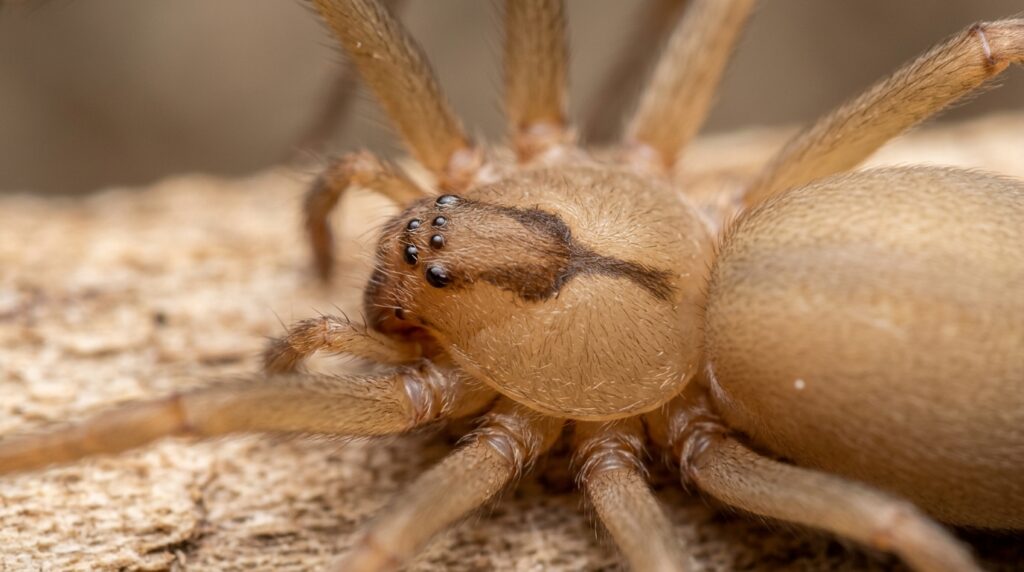
Brown recluse: Uniform tan to light brown — no pattern on the abdomen. The one marking worth noting is the violin shape on the cephalothorax (the front body section, not the abdomen). The neck of the violin points toward the abdomen.
3. Eyes — The Most Reliable Identifier
Wolf spider: Eight eyes arranged in three rows — two large eyes in the middle row are reflective and shine brightly in flashlight, similar to a cat’s eyes.
Brown recluse: Six eyes in three pairs of two — this is the single most reliable identifier. Most spiders have eight eyes. The six-eye pattern of the brown recluse is distinctive but requires close examination.
4. Behavior
Wolf spider: Active hunter — runs fast across open floors, especially in fall when seeking warmth indoors. Does not build webs. Often seen in motion.
Brown recluse: Reclusive (as the name suggests) — hides in dark, undisturbed areas and rarely moves in open spaces. Builds small, irregular webs in crevices, not for catching prey but for shelter. More likely to be found inside boxes or behind furniture than running across the floor.
Where Each Spider Is Found
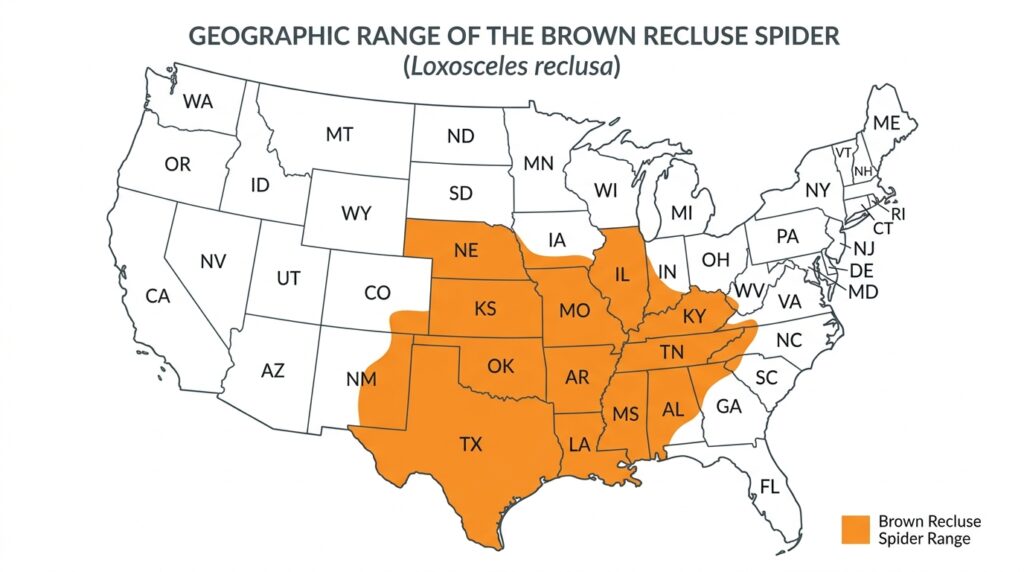
Brown Recluse Range
This is the most important context for identification: brown recluses have a defined geographic range centered on the south-central United States — primarily Missouri, Kansas, Oklahoma, Arkansas, Texas, Nebraska, and parts of adjacent states. If you’re in the Northeast, Pacific Northwest, or most of the West Coast, the spider you’re seeing is almost certainly not a brown recluse, even if it looks similar.
Indoor locations: Cardboard boxes, inside clothing and shoes left on the floor, behind furniture, in closets and storage areas. They seek dry, dark, undisturbed spaces.
Wolf Spider Range
Wolf spiders are found throughout North America — all 50 states, all climates. They’re among the most common large spiders encountered indoors, particularly in fall when they follow insects inside as temperatures drop.
Indoor locations: Open floor areas, basements, garages, and around exterior doors. Seen running rather than hiding.
Bite Comparison: How Dangerous Are They?
Brown Recluse Bite
Medically significant. Brown recluse venom contains a compound that can cause necrotic (tissue-destroying) reactions in some individuals. Most bites cause a localized reaction that heals without major treatment. A small percentage develop a necrotic wound that requires medical intervention. Fatalities are extremely rare.
Important context: Brown recluses bite defensively — almost always when trapped against skin (putting on clothing where one is hiding, rolling onto one in bed). They don’t hunt or bite humans proactively.
If bitten: Photograph the spider if possible, clean the wound, and seek medical attention — especially if the wound develops a blister or dark center within 24–48 hours.
Wolf Spider Bite
Not medically significant. Wolf spiders can bite if handled — their fangs are large enough to break skin — but the venom causes only mild, localized pain comparable to a bee sting. No necrotic effect, no systemic symptoms in healthy adults. Treat like any minor puncture wound.
What to Do Based on What You’re Seeing
If You Have Wolf Spiders
No urgent concern. Wolf spiders are harmless and usually enter homes seasonally. Reduce entry points (gaps under exterior doors, foundation gaps), reduce the ground-level insects they follow inside (crickets are a common draw), and apply a perimeter residual spray along baseboards. Numbers typically drop once the fall influx period ends.
If You Have (or Suspect) Brown Recluses
Take practical precautions without panic. Brown recluses are shy, reclusive, and bite only when trapped. The most effective control combines:
• Sticky glue traps placed along baseboards and in closets — most reliable capture method
• Reducing clutter, especially cardboard boxes where they hide
• Shaking out shoes and clothing before wearing — the most common bite scenario
• Residual spray in storage areas, closets, and behind furniture
• Sealing cracks in the foundation and around utility penetrations
Frequently Asked Questions
How can I tell if I have brown recluses without catching one?
Place sticky traps along baseboards and inside closets for 2–4 weeks. Brown recluses are ground hunters that walk into glue traps. If you catch tan-to-brown uniform-colored spiders (no body pattern) in the traps and you’re within the recluse’s geographic range, have one examined by a local extension service or pest control professional for confirmation.
Can brown recluses and wolf spiders look the same?
At a glance, yes — both are brown and roughly similar in shape. Close inspection separates them: wolf spiders are visibly larger, have patterned markings, and eight eyes including two large reflective ones. Brown recluses are smaller, uniformly tan with no abdomen pattern, and have six eyes. The violin marking on the brown recluse is helpful but not always clearly visible.
Are wolf spiders dangerous to pets?
No. Wolf spider venom is not medically significant for dogs or cats. If a pet is bitten, it may show mild localized swelling but no systemic reaction. Monitor for a few hours — if the pet shows normal behavior, no treatment is needed. Brown recluse bites to pets are more serious and warrant a vet call.
What do brown recluse egg sacs look like?
Off-white to cream, roughly 1/2 inch diameter, papery texture — found inside the spider’s retreat web in dark crevices. A single egg sac contains 31–300 eggs. If you find egg sacs in a closet or storage area, treat the space immediately with a residual spray and remove all clutter to expose hiding spiders.
The Bottom Line
The large brown spider running across your floor is almost certainly a wolf spider — harmless, seasonal, and easily controlled with perimeter spray and reduced entry points. Brown recluses are smaller, uniform in color, reclusive by nature, and limited in range to the south-central US. When in doubt: size, pattern, and location are your three fastest ID clues.
Want to reduce spiders throughout the house? See our complete guide on how to get rid of spiders in your house for a full treatment plan.