
This post contains affiliate links. If you buy through our links, we may earn a commission at no extra cost to you.
Bed bug bites aren’t proof — many insects bite at night. Here’s how to do a proper inspection so you know for certain what you’re dealing with before you treat.
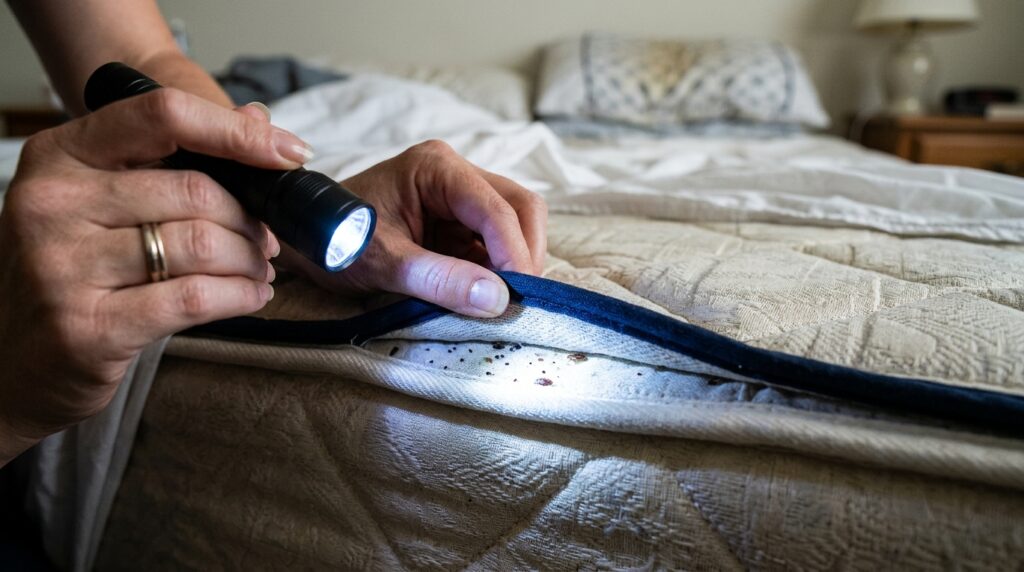
Waking up with unexplained bites is alarming — but bites alone don’t confirm bed bugs. Mosquitoes, fleas, mites, and allergic reactions to detergent or fabric can all produce similar marks. The only way to know for certain is a thorough visual inspection.
Bed bugs leave behind physical evidence that’s distinctly identifiable — dark fecal spots, shed skins, live insects, and eggs. Finding any of these confirms the infestation and tells you how advanced it is. The earlier you catch it, the easier it is to treat.
Quick answer: Strip your bed completely and inspect mattress seams, box spring corners, and bed frame joints with a flashlight. The most reliable evidence is dark fecal spots (dried blood/excrement) on fabric, or live bugs in seams. If you find either, you have bed bugs.
⭐ Tools for Inspection:
Lepro LED White Light Flashlight, High Lumens Waterproof Adjustable Focus — essential for inspecting seams, crevices, and dark areas. Bed bugs are small and hide in tight spaces.
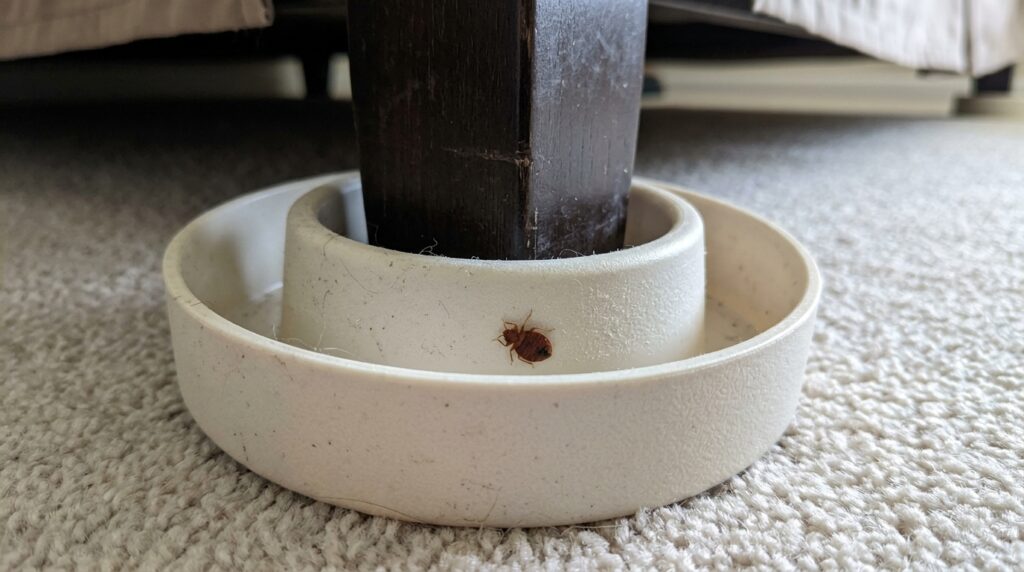
ClimbUp Insect Interceptor Cups — place under bed legs after inspection. Catches bugs moving to/from the bed and gives you ongoing population data. Confirms active infestation even when you can’t find live bugs by eye.
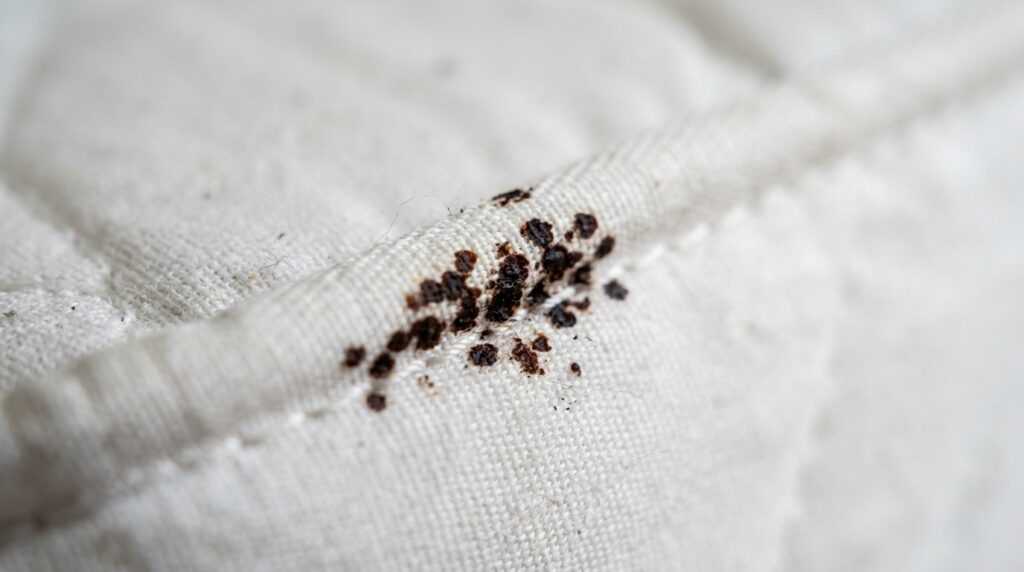
Sign 1: Dark Fecal Spots
The most reliable indicator of an active bed bug infestation. Bed bug fecal matter consists of digested blood — it appears as small, dark ink-like spots that bleed into fabric when touched with a damp cloth (unlike regular dirt, which smears differently).
What they look like: Dark brown to black dots, roughly the size of a period at the end of a sentence. Often appear in clusters or streaks along seams.
Where to find them:
• Along mattress seams, particularly at the corners and head end
• On the box spring fabric, especially along the staple lines where the fabric meets the frame
• On the wall directly behind the headboard
• On the sheets and pillowcases (blood smears from crushed bugs)
• Inside the bed frame joints and screw holes
Sign 2: Shed Skins (Exuviae)
Bed bugs molt through 5 nymph stages before reaching adulthood, shedding their exoskeleton each time. These shed skins — called exuviae — are pale yellow, translucent, and hollow. They retain the shape of the bug that left them.
Finding shed skins indicates an established infestation with a population that has been present and developing long enough to molt — at least 1–2 weeks, often longer. Multiple skins in the same area suggest a harborage point.
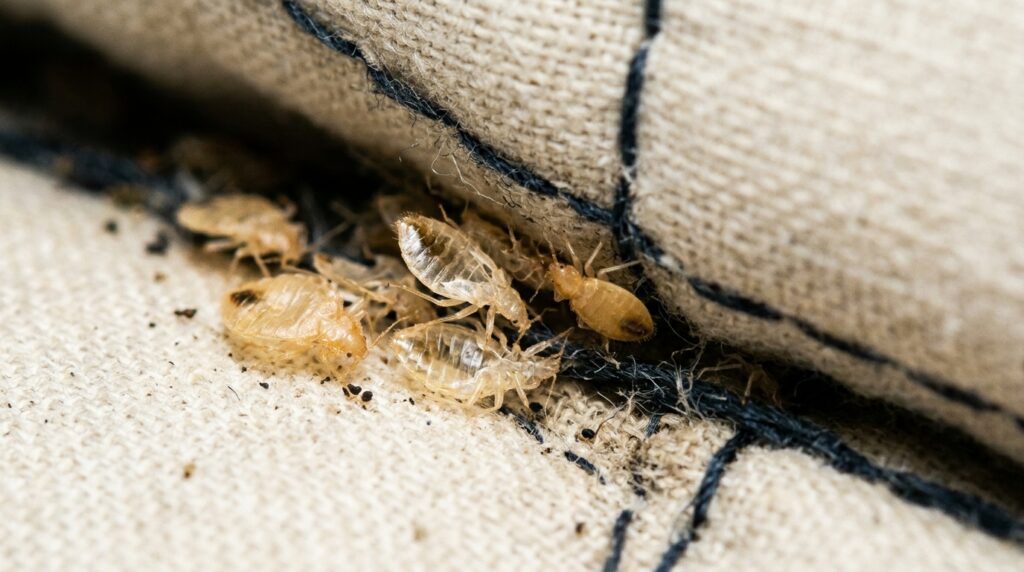
Sign 3: Live Bugs
Finding a live bed bug is definitive confirmation. Adults are flat, oval, reddish-brown, and about the size of an apple seed (1/4 inch). After feeding, they swell and become more elongated and darker. Nymphs are smaller and translucent until they feed.
Where live bugs hide:
• Inside the rolled seam along the edge of the mattress
• Under the tags on the mattress corners
• In the folds of the box spring fabric
• Inside bed frame joints, screw holes, and cracks in wooden frames
• Behind the headboard — especially where it attaches to the wall
• Inside electrical outlets on the wall adjacent to the bed
Sign 4: Eggs and Egg Shells
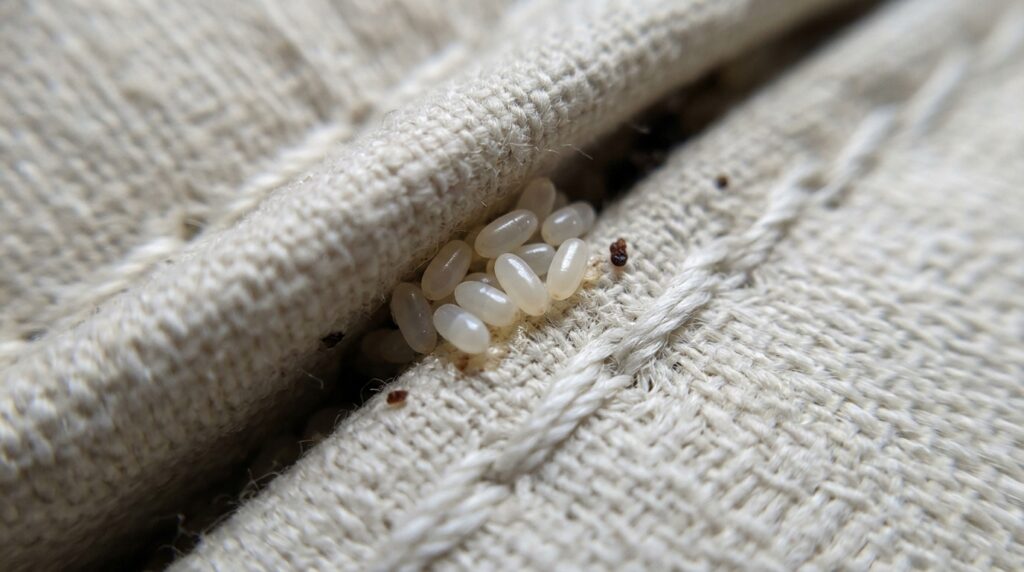
Bed bug eggs are white, barrel-shaped, about 1mm long — roughly the size of a sesame seed. They’re laid in clusters of 1–5 eggs in crevices and seams, glued to surfaces with a sticky secretion that makes them difficult to dislodge. Hatched egg shells are the same size but collapsed and translucent.
Why this matters: Finding eggs means active reproduction — the infestation is growing. A single female lays 1–5 eggs per day. Eggs hatch in 6–10 days, so an infestation can expand rapidly if not treated immediately.
Sign 5: Blood Stains on Sheets
Small rust-colored or reddish-brown smears on sheets or pillowcases occur when a feeding bed bug is accidentally crushed during sleep. These stains are typically 2–5mm, irregularly shaped, and may appear in clusters.
Distinguishing from other stains: Bed bug blood stains tend to be small, scattered, and rust-colored rather than the brighter red of a fresh wound. They won’t appear every night — only when bugs are accidentally crushed, which depends on sleeping position and activity.
Sign 6: Sweet Musty Odor
A heavy bed bug infestation produces a distinctive sweet, musty odor — often described as similar to coriander, almonds, or overripe raspberries. This is caused by pheromones released by the bugs. The odor is usually only detectable with a significant infestation and is not a reliable early indicator, but its presence confirms a serious problem.
How to Do a Complete Bed Bug Inspection
A thorough inspection takes 15–30 minutes and requires a bright flashlight, a credit card or thin blade for probing seams, and gloves. Work systematically from the sleeping surface outward.
Step 1: Strip the bed completely
Remove all bedding and bag it immediately in sealed plastic bags. Inspect each piece of bedding as you remove it — look for fecal spots and live bugs on the fabric.
Step 2: Inspect the mattress
With the flashlight, examine all seams — run your finger along each seam to open it slightly and look inside. Check both sides. Pay special attention to the head end and corners. Look for fecal spots, shed skins, live bugs, and eggs.
Step 3: Inspect the box spring
Turn the box spring on its side. Inspect along all staple lines where the fabric is attached to the frame. Check inside the corners and along the wooden frame edges. Box springs often harbor more bugs than the mattress.
Step 4: Inspect the bed frame
Check every joint, screw hole, and crack in the bed frame. Use the card edge to probe crevices. Wooden frames have more hiding spots than metal frames. Look particularly at the joints where the headboard attaches and where side rails meet the footboard.
Step 5: Expand the inspection zone
If you find evidence at the bed, inspect: the wall behind the headboard, baseboards along the walls adjacent to the bed, behind picture frames and mirrors near the bed, inside nightstand drawers and along the back of the nightstand, and electrical outlets on the wall beside the bed.
Frequently Asked Questions
Can you have bed bugs without seeing them?
Yes. Bed bugs are cryptic — they hide in crevices during the day and feed at night. A small early-stage infestation can produce bites for weeks before you find evidence. If you suspect bed bugs but can’t find visual evidence, place interceptor cups under bed legs for 1–2 weeks — they’ll catch bugs that would otherwise remain hidden.
What do bed bug bites look like?
Red, itchy welts that often appear in a line or cluster of 3 (“breakfast, lunch, dinner” pattern). However, bite appearance varies enormously between people — some people have no reaction at all, while others develop large hives. Bite appearance alone cannot confirm bed bugs. Only finding physical evidence (bugs, fecal spots, skins) is confirmation.
How long before bed bugs show signs?
A single female introduced to a new environment begins laying eggs within days. The first shed skins appear after 5–7 days as first-stage nymphs molt. Fecal spotting begins with the first feeding. With a small initial population, evidence may be sparse and hard to find for the first 2–4 weeks. This is why interceptor cups under bed legs are valuable — they catch bugs even when visual evidence is minimal.
Can I bring bed bugs home from a hotel?
Yes — this is the most common way bed bugs spread. Inspect hotel beds using the same method above before sleeping. Keep luggage off the floor and bed (use the luggage rack). When you return home, launder all travel clothing immediately on high heat and inspect luggage before bringing it inside.
The Bottom Line
Bites alone don’t confirm bed bugs. A thorough inspection of the mattress seams, box spring, and bed frame takes 20 minutes and gives you a definitive answer. Finding fecal spots, shed skins, or live bugs means you have an infestation — the sooner you start treatment, the easier it is to eliminate.
Confirmed bed bugs? See our complete step-by-step guide on how to get rid of bed bugs for the full treatment protocol.