
This post contains affiliate links. If you buy through our links, we may earn a commission at no extra cost to you.
Bed bugs are the hardest household pest to eliminate on your own — but it’s possible with the right method. Here’s a step-by-step guide that gives you a realistic picture of what DIY treatment involves.
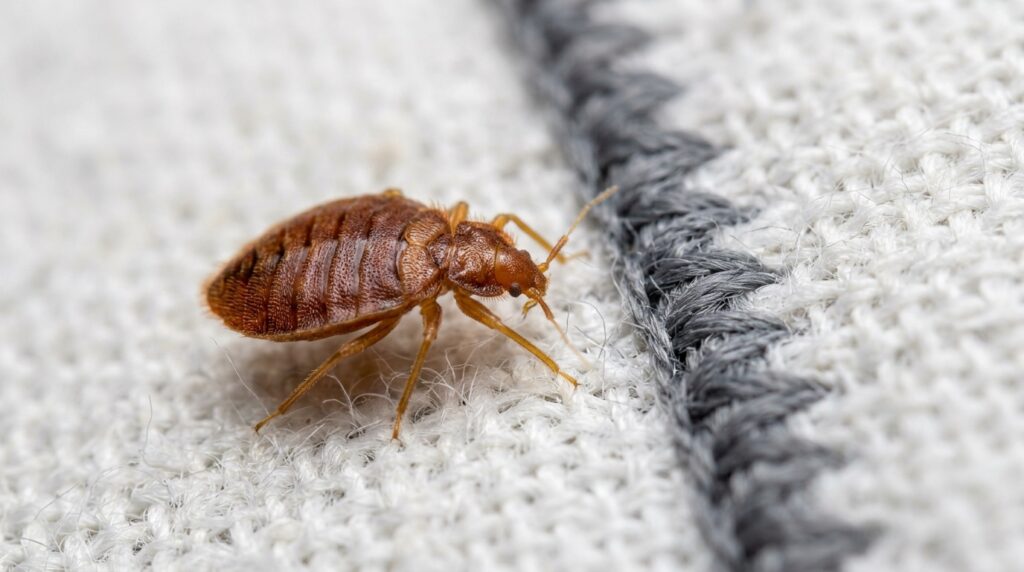
Bed bugs are the pest most people hope they never have to deal with — and for good reason. They’re cryptic, resilient, reproduce fast, and are notoriously difficult to eliminate completely. Unlike most household pests, a missed egg or a hidden harborage can restart the infestation weeks after you think the problem is solved.
That said, DIY bed bug treatment is possible — especially for early-stage infestations caught quickly. The key is understanding what you’re dealing with and using the right combination of methods. No single product eliminates bed bugs. Treatment requires heat, chemical, and mechanical methods used together, consistently.
Quick answer: Heat kills bed bugs at all life stages — wash bedding and clothing at 130°F+, use a portable heat treatment for items that can’t be washed, apply a residual insecticide to hiding areas, encase the mattress and box spring, and inspect weekly for 6–8 weeks to confirm elimination.
⭐ Essential Products:
SureGuard Mattress Encasement — lab-tested bed bug proof encasement. Trap existing bugs inside, prevent new bugs from reaching the mattress. Keep on for 18 months minimum.
Ortho Home Defense Bed Bug Killer — kills bed bugs on contact and leaves a residual. Spray into cracks, seams, and hiding areas around the bed frame and baseboards.
Step 1: Confirm You Have Bed Bugs
Bed bug bites alone are not confirmation — many insects bite at night, and reactions vary widely between people. Confirm the infestation visually before treating.
What to look for:
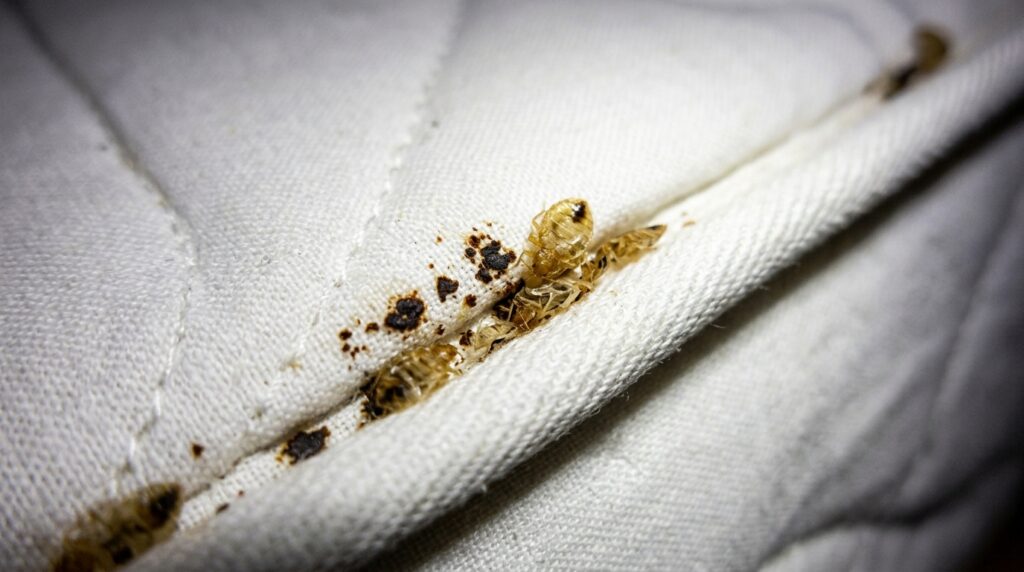
• Live bugs: flat, oval, apple seed-sized (adults), reddish-brown. Nymphs are smaller and translucent until they feed.
• Fecal spots: tiny dark spots (dried blood/excrement) on mattress seams, box spring fabric, and behind headboards. Look like ink dots from a fine marker.
• Shed skins (exuviae): pale yellow casings left behind as nymphs molt through 5 stages
• Blood stains: small rust-colored smears on sheets from bugs crushed during sleep
• Eggs: white, 1mm, barrel-shaped — found in clusters in seams and crevices
Where to inspect: Mattress seams and tags, box spring corners and staple lines, bed frame joints and screw holes, headboard cracks, behind picture frames near the bed, inside nightstand drawers and along baseboard behind the bed.
Step 2: Contain the Infestation
Before treating, prevent bed bugs from spreading to other rooms — a common mistake that turns a bedroom problem into a whole-home infestation.
• Do NOT move infested furniture, mattresses, or bedding to other rooms
• Do NOT sleep in another room — you will carry bugs with you
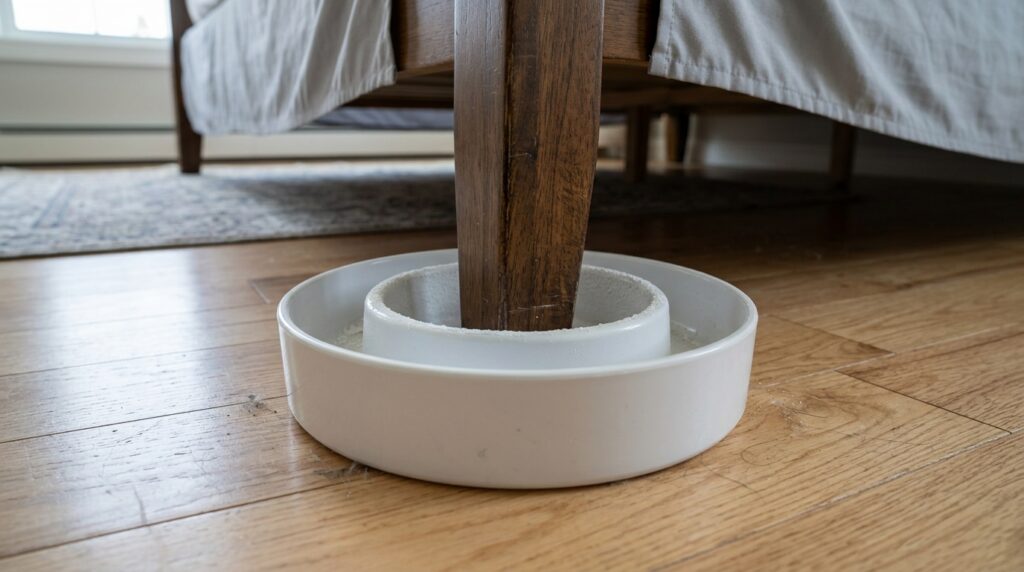
• Place bed bug interceptor cups under each bed leg — these trap bugs trying to climb up or down and give you a population count
• Bag all bedding and clothing in sealed plastic bags before laundering — don’t carry them loose through the house
Step 3: Apply Heat Treatment
Heat is the most reliable bed bug killer available to homeowners — bed bugs and their eggs die at 122°F (50°C). Unlike insecticides, heat reaches inside mattresses, inside electronics, and into seams where bugs hide. It leaves no residue and kills all life stages.
Laundry: The First and Most Important Step
Wash all bedding, pillowcases, clothing, and curtains from the affected room in hot water (130°F+), then dry on the highest dryer setting for at least 30 minutes. The dryer heat is what kills the bugs — washing alone may not reach lethal temperatures in all load types.
Items that can’t be washed: Place in the dryer on high heat for 30 minutes, or seal in a black plastic bag and leave in a hot car or direct sun (internal temperature must reach 122°F).
Portable Heat Chambers for Belongings
PackTite portable heat chamber heats items to 120°F+ inside a collapsible bag — books, shoes, backpacks, electronics, stuffed animals, and anything that can’t go in the dryer. One of the most useful tools for DIY bed bug treatment of personal items.
Step 4: Apply Chemical Treatment
Chemical treatment targets the hiding areas heat can’t reach and provides ongoing residual protection. Bed bugs have developed resistance to some insecticides — using the right active ingredients matters.
Ortho Home Defense Bed Bug Killer — Best Spray
Kills bed bugs on contact and leaves residual. Apply to: bed frame joints and screw holes, box spring seams and staple lines, baseboards behind and beside the bed, inside nightstand drawers, and behind pictures or wall outlets near the bed. Do NOT spray the mattress surface.
CimeXa Insecticide Dust — Best Residual Treatment
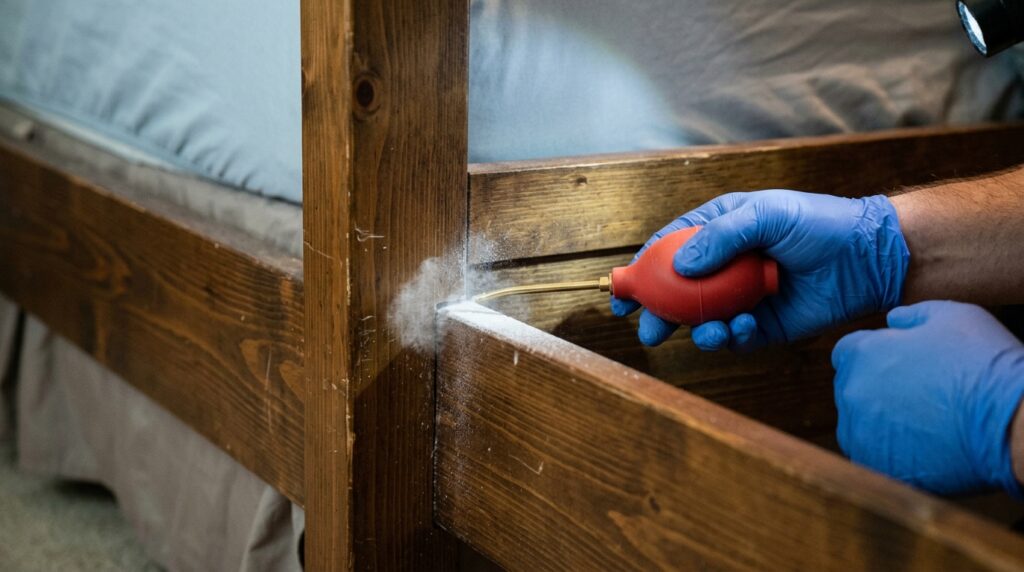
Silica gel dust that kills bed bugs by absorbing the waxy coating from their exoskeleton, causing dehydration. Resistant to the pyrethroid resistance common in many bed bug populations. Apply a thin layer inside wall voids (through outlet covers), inside box spring edges, and into bed frame crevices. Effective for up to 10 years in undisturbed areas.
Important: Use a hand duster for precise application — visible piles repel bed bugs. A barely visible coating is correct.
Step 5: Encase Mattress and Box Spring
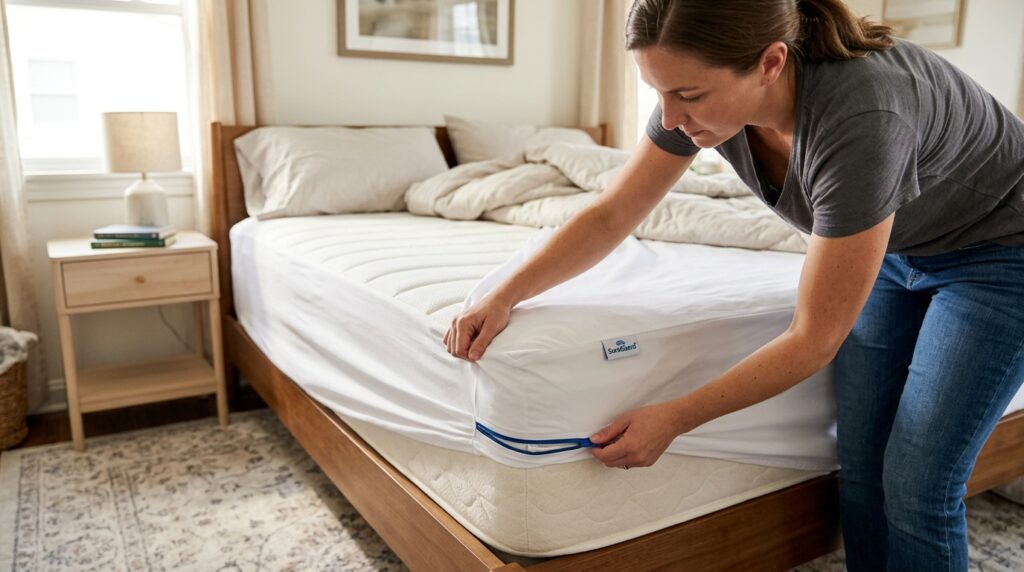
Mattress encasements serve two purposes: they trap any remaining bugs inside the mattress where they eventually die of starvation (bed bugs can survive 12–18 months without feeding), and they prevent new bugs from hiding in the mattress in the future.
SureGuard Mattress Encasement — lab-certified bed bug proof with a secure zipper closure and fabric that bed bugs cannot bite through. Required for both mattress and box spring. Leave on for a minimum of 18 months — the time needed to starve any trapped bugs.
Critical: Inspect the encasement for tears monthly. A single small hole renders it ineffective.
Step 6: Monitor for 6–8 Weeks
Bed bug eggs hatch in 6–10 days and are resistant to most insecticides. This means a single treatment round is almost never sufficient — a second treatment 7–10 days after the first targets newly hatched nymphs before they can reproduce.
Monitoring protocol:
• Check bed bug interceptor cups weekly — any catch after treatment means living bugs remain
• Retreat all harborage areas 7–10 days after initial treatment
• Continue weekly inspections for 6–8 weeks after the last bug is found
• Zero catches for 6 consecutive weeks indicates successful elimination
When to Call a Professional
DIY treatment is most effective for early-stage infestations in one room. Call a professional when:
• Bugs are found in multiple rooms or floors
• DIY treatment has been attempted and failed after two full treatment cycles
• The infestation is in an apartment building (requires coordinated treatment of multiple units)
• You or household members have significant bite reactions
Professional whole-room heat treatment ($1,000–$3,000) is the most reliable elimination method for severe infestations and eliminates the need for multiple treatment rounds.
Frequently Asked Questions
How long does it take to get rid of bed bugs?
A minimum of 6–8 weeks for a thorough DIY treatment to be confirmed successful. This accounts for the egg hatch cycle and monitoring period. Most DIY cases require 2–3 treatment rounds. Professional heat treatment can eliminate an infestation in a single day, though monitoring for reinfestation is still recommended for 4–6 weeks afterward.
Can I get rid of bed bugs without throwing out my mattress?
Yes, in most cases. A high-quality mattress encasement traps any bugs inside the mattress and prevents new hiding sites. You only need to discard a mattress if it has tears or structural damage that prevents effective encasement, or if the infestation is so severe that the mattress is heavily infested throughout.
Do bed bugs spread through walls?
Yes, particularly in apartments and multi-unit buildings. Bed bugs can travel through wall voids, electrical conduit, and plumbing penetrations between adjacent units. In apartment settings, professional treatment of the affected unit and adjacent units simultaneously is usually required for effective elimination.
What kills bed bug eggs?
Heat is the most reliable option — 122°F (50°C) for 2+ hours kills eggs at all stages of development. Most liquid insecticides do not effectively penetrate the egg shell. CimeXa silica dust is one of the few residual products with evidence of effectiveness against eggs in contact. This is why single treatments are rarely sufficient — retreating 7–10 days after the first treatment targets newly hatched nymphs that survived as eggs.
The Bottom Line
Getting rid of bed bugs requires patience, consistency, and multiple methods used together. Heat kills immediately but doesn’t prevent reinfestation. Residual insecticide and dust protect ongoing. Encasements eliminate the mattress as a harborage. Monitoring confirms success. Miss any of these and you’re likely to face a recurrence.
Trying to confirm whether what you have is actually bed bugs? See our guide on how to identify bed bug signs vs. other biting insects.