
This post contains affiliate links. If you buy through our links, we may earn a commission at no extra cost to you.
Not all mattress covers are bed bug proof — most waterproof covers offer zero protection. Here’s what makes an encasement actually work, and the products that have been lab-tested to prove it.
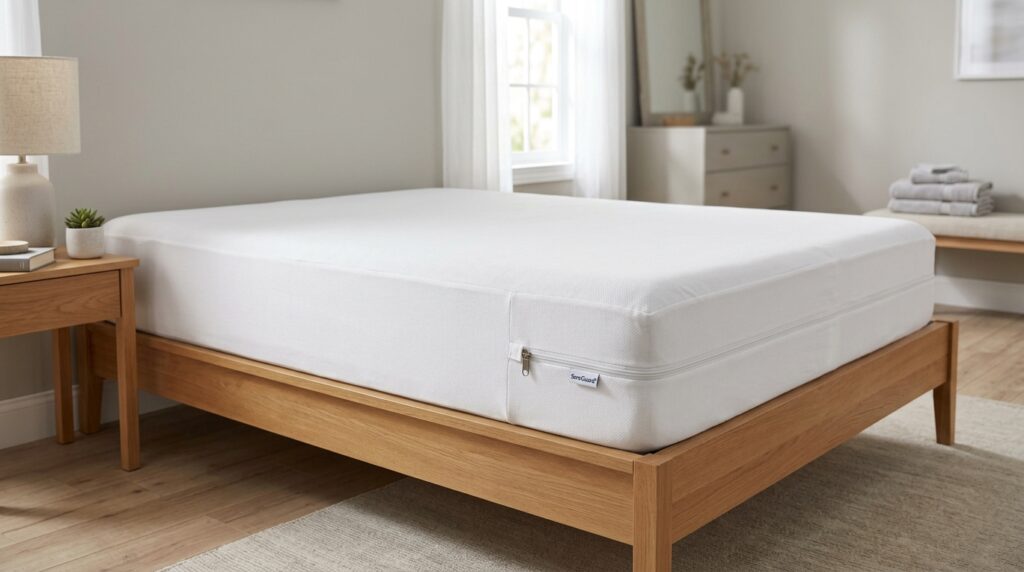
A mattress encasement is one of the most important tools in bed bug treatment — and one of the most misunderstood. Most people assume any waterproof mattress cover provides protection. It doesn’t. Bed bugs can bite through thin fabric, slip through zipper gaps, and survive inside inadequately sealed encasements for months.
A true bed bug encasement does three things: it prevents bugs already in the mattress from escaping and biting, it prevents new bugs from entering and hiding in the mattress, and it keeps the mattress usable so you don’t have to replace it. But only encasements that have been specifically lab-tested for bed bugs deliver on all three.
Quick answer: SureGuard is the most widely recommended encasement by pest control professionals and has the most rigorous independent testing. It covers both mattress and box spring, uses a zipper lock system, and has fabric bed bugs cannot bite through. Encase both the mattress and the box spring — bugs hide in both.
⭐ Our Top Pick:
SureGuard Mattress Encasement — lab-certified bed bug proof. Patented zipper guard prevents bed bugs from passing through the zipper gap. Available for all mattress sizes and separately for box springs. The encasement recommended by most pest control professionals.
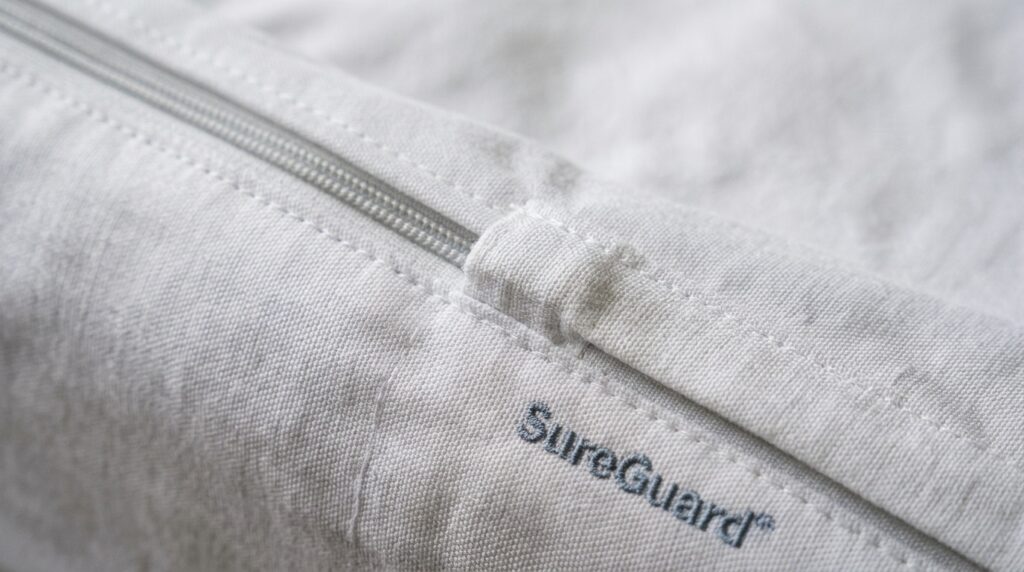
What Makes a Mattress Encasement Actually Bed Bug Proof
Most mattress covers on the market are not bed bug encasements — they’re waterproof protectors designed for liquid spills. The difference matters:
Fabric bite-resistance
Bed bugs have piercing mouthparts that can penetrate thin woven fabrics. A bed bug encasement uses a tightly woven microfiber fabric with a pore size too small for bed bug mouthparts to penetrate. Look for encasements that specifically list bite-resistance in their lab test documentation.
Zipper protection
Standard zippers have a gap between the teeth that bed bugs (especially nymphs) can squeeze through. Bed bug encasements use one of two solutions: a zipper guard (a fabric flap that covers the zipper and seals the gap after closing) or a specially designed micro-zip with teeth too close together for bed bugs to pass. This is where many cheap encasements fail.
Full enclosure
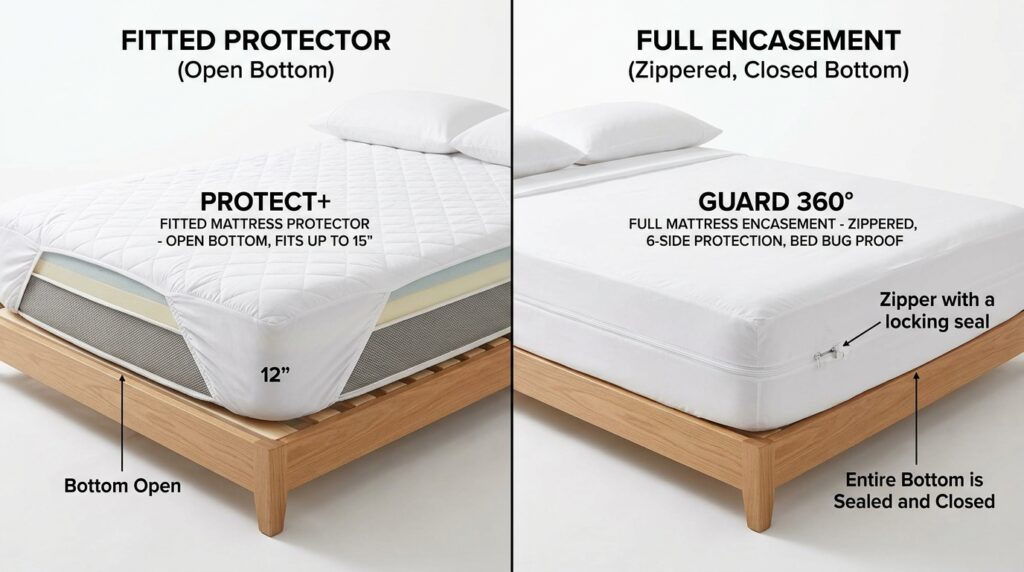
The encasement must enclose the entire mattress — top, bottom, and all sides — with no gaps. Half-encasements or fitted-sheet style covers leave the bottom exposed and provide no protection.
Lab testing certification
Look for encasements tested by an independent lab specifically for bed bug containment and prevention. Testing protocols include placing live bed bugs inside the encasement and verifying none escape, and attempting to bite through the fabric with live bugs on the outside. “Allergen-proof” or “dust mite proof” certifications do not mean bed bug proof.
Best Mattress Encasements for Bed Bugs
SureGuard Mattress Encasement — Best Overall
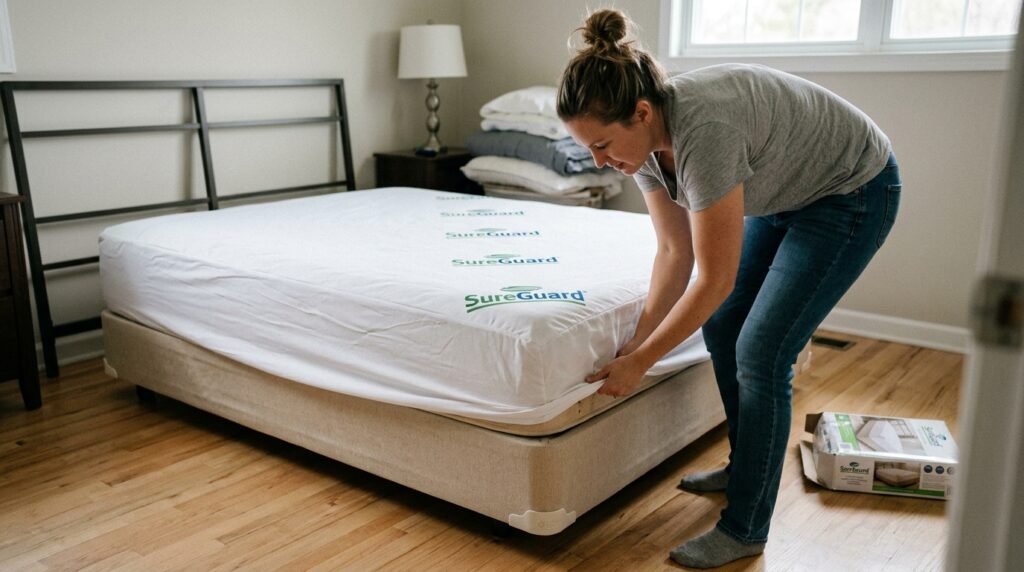
The most widely recommended encasement by pest control professionals. Uses a patented zipper guard that seals the zipper gap and prevents even first-instar nymphs (the smallest life stage) from escaping. Fabric is independently lab-tested for bite resistance, allergen protection, and liquid impermeability.
Key features:
• Patented Secureziptm technology — covers the zipper with a fabric guard after closing
• Lab-tested bite-resistant fabric — bed bugs cannot bite through from inside or outside
• Waterproof — protects against spills and allergens in addition to bed bugs
• Available in all standard sizes; separate box spring encasement available
How long to keep it on: Minimum 18 months — the longest documented survival time of bed bugs without feeding. Remove earlier and trapped bugs may still be alive.
Utopia Bedding Zippered Mattress Encasement — Best Budget Option
A more affordable option with a tight weave and zippered closure. Not independently certified to the same standard as SureGuard, but offers meaningful protection for light infestations or as a preventive measure during travel. The zipper does not have a guard — verify the zipper closes fully flush with no gap after installation.
Best for: Preventive use when traveling, protecting a second bedroom, or anyone who cannot afford a premium encasement but needs some protection
Limitation: Zipper gap may allow nymphs to pass through; not recommended as the primary treatment tool for a confirmed infestation
Protect-A-Bed AllerZip Smooth Mattress Encasement — Best for Comfort
Independently tested for bed bug containment with a BugLock zipper system and smooth, quiet fabric (unlike crinkly waterproof covers). An excellent choice for people who find standard encasements uncomfortable to sleep on.
Best for: Light sleepers or anyone sensitive to the feel and sound of standard waterproof encasements; couples who find crinkle noise disruptive
Don’t Forget the Box Spring
This is the most common mistake in bed bug treatment: encasing only the mattress while leaving the box spring unprotected. Box springs are prime bed bug habitat — the fabric covering has many seams and staple lines, the interior is hollow, and it’s directly under where you sleep.
Studies show box springs often harbor more bed bugs than the mattress itself. Encasing only the mattress forces surviving box spring bugs to travel across the floor to reach you — slowing but not stopping feeding.
SureGuard Box Spring Encasement — same lab-certified protection as the mattress version, designed for the deeper profile of box springs. Required for complete protection.
How to Install a Mattress Encasement Correctly
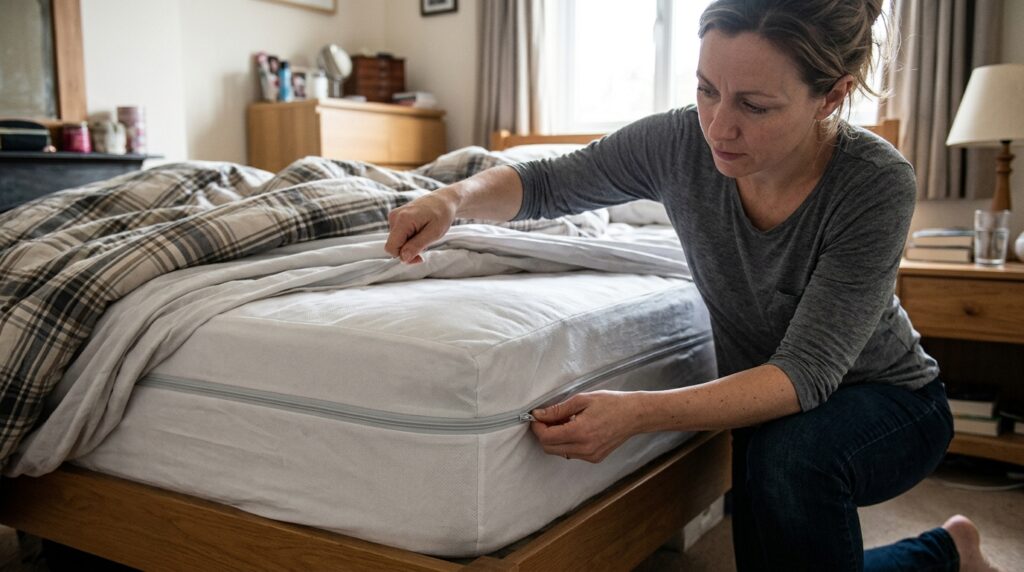
Installation errors can render even the best encasement ineffective:
• Do not inspect or treat the mattress after encasing — treat first, encase after
• Slide the encasement on like a pillowcase, working around the mattress evenly — don’t drag the mattress into it
• Close the zipper fully and engage any zipper guard or lock mechanism
• After installing, run your hand along all seams to check for any visible gaps or puckers
• Inspect the encasement monthly for tears, especially near the corners and zipper
• A single small tear or opening renders the encasement ineffective — replace immediately if damaged
Which Encasement for Your Situation
Active bed bug infestation, confirmed: SureGuard — only option with the zipper protection and lab certification needed for treatment
Preventive protection, no infestation: Utopia Bedding or Protect-A-Bed — cost-effective protection while traveling or for guest rooms
Sensitive sleeper / comfort priority: Protect-A-Bed AllerZip — quiet fabric, same protection level as SureGuard
Always encase: Both mattress AND box spring — encasing only one defeats the purpose
Frequently Asked Questions
How long do I need to keep the encasement on?
A minimum of 18 months. Bed bugs can survive up to 18 months without feeding under ideal conditions. Removing the encasement before this period allows surviving bugs to escape. Most pest control professionals recommend leaving encasements on indefinitely as ongoing protection — there’s no downside to keeping a quality encasement on a mattress long-term.
Can I still use my mattress with an encasement?
Yes. Quality encasements are designed for normal mattress use. The fabric is smooth, quiet, and comfortable to sleep on with a regular sheet on top. Encasements don’t affect mattress feel or warranty in most cases.
Do I need to throw away my mattress if I have bed bugs?
In most cases, no. A quality encasement traps any bugs inside and starves them over 18 months while protecting you from new bites. Mattress disposal is only necessary when the mattress has structural damage (torn fabric, broken seams) that prevents effective encasement. Disposing of an infested mattress without encasing it first also risks spreading bugs to other areas.
Are mattress encasements the same as mattress protectors?
No. Mattress protectors cover only the top surface and sides — they leave the bottom open and use a fitted-sheet style elastic band with no full enclosure. Mattress encasements enclose the entire mattress in a zipper-sealed cover with no openings. Only a full encasement provides bed bug protection.
The Bottom Line
If you have bed bugs, a SureGuard encasement on both the mattress and box spring is non-negotiable — it’s the only encasement with the zipper protection and lab certification needed to actually contain an infestation. If you’re buying preventively, any full-enclosure encasement with a tight zipper provides meaningful protection at a lower cost. Keep it on for at least 18 months, inspect monthly for damage, and replace immediately if torn.
Need the full treatment protocol? See our step-by-step guide on how to get rid of bed bugs for the complete method including heat treatment, chemical application, and monitoring.