
This post contains affiliate links. If you buy through our links, we may earn a commission at no extra cost to you.
Squirrels in the attic chew wiring, destroy insulation, and breed fast. Here’s how to remove them without poison and seal the house so they can’t come back.
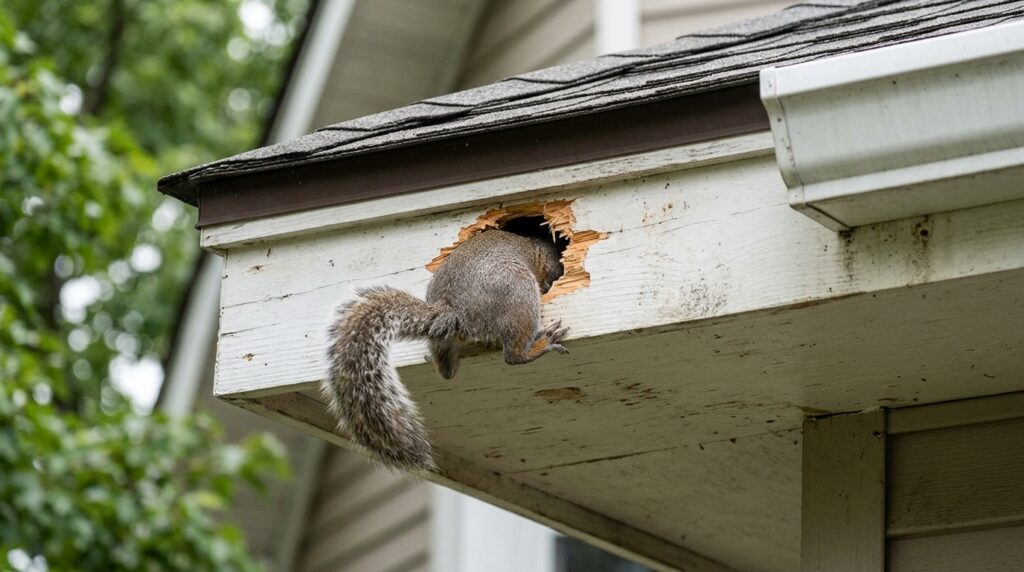
That thumping and scratching above the ceiling isn’t the house settling. Squirrels in the attic are one of the most common wildlife problems homeowners face — and one of the most damaging if left untreated. They chew electrical wiring (a fire hazard), destroy insulation, gnaw on structural wood, and create nesting sites that attract secondary pests.
The good news: squirrel removal follows a straightforward process. Unlike rodent infestations that breed inside the home year-round, squirrels have predictable entry patterns and respond well to exclusion — a method that removes them humanely without traps or poison and keeps them out permanently.
Quick answer: Install a one-way exclusion door over the main entry point, seal all secondary entry points with hardware cloth, and wait 3–5 days for squirrels to exit. Remove the exclusion door and seal the main entry permanently. This is the most effective and humane method for attic squirrel removal.
⭐ Essential Products:
Havahart One-Way Exclusion Door — lets squirrels exit but not re-enter. Install over the main entry hole; squirrels leave to forage and can’t get back in.
1/4-inch hardware cloth (galvanized steel) — use to seal all secondary entry points. Squirrels cannot chew through it. Available at any hardware store.
Step 1: Confirm You Have Squirrels
Squirrels are daytime animals — if you’re hearing attic noise primarily during the day (morning and late afternoon), squirrels are the likely culprit. Nighttime activity points to rats, mice, or raccoons instead.
Squirrel signs:
• Scurrying, thumping, or rolling sounds during daytime — squirrels are active at dawn and dusk
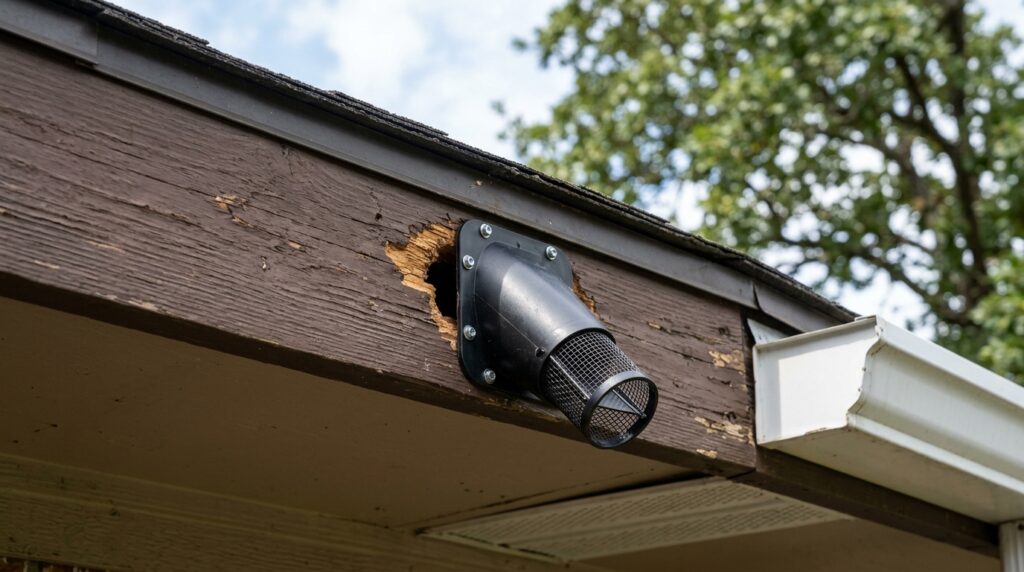
• Chewed entry holes with smooth, gnawed edges — typically 2–3 inches in diameter
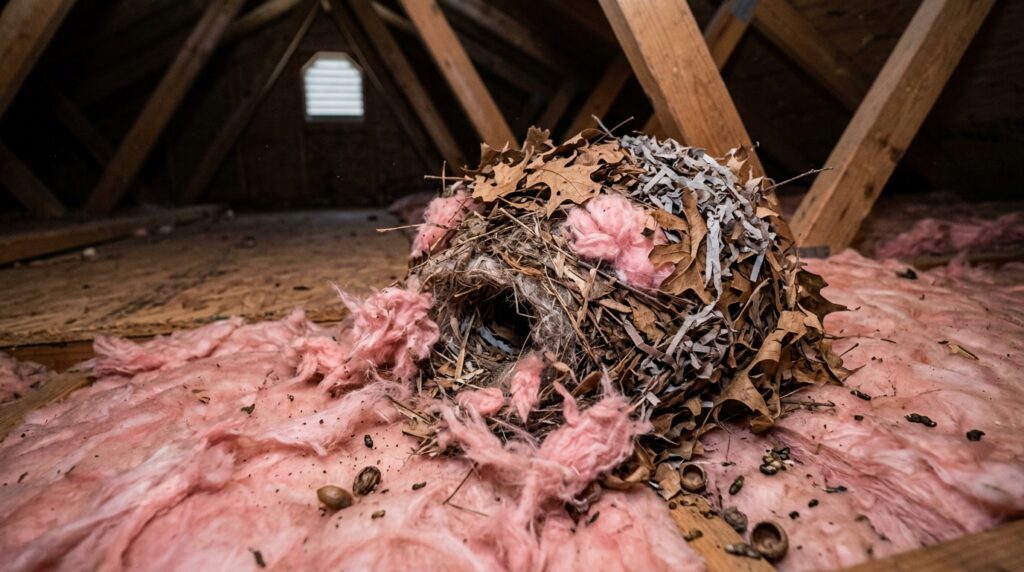
• Nesting material: leaves, insulation, and shredded material in the attic
• Droppings: similar to rat droppings but slightly larger and more barrel-shaped
• Chewed wiring insulation or gnaw marks on wood beams
Important: Timing Matters
Squirrels have two breeding seasons: January–February and June–July. Baby squirrels (kits) are born helpless and stay in the nest for 8–10 weeks before they can move on their own.
Critical rule: Do NOT seal entry points or install exclusion devices during breeding season if babies are present. Sealing the entry traps the mother inside (or outside away from her young), resulting in dead squirrels in the attic — a severe odor problem — or orphaned kits that die in the walls.
Best times for exclusion: March–May (after winter litter is mobile) or August–November (after summer litter is mobile, before winter breeding). When in doubt, watch the entry point — if you see only adults entering and exiting, it’s safe to proceed.
Step 2: Find All Entry Points
Squirrels typically use one primary entry point and may have one or two secondary access points. Finding all of them before starting exclusion is critical — if you seal everything except the main hole and then close that, you’re done. If you miss a secondary hole, squirrels simply start using that instead.
Common entry points:
• Roofline gaps where the fascia board meets the soffit
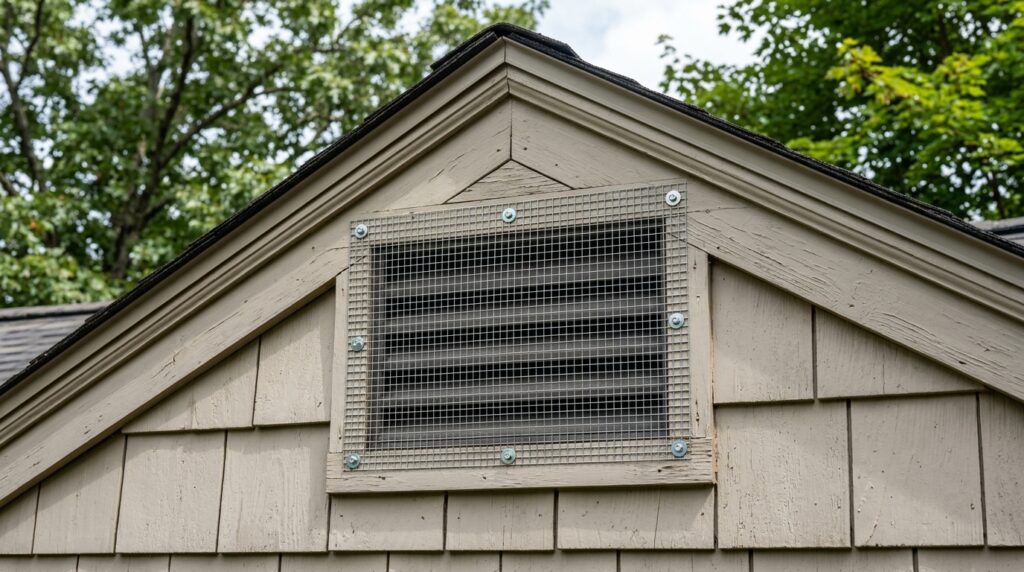
• Gable vents — squirrels chew through or push out damaged vent screens
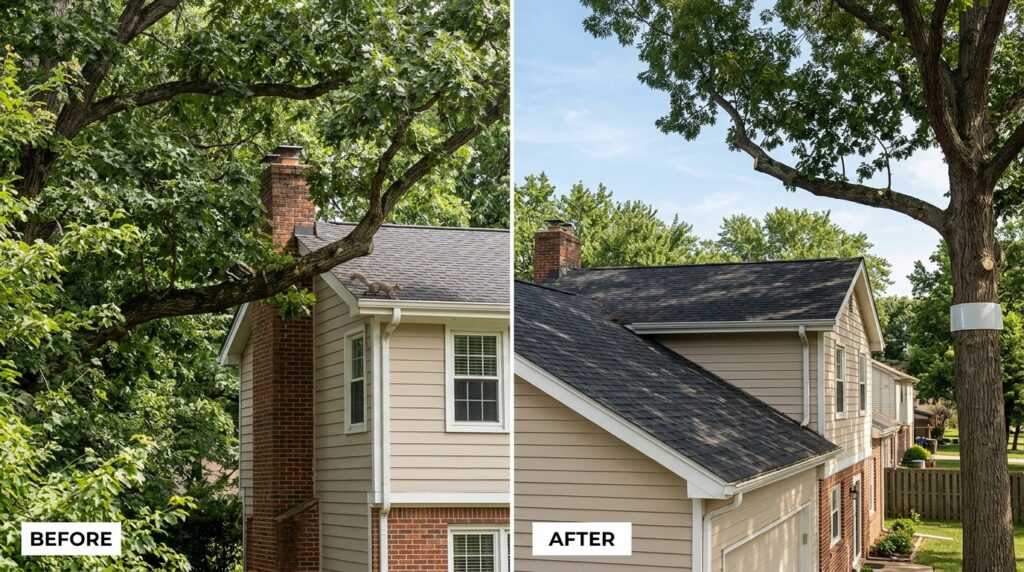
• Where tree branches overhang the roof — squirrels jump from branches to the roof edge
• Plumbing vent pipes on the roof — gaps around the pipe boot flashing
• Chimney caps that are damaged or missing
• Where roof meets a dormer or addition — often has gaps in the flashing
Step 3: Install One-Way Exclusion Device
A one-way exclusion door allows squirrels to exit the attic but not re-enter. This is the most effective and humane removal method — no trapping, no poison, no handling of animals.
How to install the exclusion door:
1. Identify the primary entry/exit hole — this is where you’ll see the most traffic and the most gnaw marks around the edges
2. Seal all secondary entry points with 1/4-inch hardware cloth before installing the exclusion door
3. Attach the exclusion door over the main entry hole — the one-way funnel or flap allows squirrels to push out but not back in
4. Leave the exclusion door in place for 3–5 days — enough time for all squirrels to exit during their normal foraging activity
5. After 3–5 days with no signs of activity, remove the exclusion door and permanently seal the main entry hole with hardware cloth and caulk
Step 4: Seal All Entry Points Permanently
Squirrels can chew through wood, plastic, and thin metal. Use materials they cannot gnaw through:
1/4-inch galvanized hardware cloth: Cut to size and secure with screws or staples plus a bead of exterior caulk around the edges. Use for gable vents, soffit gaps, and any opening larger than 1 inch.
Steel wool + caulk: For smaller gaps around pipes and wires. Pack steel wool tightly, then cover with exterior caulk.
Metal flashing: For gaps at roof edges, chimney bases, and where the roof meets a dormer. Metal flashing cannot be chewed through.
Tree trimming: Cut back any branches that overhang or touch the roof. Squirrels jump up to 10 feet horizontally — keep branches at least 10 feet from the roofline.
What NOT to Do
Don’t use poison: Rodenticide kills squirrels, but they die wherever they are — often inside the wall or attic. A dead squirrel in an inaccessible area produces a severe odor for 2–4 weeks and attracts blowflies and secondary pests.
Don’t seal without excluding first: Sealing entry points while squirrels are still inside traps them. Trapped squirrels will chew new holes — potentially through finished ceilings or walls — and eventually die inside if they can’t escape.
Don’t use repellents alone: Mothballs, predator urine, and ultrasonic devices provide at best temporary deterrence. Squirrels habituate quickly to non-exclusion deterrents and return within days.
Frequently Asked Questions
How long does it take to get rid of attic squirrels?
With exclusion: 3–7 days from installation to full removal. Sealing secondary holes takes a few hours; the exclusion door does the work over 3–5 days. After the squirrels are out, final sealing takes another few hours. Total process: about 1 week from start to finish, with most of that being passive wait time.
Will squirrels leave the attic on their own?
No. Squirrels that have established a nest in an attic consider it a permanent territory. They leave to forage but return to the same nest. Without exclusion, they will stay indefinitely, raise multiple litters, and the population will grow.
How did squirrels get in my attic?
Usually through a gap at the roofline — a damaged soffit, a broken gable vent screen, or a gap where the fascia board has pulled away. They’re also excellent jumpers and climbers — overhanging tree branches give them direct roof access. Once a squirrel finds a gap, it gnaws to widen it if necessary.
Do I need a permit to remove squirrels?
Exclusion (the method described here) typically requires no permit — you’re not trapping or relocating wildlife, just preventing entry. Live trapping and relocation may require a state wildlife permit in some states. Check your local regulations before using live traps. Exclusion is the legally simplest approach and also the most effective.
The Bottom Line
Squirrels in the attic are a structural problem, not just a nuisance — chewed wiring is a genuine fire risk. The exclusion method (one-way door + seal all secondary holes + permanent seal after removal) is the most effective, humane, and permanent solution. Time it right, avoid breeding season, and the process takes about a week.
Dealing with other wildlife? See our guide on how to keep raccoons away from your property for perimeter deterrence strategies.