
This post contains affiliate links. If you buy through our links, we may earn a commission at no extra cost to you.
One mosquito whining in your bedroom at 2 a.m. can ruin a night’s sleep. But where did it come from? And how do you get rid of it — and the others — for good? Here’s the full indoor mosquito strategy.
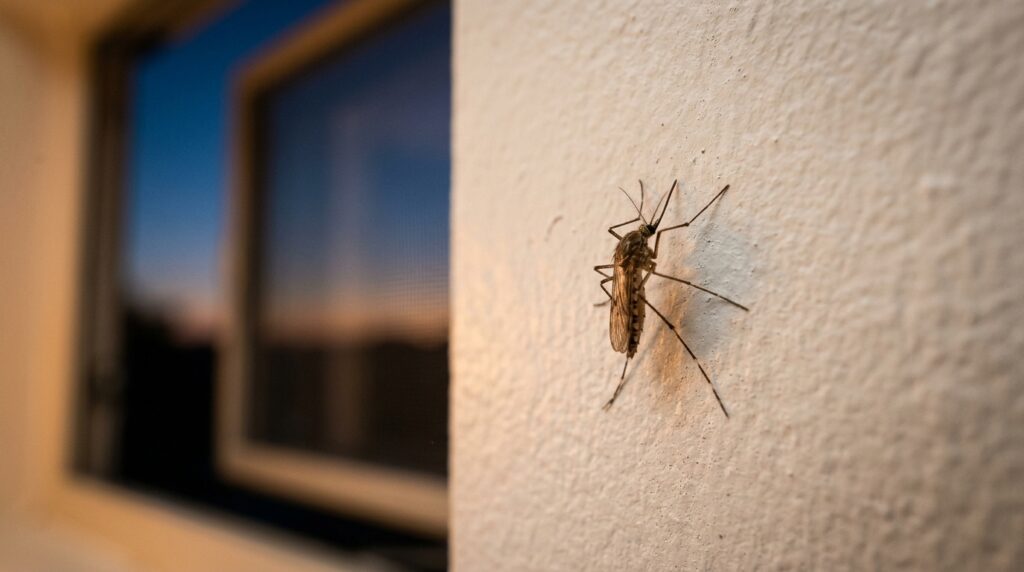
A mosquito inside your house is a different kind of problem from mosquitoes in the yard. Outdoors, you’re dealing with population management — reduce breeding sites, treat the yard, create repellent zones. Indoors, the goal is simpler but often more urgent: find where they’re getting in, kill the ones already inside, and seal the entry so it doesn’t keep happening.
The good news is that most indoor mosquito problems come from a small number of predictable entry points. Once you identify and close them, indoor infestations typically resolve within a day or two — because mosquitoes don’t breed inside homes under normal conditions (they need standing water, and there usually isn’t any in a typical indoor space).
Quick answer:
To get rid of mosquitoes inside the house: (1) Find and fix the entry points — screens, gaps around doors/windows, plumbing penetrations. (2) Kill the mosquitoes already inside using a pyrethrin-based indoor spray or an electric mosquito trap. (3) If you have any standing water indoors (plant saucers, pet bowls, basement puddles), eliminate it — mosquitoes can complete their lifecycle indoors if water is present. The problem is usually solved within 24–48 hours once entry is closed.
Why Are Mosquitoes Getting Inside?
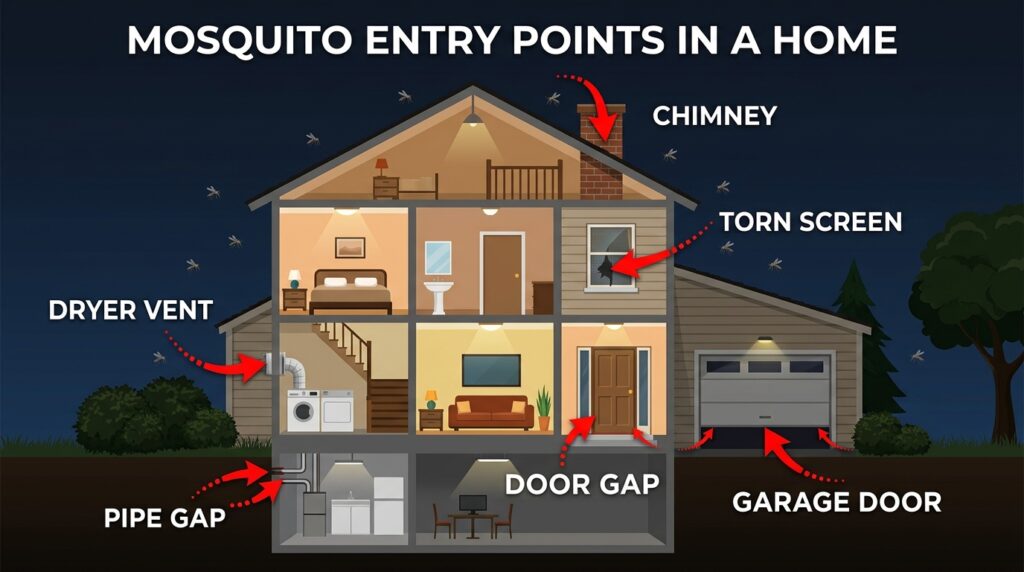
Before treating the interior, you need to understand how mosquitoes get in. They’re not sneaking under doors on their own — they need an opening. The most common entry points:
Damaged or improperly fitted window and door screens
This is the number-one cause. A single small tear in a window screen is enough. Mosquitoes can squeeze through openings as small as 1.5mm — smaller than a pencil tip. Common failure points: corners where the screen meets the frame (the rubber spline that holds the screen loosens over time), tears from pets or normal wear, and gaps where the screen doesn’t sit flush with the frame.
Check every screen in the house. Hold it up to light and look for pinholes. Check whether the screen pulls tight against the frame on all four sides. A screen that looks intact can have loosened corners that leave a gap mosquitoes pass through easily.
Open doors — even briefly
The most common complaint is: “But I barely had the door open for a second.” That’s enough. Mosquitoes near an entrance can fly in during a 2-3 second door opening. If mosquitoes are active outside your front or back door and you’re opening it frequently (carrying groceries, letting pets out), they will eventually get inside. This is especially true at dusk and dawn when mosquito activity peaks.
Unscreened vents and air gaps
Dryer vents, attic vents, crawl space vents, weep holes in brick construction, gaps around plumbing and electrical penetrations where pipes or wires enter the house — all are potential mosquito entry points. These are less common than screen failures but worth checking if you can’t find an obvious entry point.
Attached garages
If you have an attached garage with a door that opens to the outside, and a door from the garage into the house, mosquitoes can enter the garage easily and then enter the house through the interior door. Many people screen their living areas but leave garage access unscreened.
Fireplaces and chimneys
An uncapped or open fireplace damper is a straight-shot entry point. Less common than screens, but worth checking if you use the fireplace seasonally and suddenly notice mosquitoes.
How to Kill Mosquitoes Already Inside
Once you’ve identified the entry points, you need to deal with the mosquitoes that are already inside. Here are the most effective methods, ordered by how quickly they work:
1. Indoor pyrethrin/pyrethroid spray (fastest)
A pyrethrin-based aerosol spray is the quickest way to kill mosquitoes already inside the house. Products like Raid Flying Insect Killer or Bengal Gold Flying Insect Killer contain pyrethrins or synthetic pyrethroids that kill mosquitoes on contact and leave a residual effect on surfaces for a few hours after application.
To use effectively: close all windows and doors in the room. Spray toward the ceiling and upper corners (mosquitoes rest on upper walls and ceilings when not active). Leave the room for 15–30 minutes. Ventilate before re-entering. This approach kills the mosquitoes you can’t see as well as visible ones.
Amazon: Raid Flying Insect Killer or Bengal Gold Flying Insect Killer
2. Electric mosquito traps (best for overnight or unattended rooms)
Indoor UV mosquito traps use UV light to attract mosquitoes and either electrocute them (zapper-style) or trap them on a sticky board. These are effective for rooms where you want passive, ongoing capture without applying spray — bedrooms, nurseries, home offices.
The UV + sticky board models (like the Katchy Indoor Insect Trap) tend to be more effective than zapper-only models for mosquitoes, which are more attracted to UV + CO2 than UV alone. For best results: place the trap in a dark corner of the room (mosquitoes move toward light sources and will be intercepted), turn off other lights, leave it running overnight.
Amazon Katchy: Indoor UV mosquito traps
3. Manual removal — the old-fashioned way
If there’s a single mosquito bothering you at night, the most effective approach is to turn on the light, wait for it to land, and kill it manually. Mosquitoes are most active in darkness and will often rest on walls once the lights come on. A quick clap or swat with a flyswatter or tennis-racket-style electric swatter ends the problem immediately.
The electric tennis racket zappers (like the ZAP IT! Bug Zapper) are particularly satisfying and effective for this — they don’t require precision and can be swept through the air to kill mosquitoes that are flying rather than resting.
Amazon: ZAP IT! Bug Zapper
4. Mosquito coils or plug-in vaporizers (slow burn, ambient control)
Mosquito coils (burn slowly, release allethrin smoke) and plug-in vaporizers (heat a liquid or mat to release repellent) are effective at repelling mosquitoes in a room but work slowly — they need 20–30 minutes to create an effective zone. They’re better as prevention than as quick-kill solutions.
Plug-in vaporizers like the Raid Mosquito Vaporizer are better for bedrooms (no smoke, no flame) and can be left on throughout the night. Coils are better for covered porches or garages. Note: these repel, they don’t kill — mosquitoes leave the zone but don’t die.

Check for Indoor Breeding Sites
Under normal conditions, mosquitoes can’t complete their lifecycle indoors because they need standing water to lay eggs and for larvae to develop. But if you have standing water anywhere inside the house, you may have a breeding problem — not just individual mosquitoes that got in from outside.
Indoor standing water sources to check:
- Plant saucers and vases — particularly common. Water that sits in a plant saucer for more than 7–10 days can harbor mosquito larvae. Empty and refill plant saucers weekly, or add a drop of dish soap to the water to break surface tension (mosquito larvae drown).
- Pet water bowls — refreshed daily, these are usually fine. But outdoor pet water bowls or large self-refilling water systems that don’t circulate can become breeding sites.
- Basement puddles or floor drains — any low area with standing water. French drains with water sitting in them. Sump pits that aren’t sealed.
- Bathroom drains — rarely a breeding site (too much disturbance, too dark), but floor drains in rarely-used bathrooms or utility rooms can accumulate water.
- Leaking pipes under sinks — even a slow leak creates a small puddle that can support larvae development.
If you find larvae (they look like tiny wriggling worms in the water, about 3–6mm long), eliminate the water source immediately. Do not pour bleach down drains looking for larvae — it won’t help and will harm your pipes’ beneficial bacteria.
How to Seal Entry Points and Prevent Recurrence
Repair or replace damaged window screens
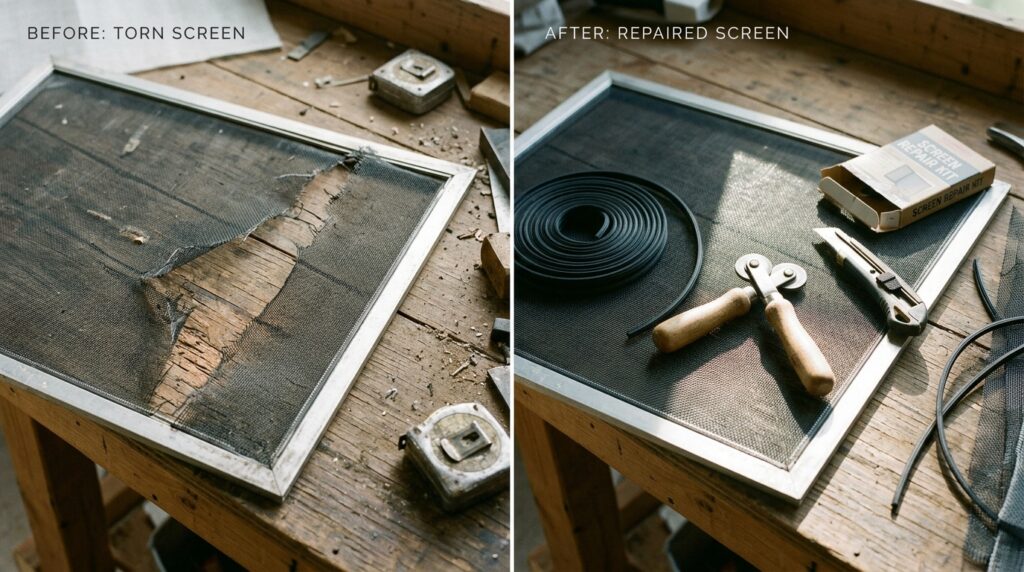
Screen repair kits are inexpensive and work for small holes and tears. For larger damage or screens that no longer fit the frame properly, full screen replacement is typically $5–$20 per window in materials (aluminum screen mesh + rubber spline + a rolling tool). If you’re handy with basic tools, this is a simple DIY project.
Seal gaps around doors
Door sweeps on the bottom of exterior doors close the gap between the door and threshold. Self-adhesive door seals on the sides and top (door weatherstripping) close lateral gaps. If you can see light under or around your exterior doors, mosquitoes can get in.
Seal pipe and cable penetrations
Where plumbing or electrical cables enter the house through the wall, there’s often a visible gap around the pipe or conduit. DAP Caulk or expanding spray foam (for larger gaps) seals these entry points. This also improves energy efficiency, so it’s a worthwhile fix regardless of pest concerns.
DAP Caulk: DAP Alex Plus Acrylic Latex Caulk, White, 10.1 Oz, 12 Pack (7079818152)
Add magnetic screen doors for high-traffic entries
If you have a door that gets opened frequently (back patio door, garage side door), a magnetic screen door lets air through while keeping flying insects out. The magnetic closure seals automatically after you walk through — no leaving it ajar.
Mosquitoes in the Bedroom Specifically
The bedroom mosquito problem is its own special category because it disrupts sleep even when only one mosquito is present. A single mosquito in your room can bite multiple times per night and the buzzing sound alone is enough to prevent sleep.
Bedroom-specific strategies:
- Mosquito bed nets: If you live in a high-mosquito area or are traveling, a bed net (hanging above the bed to create an enclosed sleeping zone) is 100% effective at preventing bites during sleep regardless of what’s happening in the room. DEET-treated or permethrin-treated nets add a repellent/kill layer.
- Check the headboard and ceiling: Mosquitoes rest in dark, cool areas during the day. Your bedroom headboard (especially if upholstered), behind picture frames, inside closets, and along the ceiling-wall junction are their preferred hiding spots. Look there first when hunting a mosquito you can’t find.
- White sheet trick: One commonly cited trick — hold a white sheet up against a dark wall in your bedroom, turn the lights on suddenly, and wait. Mosquitoes resting on the ceiling or dark walls will often be visible against the white sheet as they move. Not scientifically validated but widely reported as useful.
- Run a fan: Mosquitoes are weak flyers. A ceiling fan or box fan running in the bedroom disrupts their flight and makes it significantly harder for them to home in on you as you sleep. A 2003 study found that fans reduced mosquito landing rates by over 45%.
When Indoor Mosquitoes Are a Bigger Problem
If you’ve sealed all visible entry points and still have a persistent indoor mosquito problem after 48 hours, consider these less-common causes:
- Apartment building: In multi-unit buildings, mosquitoes can travel through shared hallways, under unit doors, through inter-unit gaps, and via shared HVAC systems. Sealing your unit’s exterior is harder when you share walls and corridors with neighbors.
- Basement or crawl space: Basements and crawl spaces often have separate entry vulnerabilities — old windows, foundation cracks, ground-level vents — and can accumulate standing water. If mosquitoes are persistent and you have a basement, check it thoroughly.
- Active breeding indoors: If you’re seeing many mosquitoes and have eliminated exterior sources, look harder for standing water indoors. Even a small amount — a quarter inch in a saucer — is enough for a full breeding cycle in warm temperatures.
If the problem is apartment-wide or building-wide, it typically requires coordination with building management or your landlord, similar to a cockroach infestation — one unit treating alone doesn’t solve a building-level problem.
Safety Note
Pyrethrin and pyrethroid sprays (Raid Flying Insect Killer, Bengal Gold) are low-toxicity for humans and dogs at consumer concentrations, but highly toxic to cats. If you have cats, use pyrethrin sprays only in rooms your cat can’t access, and ventilate thoroughly before allowing cat re-entry. Plug-in vaporizers and mosquito coils with allethrin or similar pyrethroids carry the same warning for cats.
UV electric traps and manual methods (swatters, fans) are safe around all pets.
Frequently Asked Questions
Where do mosquitoes hide inside the house?
Mosquitoes rest in dark, cool, humid locations when not actively feeding. Inside the house, they prefer: upper corners of rooms, inside closets and under beds, behind furniture pushed against walls, bathroom and laundry areas with humidity, and around the headboard or curtain folds in bedrooms. They are most active at dawn and dusk; during the day they’re typically resting in a dark hiding spot.
Will mosquitoes breed inside my house?
Under normal conditions, no. Mosquitoes need standing water to lay eggs and develop larvae — and most homes don’t have accessible standing water indoors. The exceptions are plant saucers, vases with water, pet bowls, basement puddles, and floor drains. If you have a persistent indoor mosquito problem (many mosquitoes appearing daily despite sealed entry points), check for these water sources.
How long can a mosquito live inside the house?
A female mosquito can live 2–4 weeks indoors, longer than outdoors (where predation, weather, and other factors reduce lifespan). Indoor conditions — stable temperature, no wind, shelter — are actually favorable for mosquito survival. A single mosquito that gets inside can bite repeatedly over several days before dying. This is why getting rid of it quickly matters.
Does a fan actually keep mosquitoes away?
Yes, with caveats. A fan doesn’t repel mosquitoes — it disrupts their flight by creating air turbulence. Mosquitoes locate hosts by detecting CO2 and other cues; a fan disperses these cues and makes it harder to home in on you. A 2003 study found fans reduced mosquito landings by over 45% — a meaningful but not complete effect. A fan is most useful as a sleep aid in a room with one or a few mosquitoes, not as a complete mosquito control strategy.
I can hear a mosquito but can’t find it. What should I do?
Turn all room lights off except one lamp near the ceiling. Wait 5–10 minutes. Mosquitoes will often move toward the light and become visible on the wall or ceiling nearby. Alternatively, turn on a bright light, wait for the mosquito to land, then sweep the walls slowly with a flashlight — the shadow from a mosquito on a lit wall will give away its location even if you can’t see the insect directly. An electric swatter swept near the light source can intercept it when it’s active.
Solving the Indoor Mosquito Problem
Most indoor mosquito problems resolve within 24–48 hours once you close the entry points and deal with the mosquitoes already inside. The entry point is almost always a damaged screen, a door left open, or a gap around a penetration — all fixable with basic hardware store materials for under $30.
If you’re also dealing with mosquitoes outside the house, our full yard guide covers population reduction at the source. And for repellents to use on your skin while you’re dealing with the problem, our repellent ranking breaks down what works and what doesn’t.