
This post contains affiliate links. If you buy through our links, we may earn a commission at no extra cost to you.
You can spray all the repellent in the world, but if mosquitoes are breeding 30 feet from your back door, you’ll never win. Here’s how to find every breeding site on your property and eliminate it.
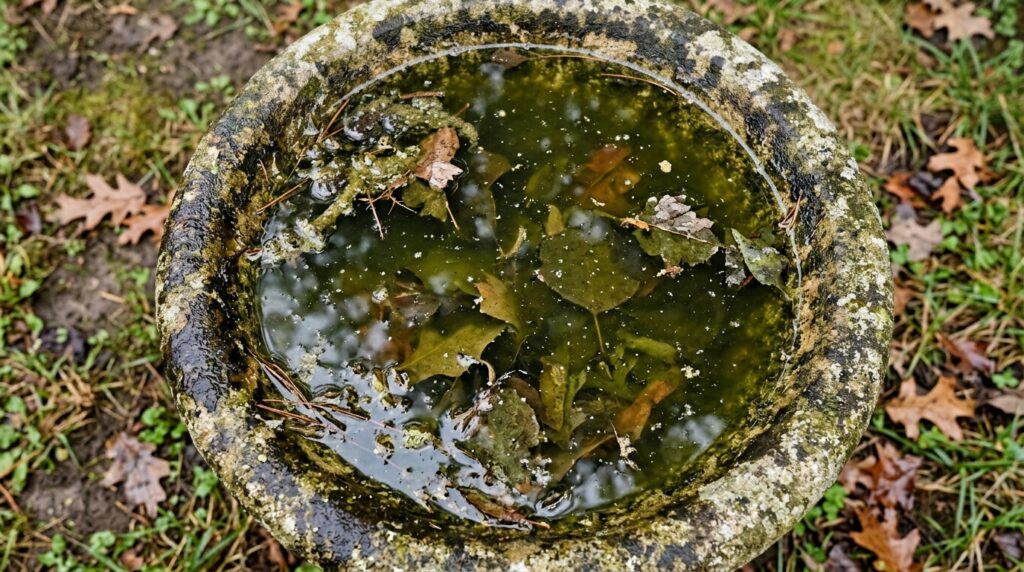
Every mosquito that bites you started as a larva in a small pool of standing water. This is the biology that makes mosquito control possible: you don’t need to kill every adult mosquito flying around your yard — you need to eliminate the water where the next generation is developing.
The critical fact most people don’t know: mosquitoes typically don’t fly more than 300 feet from where they bred. Which means the mosquitoes biting you in your backyard almost certainly hatched within a half-block radius of where you’re sitting. In most cases, they hatched on your own property or your immediate neighbor’s.
Quick answer:
Walk your property after any rain and look for water that has been sitting for 7 or more days. Common sites: clogged gutters, flower pot saucers, tarps with pockets, old tires, birdbaths, kids’ toys, low spots in the yard, and forgotten containers. Empty and drain anything you can. For water you can’t drain (ponds, rain barrels, ditches), treat with BTi larvicide (Mosquito Dunks) — it kills larvae without harming wildlife.
The Biology You Need to Understand First
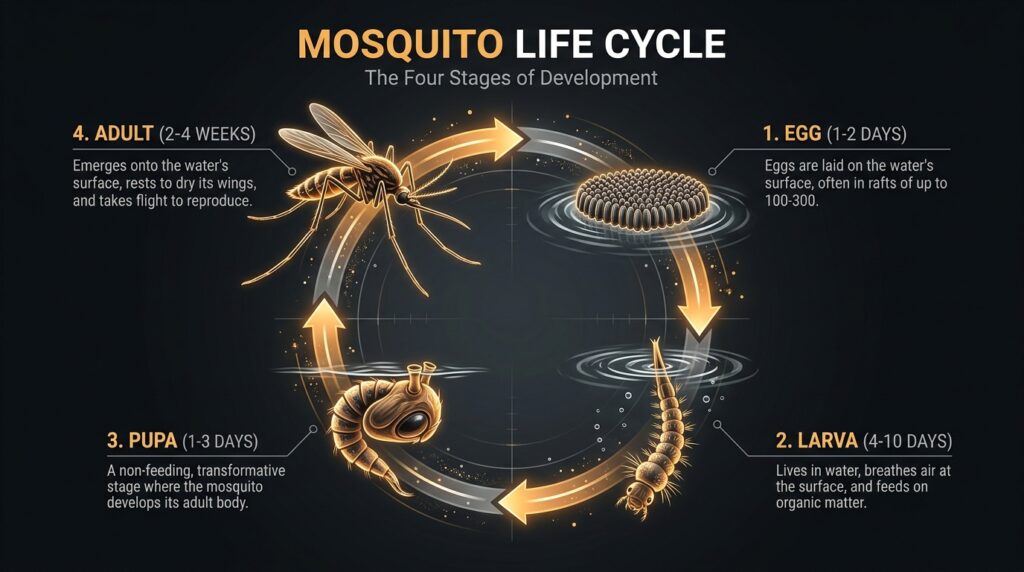
A mosquito’s lifecycle has four stages: egg → larva → pupa → adult. The first three stages all happen in water. The entire aquatic lifecycle takes 7–14 days in warm weather (faster at higher temperatures), meaning a container that fills with water after a rain can produce adult mosquitoes within about a week.
What mosquitoes need to breed:
- Standing water — even a bottle cap’s worth is technically enough for a few eggs, though larger volumes produce more mosquitoes
- Stagnant (not flowing) water — mosquito larvae need calm surface water to breathe; flowing water interrupts them
- Warmth — mosquito development essentially stops below 50°F; it accelerates in summer heat
- 7–14 days undisturbed — this is the critical timeline. Anything that disrupts the water within 7 days prevents adult emergence
The practical implication: any container that holds water for a week or more after rain is a potential breeding site. The search for breeding sites is essentially a search for “forgotten water” on your property.
How to Do a Proper Property Inspection
Most people glance around their yard and think they don’t have breeding sites. Then a professional pest inspector finds 8. The key is to look systematically and think like water — where does it collect and sit undisturbed?
When to inspect:
3–5 days after rain is the best time. Breeding sites that dry out quickly won’t be visible in dry conditions, and some won’t be obvious until water has been sitting long enough to show signs of larval activity (the water may appear slightly cloudy or have visible wriggling motion near the surface).
What you’re looking for:
- Any container with water that has been there for 7+ days
- Water with a slightly scummy or oily surface film (a sign of microbial activity consistent with larval habitat)
- Tiny wriggling “worms” near the surface — these are larvae, breathing at the water surface. They look like small, dark, comma-shaped creatures about 3–6mm long that wiggle rapidly when disturbed.
Walk the full perimeter of your property, not just areas you use regularly. Mosquito breeding sites are often in corners, along fence lines, under decks, and in the back of the yard where you don’t go often.
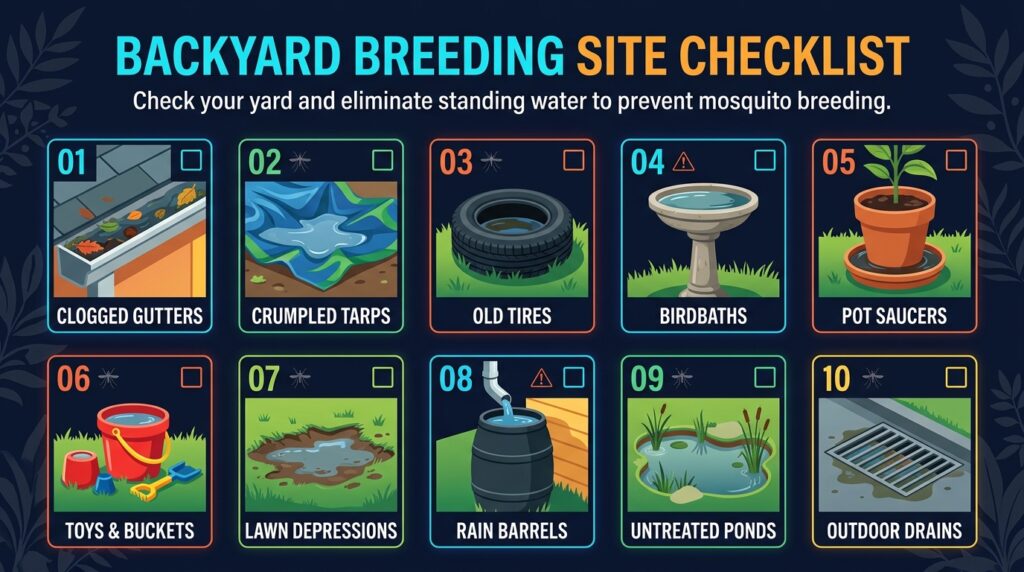
Breeding Site Checklist: Every Location to Check
Gutters and downspouts
Clogged gutters are the number-one mosquito breeding site in suburban and residential properties — and the most underestimated. A gutter clogged with leaf debris holds water for weeks after rain. A single 20-foot gutter section can hold gallons of standing water invisible from the ground.
Check: Get on a ladder and look inside the gutter. If there’s decomposing leaf litter and water, you have a breeding site. The fix: clean gutters at least twice a year (spring and fall). Consider gutter guards to prevent leaf buildup. Also check that downspout extensions direct water away from the house and don’t pool at the base.
Tarps, covers, and pool covers
Any tarp or cover develops pockets and depressions where rainwater collects. This includes boat covers, grill covers, sandbox covers, patio furniture covers, and woodpile tarps. Even a small depression holds enough water for dozens of larvae.
Fix: After rain, go through and dump or sweep water off all covers. Better yet, store covers so they drape off to the side rather than pooling in the middle. A properly stored tarp has no flat section that holds water.
Old tires
Used tires are one of the most productive mosquito breeding sites known. The concave interior holds water perfectly, is heated by the black rubber in sunlight, and is sheltered from predators. A single tire can produce 1,000+ mosquitoes over a season. This is why many municipalities have special tire disposal programs.
Fix: Eliminate all used tires from your property. If you have tires for planters or play equipment, drill drainage holes in the bottom or fill them completely with soil so no water-holding depression remains.
Birdbaths
Birdbaths are a classic breeding site because they’re designed to hold water and often neglected between refills. A birdbath that sits undisturbed for 7 days becomes a nursery. The good news: a birdbath that’s refreshed every 2–3 days (or agitated by a fountain or dripper) does not support mosquito development.
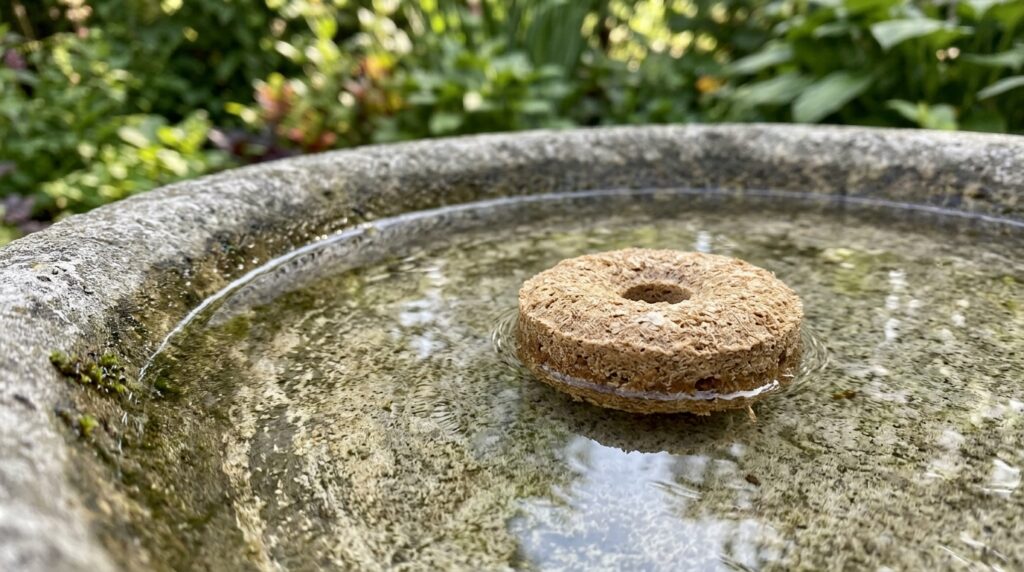
Fix: Change birdbath water every 2–3 days. Add a small solar-powered fountain or dripper — the moving water prevents larvae from breathing at the surface. Or treat with a Mosquito Dunk cut into a small piece (1/4 dunk per birdbath) — BTi kills larvae without harming birds.
Flower pots and saucers
The saucer under a flower pot is one of the most overlooked breeding sites. Water drains from the pot into the saucer and sits there. In warm weather, this is a complete breeding environment. Every outdoor pot with a saucer is a potential site.
Fix: Empty saucers after watering or rain. Alternatively, elevate pots slightly on pot feet so saucers drain themselves. For decorative pots without drainage holes, consider removing the saucer or filling the gap with gravel to prevent pooling.
Children’s toys and play equipment
Plastic toys left outside — buckets, trucks, the indentations in plastic slides, the inside of a wheel on a bike — all collect water. Kids’ wading pools are a major site if left filled but unused.
Fix: Store outdoor toys in a covered area or turn them over when not in use. Drain and store wading pools when not in use — even leaving them upside down for a day or two is enough. If you leave the pool filled, change the water every 5 days.
Low spots and depressions in the lawn
After heavy rain, low areas in the yard may hold water for days or even weeks. These are significant breeding sites when the ponding is persistent (7+ days).
Fix for temporary ponding: Usually not a problem if it drains within 5–6 days. For persistent low spots, lawn regrading (adding soil to level the area) is the permanent fix. Interim solution: aerate the low spot to improve drainage, or add a French drain.
Rain barrels and cisterns
Rain barrels are excellent for water conservation but are productive mosquito breeders if not properly designed. An open rain barrel can produce thousands of mosquitoes per season.
Fix: Ensure your rain barrel has a screened lid and screened overflow outlet. No openings larger than 1mm. Alternatively, treat with Mosquito Dunks — they’re safe for collected rainwater used to water plants.
Amazon Mosquito Dunks: 2-Pack Summit Mosquito Dunks
Clogged or slow drains
Outdoor drains (in driveways, patios, pool surrounds) can become breeding sites if they drain slowly and hold water. The drain itself — the little cup where water collects before going down — is often the site.
Fix: Clear debris from outdoor drains after each rain. A pour of boiling water followed by a scrub brush clears the immediate area. For persistent slow drainage, check for blockage in the drain pipe.
Decorative ponds and water features
Still ornamental ponds without fish or adequate aeration are productive breeding sites. A pond with goldfish or koi is actually protective — fish eat mosquito larvae voraciously. A pond with no fish and no circulation is a nursery.
Fix: Add fish (goldfish, koi, or native fish) to ornamental ponds. Add a pump and aerator to create water movement. For ponds where fish aren’t practical, use Mosquito Dunks — they’re safe for decorative ponds and won’t harm beneficial insects, birds, or other wildlife.
Gutters on neighbors’ properties and municipal ditches
If you’ve eliminated all breeding sites on your property and still have a persistent mosquito problem, the source may be off your property. Roadside ditches, storm drains, and neighbors’ unmaintained properties can produce mosquitoes that fly to your yard within their 300-foot range.
For neighborhood ditches: contact your municipality — many have mosquito abatement programs that treat ditches seasonally with BTi. For neighbor properties: this is a diplomatic conversation, or in some cases a code enforcement issue if the property is producing a documented nuisance.
What to Do With Water You Can’t Eliminate
Some water sources can’t be removed — ponds, rain barrels, birdbaths you want to keep, ditches you don’t control. For these, BTi (Bacillus thuringiensis israelensis) is the answer.
What is BTi?
BTi is a naturally occurring soil bacterium that produces proteins toxic to mosquito larvae (and fungus gnats and blackfly larvae) but harmless to everything else — humans, pets, fish, birds, bees, beneficial insects, aquatic life. It is used by municipal mosquito control programs worldwide, approved for organic agriculture, and safe for use in drinking water cisterns.
Products:
Mosquito Dunks (BTi donut — for larger water features)
Mosquito Dunks (B000BT0ZQS) are compressed BTi tablets that float on the water surface and slowly release the bacteria over 30 days. One dunk treats 100 square feet of surface water. Place in birdbaths, rain barrels, ornamental ponds, cisterns, and any standing water you can’t drain. The dunk dissolves slowly and maintains protection through the month.
Amazon: 2-Pack Summit Mosquito Dunks
Mosquito Bits (BTi granules — for smaller areas and quick kill)
Mosquito Bits (B000HHV3PK) are granular BTi that can be scattered over wet soil, mulch, gutters, and any standing water. They work faster than Dunks (larvae die within 24 hours of exposure) but don’t last as long. Ideal for spot treatment of gutters before cleaning, wet lawn areas, and drainage ditches.
Amazon: Mosquito Bits Quick Kill Multiple Insects 8 Oz
Important: BTi kills larvae only — it has no effect on adult mosquitoes. This is a breeding prevention tool, not an adult knockdown treatment. Use it consistently from spring through fall for season-long larval suppression.
The Breeding Site Elimination Schedule
Every week during mosquito season (May–September):
- Empty and refill birdbaths
- Check and empty pot saucers
- Dump any toy buckets or containers left outside
- Check tarps and covers for water pockets
After every rain:
- Walk the property and dump any water that collected
- Check the birdbath and pot saucers immediately
- Verify tarps and covers haven’t developed pockets
Monthly:
- Replace Mosquito Dunks in birdbaths, rain barrels, and ponds
- Check gutters for blockage
- Walk the fence line and back corners looking for forgotten containers
Spring (before mosquito season starts):
- Clean gutters thoroughly
- Inspect and repair any low spots that hold water
- Check that rain barrel screens are intact
- Place first Dunks in permanent water features
Safety Note
BTi products (Mosquito Dunks and Bits) are safe for all wildlife, pets, and people — they can even be used in drinking water cisterns. No special handling is required.
If you use a pyrethroid yard spray (permethrin, bifenthrin) to treat vegetation for adult mosquitoes in addition to eliminating breeding sites, these products are toxic to aquatic invertebrates and fish. Do not apply near water features, storm drains, or any waterway. Apply only to dry vegetation and allow to dry before water exposure.
Frequently Asked Questions
How much water do mosquitoes need to breed?
Surprisingly little — a teaspoon of standing water is technically enough for a small number of eggs. In practice, a bottle cap, the drip tray under a pot, or the depression in a plastic toy can produce mosquitoes. The volume doesn’t need to be large — what matters is that the water is still and undisturbed for 7+ days in warm weather.
How far do mosquitoes travel from their breeding site?
Most species common in residential areas (Culex, Aedes aegypti, Aedes albopictus) have a typical flight range of 100–300 feet from their breeding site. Some species fly farther — Culex tarsalis can travel up to a mile — but for the backyard mosquito problem most homeowners face, the source is almost always within 300 feet, which means within your property or your immediate neighbor’s.
Will Mosquito Dunks hurt fish, frogs, or other pond life?
No. BTi (the active ingredient in Mosquito Dunks) is specifically toxic to the larvae of mosquitoes, fungus gnats, and blackflies — and essentially harmless to everything else. Fish, frogs, tadpoles, aquatic insects (beneficial and otherwise), birds, and people are unaffected. This is why BTi is the standard recommendation for water features where you can’t or don’t want to drain the water.
What if the standing water is on my neighbor’s property?
This is a common and frustrating situation. A few approaches: (1) Talk to your neighbor — most people don’t realize they have breeding sites. Offering to help or loan them Mosquito Dunks often goes over well. (2) Contact your local mosquito abatement district or county health department — many have programs that will treat off-property breeding sites at no cost when a resident reports a problem. (3) Focus on your own yard and use personal repellents — you can reduce your exposure significantly even without controlling the source.
Does raking leaves eliminate mosquito breeding sites?
Partially. Leaf piles themselves aren’t breeding sites because they don’t hold water cleanly. But leaf debris in gutters absolutely is, and leaf accumulation in low spots can trap water and create a micro-habitat. Raking and removing leaves from gutters, drains, and low yard areas is worth doing as part of mosquito prevention — the main benefit is keeping gutters clear and draining properly.
The Fastest Way to Reduce Mosquitoes in Your Yard
The most effective thing you can do about mosquitoes is walk your property with a bucket, dumping every container of standing water you find. This takes 20 minutes and eliminates thousands of future mosquitoes that would have hatched from those sites over the next week. No product, no spray, and no trap is as effective per hour of effort as eliminating breeding sites directly.
For water you can’t eliminate, Mosquito Dunks provide a month of larval control without affecting anything else in your yard. Used consistently from spring through fall, this two-pronged approach — eliminate what you can, treat what you can’t — is how professional mosquito abatement programs operate.
If adult mosquitoes are already a problem while you’re working on breeding site elimination, see our guide on how to get rid of mosquitoes in your yard for population treatment strategies, and our repellent ranking for personal protection while you work.