
This post contains affiliate links. If you buy through our links, we may earn a commission at no extra cost to you.
Raccoons are smart, persistent, and adaptable — removing them doesn’t work unless you also remove what’s attracting them. Here’s a practical approach to keeping raccoons off your property for good.
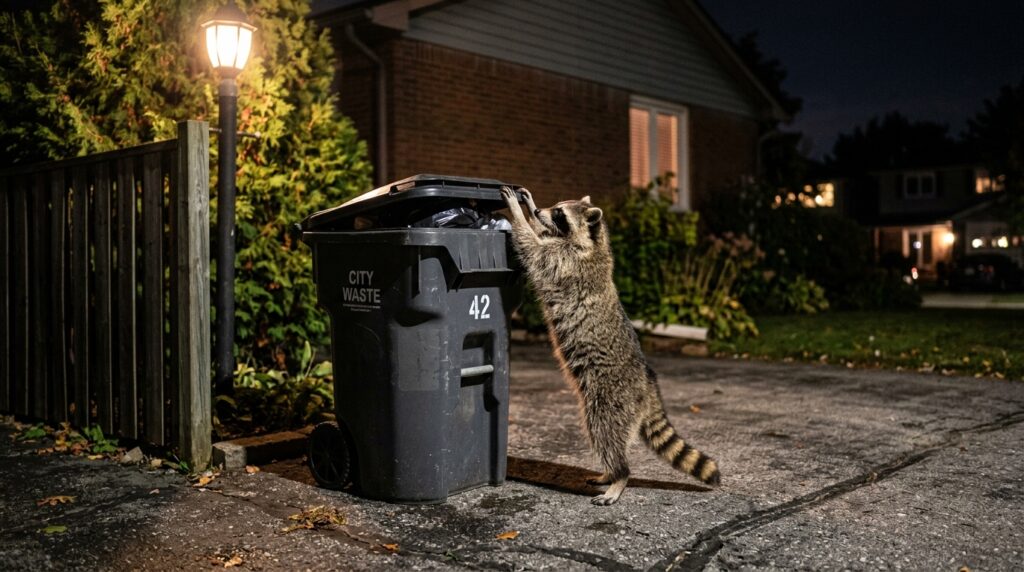
Raccoons are one of the most intelligent and adaptable urban wildlife species in North America. They remember food sources, solve problems, communicate with others in their group, and quickly learn to work around deterrents that aren’t backed by genuine consequences.
The central principle of effective raccoon control is this: deterrents work, but only when combined with removing the attractants that brought them to your property in the first place. A raccoon that has found reliable food at your home will tolerate a lot of deterrence to keep accessing it. Remove the food, and deterrents work much better.
Quick answer: Secure trash cans with bungee cords or a locking lid, remove outdoor pet food, and install motion-activated lights or a sprinkler. These three changes eliminate most raccoon problems without trapping, poison, or ongoing effort.
⭐ Our Top Picks:
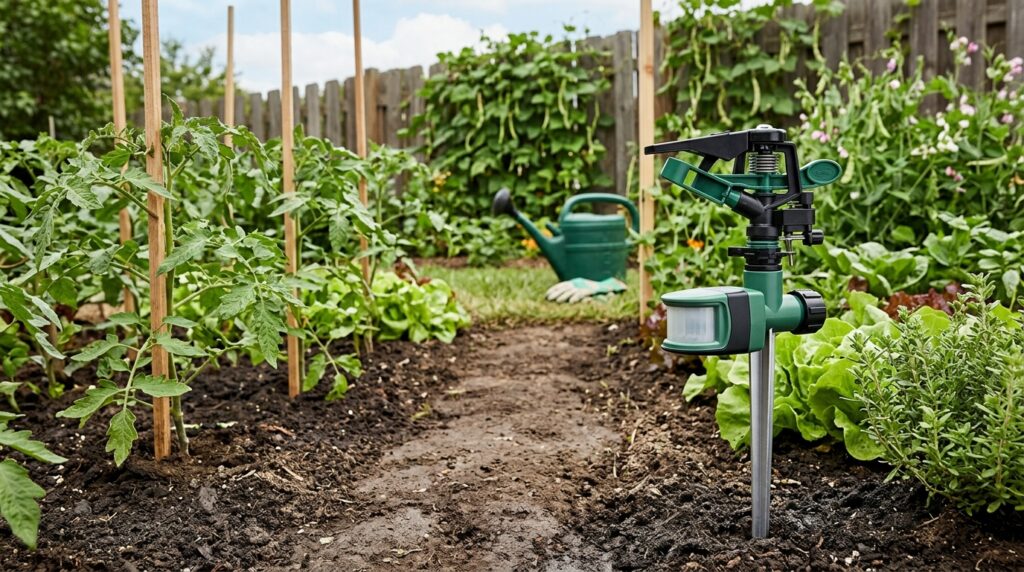
Orbit 62100 Yard Enforcer Motion-Activated Sprinkler — the most effective single deterrent for raccoons. Detects motion and delivers a startling burst of water. Raccoons learn to avoid the area within 1–2 nights.
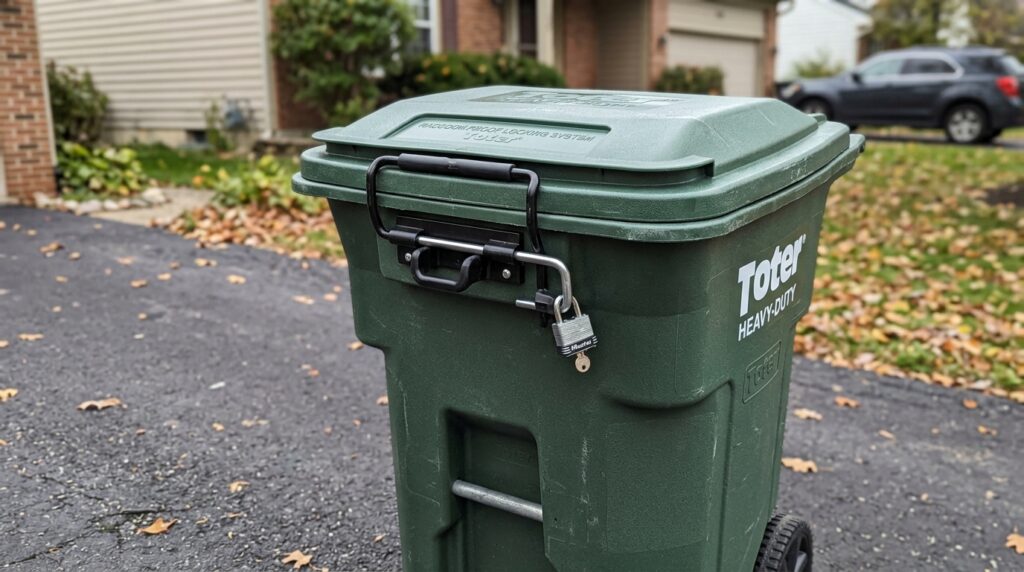
Trash cans with locking lids (Toter brand) — heavy-duty cans with a latch that raccoons cannot open. The simplest and most permanent fix for garbage raiders.
Step 1: Remove What’s Attracting Them
This is the highest-leverage action and the one most homeowners skip. Raccoons are opportunistic feeders — they go where food is easy to find. Making your property less rewarding than the neighbor’s is more effective than any repellent.
Trash and Garbage
The #1 attractant for urban raccoons. Standard trash can lids don’t stop them — raccoons can remove bungee cords they’ve encountered before and open most flip-top lids. Solutions:
• Switch to cans with raccoon-proof locking lids (Toter brand is the most commonly recommended)
• Store cans in a locked garage or shed until collection day
• Use a two-hook bungee cord system — one hook through the handle, one looped over the lid — which takes longer to remove than a single cord
Outdoor Pet Food
Pet food left outside overnight is one of the fastest ways to establish a raccoon habit at your property. Bring all bowls inside after pets eat. If you feed feral cats, use automatic feeders that close after dark and remove any uneaten food by nightfall.
Bird Feeders
Raccoons raid bird feeders readily, especially platform-style feeders near the ground. Hang feeders on a smooth metal pole at least 5 feet high with a baffle below the feeder. Alternatively, bring feeders inside at night during peak raccoon season (spring through fall).
Fallen Fruit and Gardens
Raccoons are attracted to fruit trees, vegetable gardens (especially sweet corn), and compost piles. Pick up fallen fruit promptly, harvest ripe vegetables regularly, and use a closed compost bin rather than an open pile.
Step 2: Apply Active Deterrents
Once attractants are reduced, deterrents become significantly more effective. The best deterrents deliver an unpredictable, startling consequence — raccoons are intelligent and will test deterrents that are predictable or that have no real consequence.
Motion-Activated Sprinkler — Most Effective
The Orbit Yard Enforcer detects animal movement via infrared sensor and delivers a sudden burst of water with a noise. The combination of surprise, water, and motion startles raccoons effectively. Unlike lights or sounds alone, water is genuinely unpleasant and raccoons don’t habituate quickly.
Best for: Garden areas, around trash cans, at yard entry points, near fish ponds
Set up: Position 2–3 feet from the area you’re protecting, aimed at the approach path. Move it every 2–3 days — raccoons eventually map the sensor range and approach from outside it if the sprinkler never moves.
Motion-Activated Lights
Bright motion-activated lights startle raccoons on first exposure, but they habituate within 1–2 weeks if no other consequence follows. Effective as a supplemental deterrent when combined with the sprinkler, less effective alone.
Ammonia-Soaked Rags
A temporary deterrent — ammonia mimics the smell of predator urine. Place ammonia-soaked rags in containers near trash cans or garden entry points. Replace every 3–4 days. Effective for 1–3 weeks before raccoons habituate, but useful as a short-term measure while establishing other deterrents.
Step 3: Physical Barriers for Gardens and Ponds
Electric Fencing for Gardens
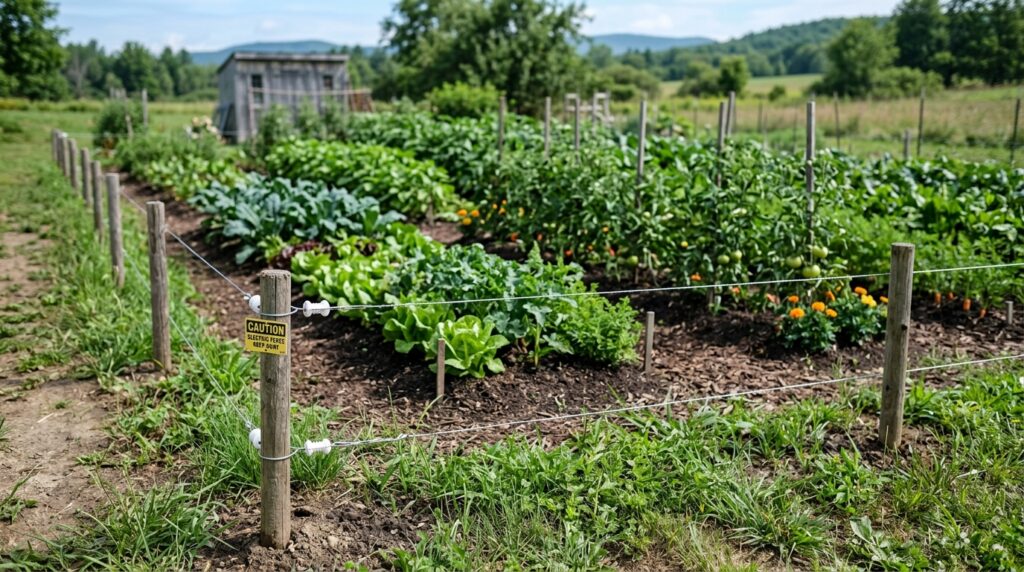
A low-voltage electric fence is the most reliable way to protect a vegetable garden from raccoons. A two-strand system — one wire 4 inches off the ground, one at 8 inches — delivers a mild shock that conditions raccoons to avoid the area. Garden-scale electric fencers are inexpensive ($30–$60) and require minimal maintenance.
Pond and Fish Protection
Raccoons are excellent fishers and will clean out a koi pond in a single night. Options: motion-activated sprinkler at the water’s edge (most effective), a mesh or wire cover over the pond surface, or a two-strand electric fence around the perimeter. Create steep pond sides (no shallow areas) — raccoons prefer to stand and reach rather than swim.
Tree and Downspout Guards
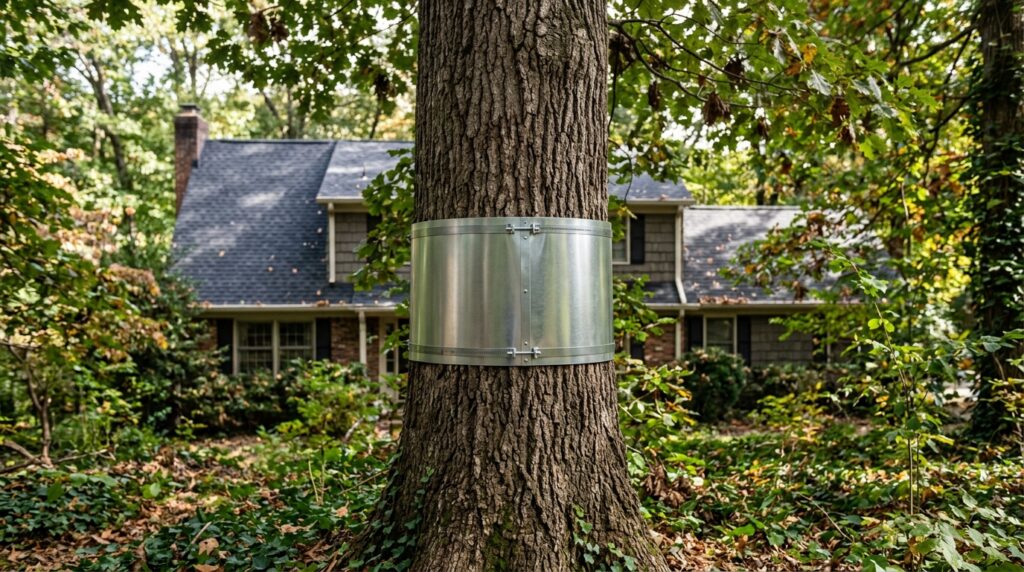
Raccoons are exceptional climbers — they can climb virtually any tree, drainpipe, or downspout to reach a roof. Install smooth metal collars (18-inch wide sheet metal wrapped around the trunk) at 4–5 feet height on any trees close to the house. These are the same baffles used to protect bird feeder poles.
If Raccoons Are Getting Into the Attic
Raccoons in the attic are a more serious problem than yard raccoons — they cause significant structural damage, create health hazards (raccoon roundworm in feces is dangerous), and may have young that complicate removal.
Important: If a female raccoon has established a den in your attic with young, do not seal the entry until the kits are mobile (8–10 weeks old). The mother raccoon will cause significant damage trying to re-enter if separated from her young.
For attic raccoons: This is generally a job for a licensed wildlife removal professional. Raccoons are significantly larger and more aggressive than squirrels and pose a greater risk during removal. Check for local wildlife removal services — many operate under state fish and wildlife permits.
What Doesn’t Work
Poison: There are no legal rodenticides approved for raccoons in the US. Attempting to poison raccoons is illegal in most states and creates risk for pets, children, and scavenging wildlife.
Live trapping and relocation: Studies show relocated raccoons return from distances up to 3 miles. Relocation also requires a state wildlife permit in most states, and relocated raccoons face high mortality in unfamiliar territory. It’s also a cycle — new raccoons fill the vacancy within weeks if attractants remain.
Predator urine sprays: Commercially sold coyote or fox urine degrades quickly and raccoons habituate to the smell within days when no actual predator appears. Marginally effective for one or two nights.
Ultrasonic repellers: No peer-reviewed evidence of effectiveness against raccoons.
Frequently Asked Questions
What smells do raccoons hate?
Raccoons dislike strong ammonia and capsaicin (hot pepper). Ammonia-soaked rags or cayenne pepper sprinkled around garden beds provide temporary deterrence. These are short-term measures — raccoons habituate quickly. They work best as part of a broader strategy that includes removing attractants and physical deterrents.
Are raccoons dangerous?
Raccoons are one of the primary rabies vector species in the US. Any raccoon active during daytime, moving erratically, or showing no fear of humans should be assumed to be ill — do not approach. Healthy raccoons are generally not aggressive unless cornered or protecting young. Their feces may contain Baylisascaris procyonis (raccoon roundworm), which is hazardous to humans — wear gloves when cleaning up raccoon latrines.
Will raccoons hurt my pets?
Raccoons will fight back if a pet corners them. Large dogs generally deter raccoons; small dogs and cats are at risk in a direct confrontation. Don’t leave small pets outside unsupervised at night during peak raccoon activity. Raccoons rarely initiate attacks on pets — conflict usually occurs when a pet investigates or corners a raccoon.
How do I know if I have raccoons vs. other wildlife?
Raccoon tracks are distinctive — 4 inches long with 5 toes and visible claw marks, front and back feet landing close together. Raccoon damage to trash cans involves the lid being opened or knocked off (not gnawed). Raccoon feces are 2–3 inches long, cylindrical, and often contain berry seeds or insect parts. Nighttime activity (dusk to dawn) distinguishes them from squirrels, which are daytime animals.
The Bottom Line
Keeping raccoons away is a two-part strategy: remove what’s attracting them (food, open trash, pet food), then apply deterrents that deliver a genuine consequence (motion sprinkler, electric fence for gardens). Done together, these changes make your property less rewarding than alternatives — and raccoons will shift their territory accordingly.
Hearing noise in the attic? See our guide on how to get rid of squirrels in the attic — the exclusion method described there also applies to young raccoons before they’re large enough to require professional removal.