
This post contains affiliate links. If you buy through our links, we may earn a commission at no extra cost to you.
A clean house can absolutely have cockroaches. Here’s why it happens, what’s actually attracting them, and how to get rid of them for good.
⭐ What You’ll Need to Get Rid of Them:
• Advion Cockroach Gel Bait — Syngenta 383920 Advion Cockroach Gel Bait 4 X 30 Gram Tubes Roach Control
• Combat Max 12-Month Roach Killing Bait — Combat Max 12 Month Roach Killing Bait, Small Roaches, Kill Nest, 18 Count
• Ortho Home Defense Indoor Insect Barrier — Ortho Home Defense Max Indoor Insect Barrier, Wand, 1 gal.
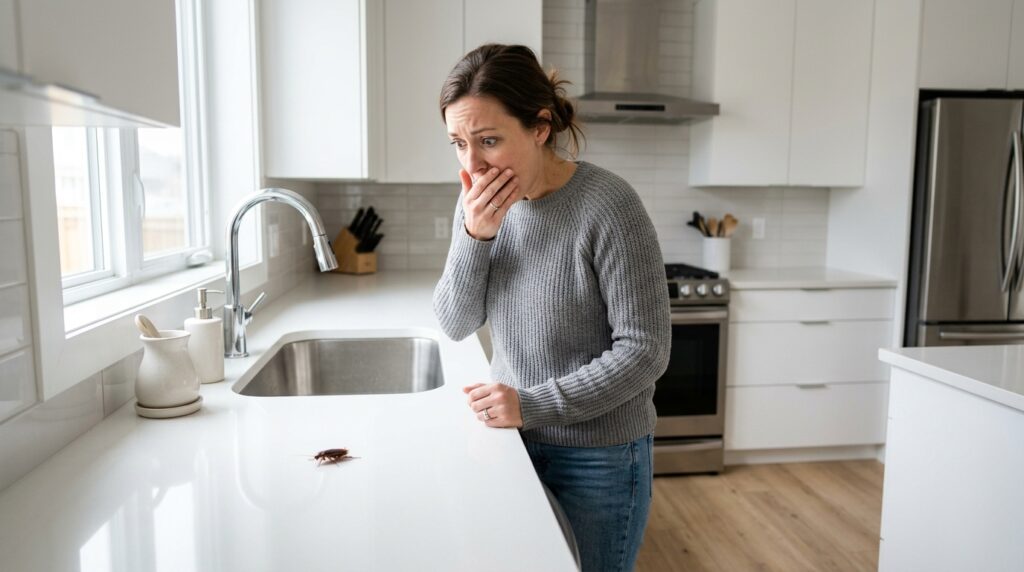
You keep a clean kitchen. You wipe down the counters. You take out the trash. And then you walk into the kitchen at midnight and see a cockroach disappear behind the stove.
It feels like a personal failure. It isn’t.
Cockroaches don’t require a dirty home to thrive — they require access, warmth, moisture, and a small amount of food. A spotless house can provide all four without you realizing it. Understanding why roaches appear in clean homes is the first step to actually eliminating them, because the usual advice (“clean more”) misses what’s really going on.
Quick answer: The most common reasons for roaches in a clean house are hidden moisture sources (leaking pipes, condensation), entry through grocery bags or secondhand items, migration from neighboring units in apartments, or cracks in the foundation and around pipes that give them access. Cleanliness reduces risk but doesn’t prevent roaches if structural access points exist.
Reason 1: They Came In With Something You Brought Home
This is the #1 cause of German cockroach infestations in clean homes — and the one that surprises people most.
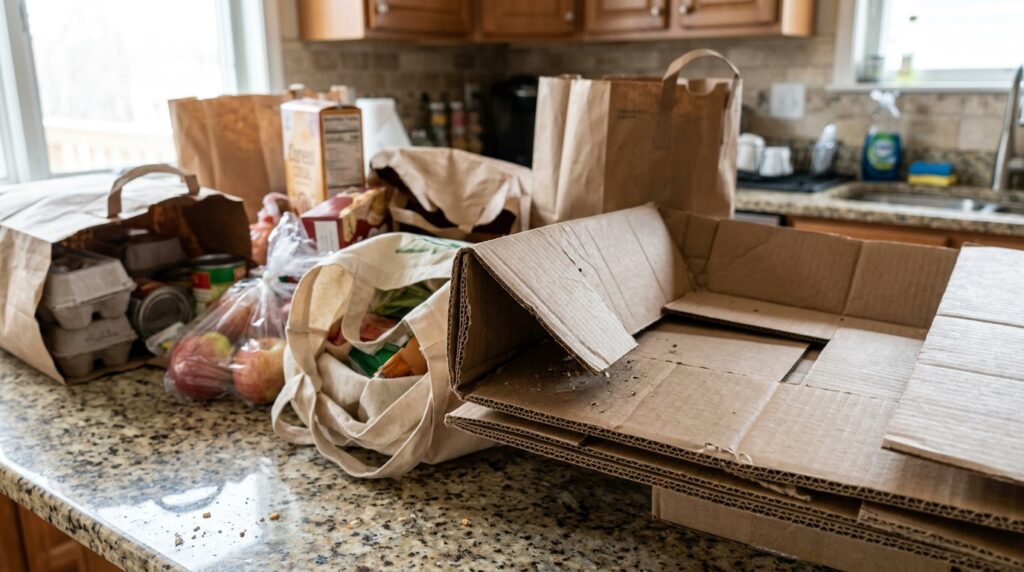
German cockroaches don’t enter from outside like ants or American roaches do. They travel almost exclusively by hitchhiking on infested items. The most common vectors:
- Grocery bags and cardboard boxes — especially from stores with warehouse-style storage. Roaches and egg cases hide in corrugated cardboard seams.
- Used appliances — a secondhand microwave, toaster oven, or coffee maker can carry a hidden colony. These are the most common single source of apartment infestations.
- Secondhand furniture — particularly upholstered pieces, dressers, and anything with enclosed spaces.
- Moving boxes — cardboard boxes stored in a garage or storage unit before a move are prime roach habitat.
- Deliveries — less common, but packages that sat in warehouses can occasionally carry egg cases.
If your infestation started suddenly after bringing something new into the home, this is almost certainly what happened. The fix is the same regardless — gel bait to eliminate the colony — but knowing the source helps you prevent recurrence.
Prevention: Unpack groceries and transfer dry goods to sealed containers before storing. Inspect used appliances carefully before bringing them inside. Avoid storing cardboard boxes in the kitchen or pantry.
Reason 2: There’s a Hidden Moisture Source
Cockroaches need water more urgently than food. A German cockroach can survive over a month without food but dies within a week without water. This means moisture is often a more important attractant than crumbs or food residue.
In a clean home, the moisture source is usually hidden:
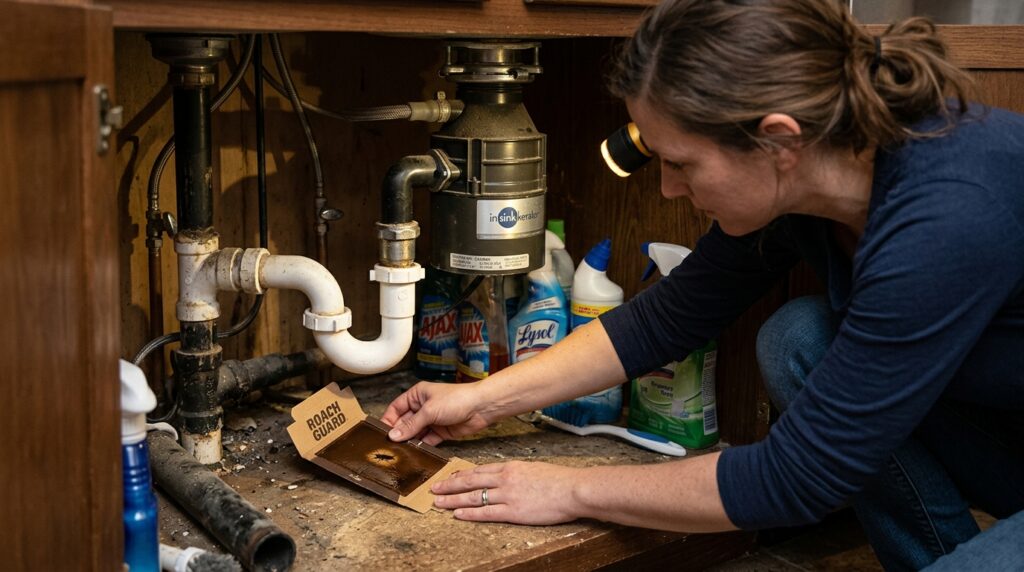
- A slow leak under the sink — even a drip that only deposits a small puddle is enough. Check under every sink and look for water stains or soft cabinet floors.
- Condensation on cold water pipes — in summer, cold supply lines sweat. Over time this creates a damp zone that roaches find irresistible.
- The refrigerator drip pan — collects condensate from the defrost cycle. Many homeowners never check it. Pull out the refrigerator and look underneath.
- A leaking dishwasher seal — water that seeps under the dishwasher creates a warm, damp environment directly under an appliance.
- Bathroom supply lines — the small braided lines connecting the shut-off valve to the toilet or sink faucet sometimes develop slow weeping leaks.
Fix any moisture source you find before treating for roaches. Eliminating water access alone won’t solve the infestation, but it makes every other treatment significantly more effective.
Reason 3: They’re Entering Through Structural Gaps
American cockroaches (the large, reddish-brown ones) primarily live outdoors and in sewers. They enter homes through gaps in the structure, not because the home is dirty.
Most common entry points:
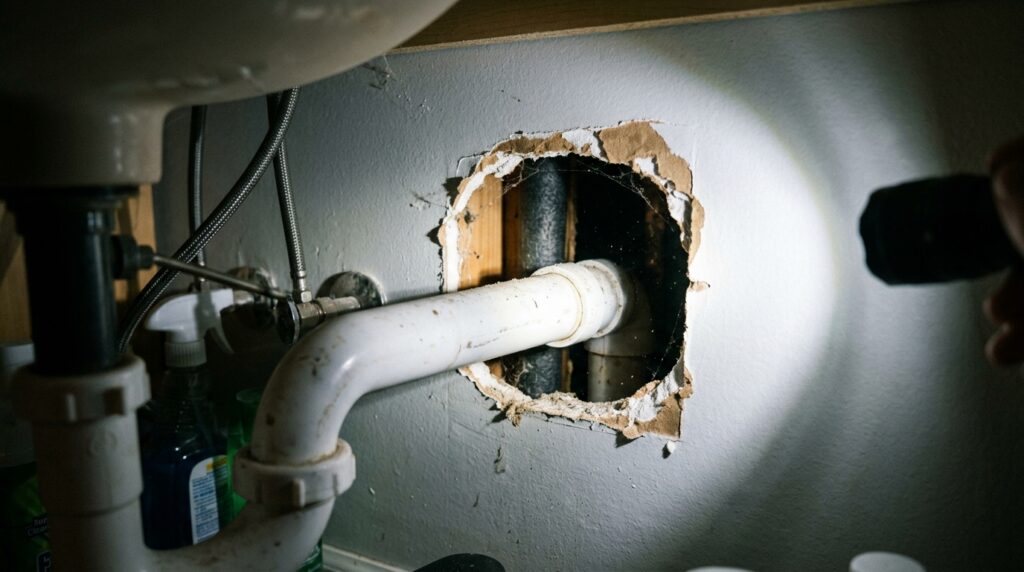
- Gaps around plumbing pipes where they penetrate the wall or floor — especially under sinks and behind toilets
- Floor drains in basements and utility rooms — American roaches live in sewer systems and enter through floor drains
- Cracks in the foundation, particularly at the base of exterior walls
- Gaps under exterior doors that don’t seal flush with the threshold
- Unscreened vents — crawl space vents, dryer vents, attic vents
Seeing one or two large roaches occasionally, especially in bathrooms, is common and doesn’t indicate a major infestation. But if you’re seeing them regularly, entry points need to be sealed.
Fix: Caulk pipe penetrations, install door sweeps, add drain covers to floor drains. These are the same steps we cover in our guide on how to get rid of cockroaches in your home.
Reason 4: You’re in an Apartment and the Source Is Next Door
If you live in an apartment, condo, or townhouse with shared walls, cockroaches don’t care about your cleaning habits at all. They travel through wall voids along plumbing and electrical runs between units continuously.
This is why people in apartments sometimes feel like no matter what they do, roaches keep coming back. The colony isn’t in your unit — it’s in a neighboring unit, and your home is just where some of them end up foraging.
Signs this is your situation: you treat consistently, see improvement, then roaches return within a few weeks. The pattern repeats.
What to do: Use gel bait consistently (it kills roaches that enter your unit and the bait can be carried back to the colony), seal pipe penetrations on shared walls, and report the infestation to building management in writing. For the full strategy, see our guide on German cockroaches in apartments.
Reason 5: Small Food Sources You’re Not Seeing
Even a very clean kitchen has food sources that roaches can exploit. These aren’t about being dirty — they’re about the fact that cockroaches are efficient at finding what humans overlook:
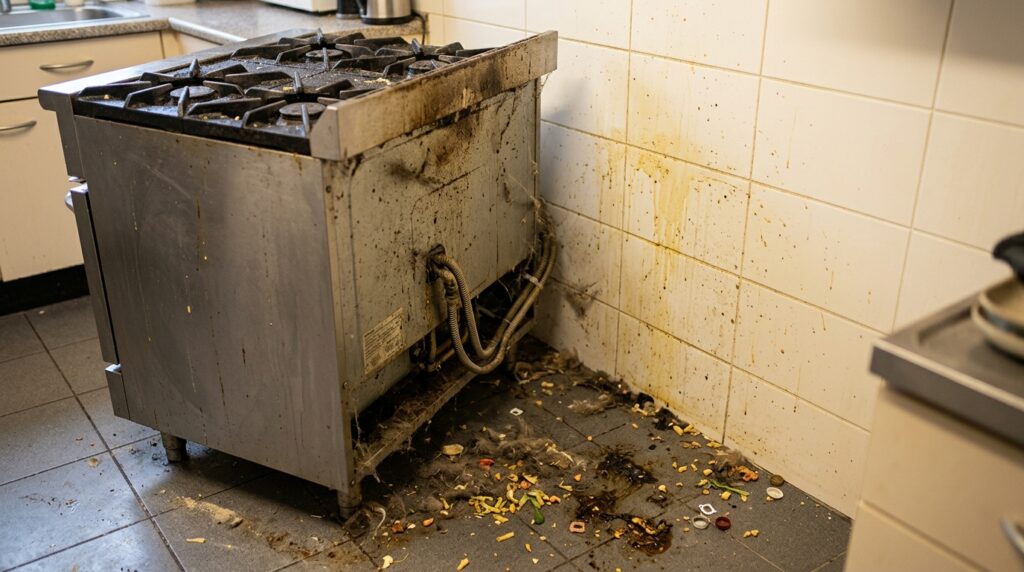
- Grease buildup behind the stove and inside the range hood — accumulates over months, invisible from outside
- Food residue inside cabinet hinges and the void at the back of lower cabinets
- Pet food left out in a bowl overnight — even a small amount sustains a colony
- Crumbs that fall behind the stove and refrigerator — these spaces are almost never cleaned
- Organic material in the bathroom — hair, soap scum, and toothpaste residue are all food sources for roaches
- Compost or organic waste bin — even a tightly lidded countertop compost bin has enough odor to attract roaches
The fix here isn’t to clean more aggressively — it’s to address the specific overlooked spots. Pull out the stove and refrigerator once a year and clean behind them. That alone eliminates two of the most reliable roach food sources in any kitchen.
How to Get Rid of Roaches Once You’ve Found the Cause
Regardless of how the roaches got in, the treatment approach is the same. The cause matters for prevention — treatment is consistent:
1. Gel Bait First
Advion Cockroach Gel Bait placed in small dots at every harborage point is the most effective first step
Apply inside cabinet hinges, along the back wall of lower cabinets, under and behind appliances, and around plumbing. Pea-sized dots every 6 inches in active areas.
2. Boric Acid in Voids
A light dusting of boric acid powder in the void space behind cabinets (accessible by removing the kick plate) and inside electrical outlets on shared walls adds a secondary kill layer.
3. Seal Entry Points
Caulk pipe penetrations, install door sweeps, add drain covers. Do this simultaneously with baiting — don’t wait until the infestation is cleared.
4. Fix Moisture
Repair any leaks. Run a dehumidifier if the kitchen or bathroom tends toward high humidity.
5. Monitor
Place sticky glue traps under the sink and near the stove. Check weekly. Decreasing catch numbers confirm the treatment is working.
Frequently Asked Questions
Can roaches appear even if I clean every day?
Yes. Daily cleaning reduces food availability but doesn’t address the main reasons roaches enter clean homes: structural entry points, hidden moisture, hitchhiking on items brought in, or migration from neighboring units. A roach colony can sustain itself on extremely small amounts of food — the grease inside a stove or the organic matter in a bathroom drain is more than enough.
Is seeing one roach a sign of infestation?
It depends on the species and the time of day. One large American cockroach (reddish-brown, 1.5+ inches) at night near a drain is probably a lone traveler from outside — common and less alarming. One small German cockroach (tan, ½ inch, striped) seen during daylight strongly suggests an established colony, because German roaches only venture out during the day when the population is large and competing for food. Treat immediately.
Do roaches mean my house is infested with just a few or hundreds?
German cockroaches are rarely solitary. If you see one, there are almost certainly more in harborage. A rough rule: if you see them during the day, the colony is large (50+). If you only see them at night and rarely, it may still be early-stage (10–30). Sticky trap counts over 48 hours give a better picture than sightings alone.
Will roaches go away on their own if I clean everything?
No. Once established, a cockroach colony does not self-resolve. They adapt to reduced food availability by being more efficient foragers. Without active treatment (gel bait, boric acid, or professional treatment), the colony will persist and grow. Sanitation is essential for preventing reinfestation after treatment — but it won’t eliminate an existing colony.
Final Thoughts
Finding roaches in a clean home is frustrating precisely because it feels like something you should have been able to prevent. Most of the time, you couldn’t — the cause was structural, or the roaches hitchhiked in on something you brought home.
What matters now is the fix: identify which of the five reasons applies to your situation, address the root cause, and treat with gel bait consistently. Cockroaches are stubborn, but they’re not impossible to eliminate with the right approach.
Ready to start treatment? See our complete guide on how to get rid of cockroaches in your home for the full step-by-step strategy.