
This post contains affiliate links. If you buy through our links, we may earn a commission at no extra cost to you.
German cockroaches in an apartment are one of the hardest pest problems to solve — partly because you can’t control what’s happening in your neighbor’s unit. Here’s the strategy that works even in shared buildings.
⭐ Our Top Picks for German Roach Control:
• Advion Cockroach Gel Bait — Syngenta 383920 Advion Cockroach Gel Bait 4 X 30 Gram Tubes Roach Control
• Gentrol IGR Concentrate — Gentrol Concentrate IGR Insect Growth Regulator 10x1oz ZOE1006B
• HARRIS Boric Acid Roach Powder — HARRIS Boric Acid Roach and Silverfish Killer Powder w/Lure for Insects (16oz)
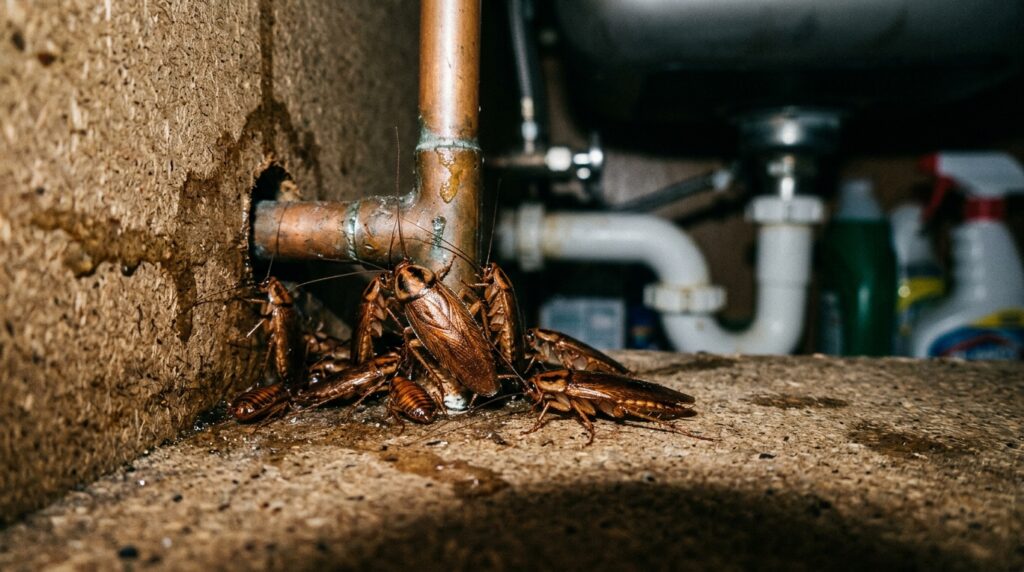
German cockroaches in an apartment hit different than any other pest problem. You can do everything right — clean obsessively, seal every crack, treat every harborage — and still see roaches a week later, because they walked in through the shared wall from the unit next door.
That’s the fundamental challenge of apartment infestations: you’re treating an open system. The colony doesn’t respect your lease boundaries.
This guide covers how to get rid of German cockroaches in an apartment specifically — including the techniques that account for shared walls, the products that work in tight spaces, and what to do when the problem is bigger than your unit.
Quick answer: Advion gel bait applied in small dots at every harborage point (cabinet hinges, under appliances, around plumbing) combined with an IGR (insect growth regulator) is the most effective DIY approach for apartments. The IGR prevents nymphs from maturing and breeding, breaking the reproduction cycle even when the colony is partially outside your unit.
Why German Cockroaches Are Harder to Eliminate in Apartments
Before getting into treatment, it helps to understand what makes apartment infestations specifically difficult — so you can set realistic expectations and choose the right strategy.
- Shared walls and plumbing runs create highways between units. Roaches travel through wall voids along pipes and conduit without ever entering common areas.
- You can’t treat what you can’t access. If the infestation source is your neighbor’s kitchen, your treatment only addresses the symptom — roaches entering your unit — not the colony.
- German roaches reproduce fast. A single female produces 4–8 egg cases in her lifetime, each containing 30–40 eggs. An untreated neighboring unit can continuously resupply your infestation.
- Foggers and bombs — what many people try first — actively make the problem worse in apartments. The chemical cloud drives roaches deeper into wall voids and into adjacent units, spreading the infestation and making it harder to treat.
The strategy below is designed around these constraints: maximize effectiveness within your own unit while blocking the routes roaches use to enter from outside it.
Step 1: Confirm It’s German Cockroaches
Treatment strategy depends on species. German cockroaches are the ones responsible for almost every serious apartment infestation.
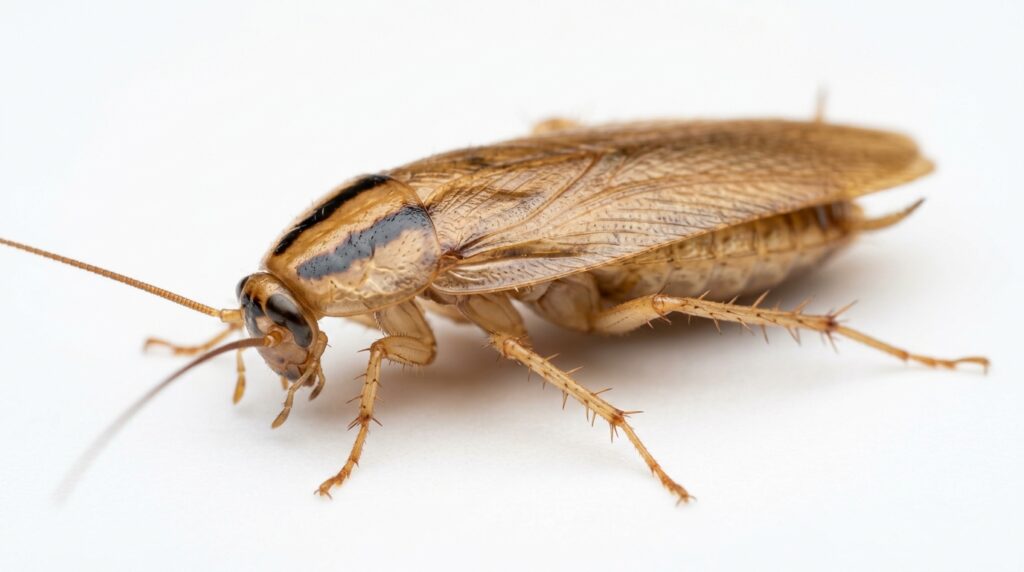
German cockroach ID:
- Small: ½ to ⅝ inch long as adults
- Color: tan to light brown
- Distinctive mark: two dark parallel stripes running from behind the head toward the body
- Behavior: exclusively indoor — they don’t live outside and don’t enter from the yard
- Where you find them: kitchen and bathrooms, almost always within 12 feet of food or water
If you’re seeing large (1.5–2 inch) reddish-brown roaches occasionally, those are likely American cockroaches entering from a basement or shared utility space — a different, usually less severe problem. The treatment approach here is focused on German roaches.
Step 2: Map the Infestation Before You Treat
Don’t place bait randomly. Spend 10 minutes mapping where the roaches are concentrated before you open anything.
How to map the infestation:
- At night (when they’re active), shine a flashlight along the base of cabinets, under the stove, behind the refrigerator, and under the sink. Count what you see.
- Place sticky glue traps in 4–5 locations: under the sink, inside a lower cabinet, behind the refrigerator, near the stove, and in the bathroom under the vanity. Leave for 24–48 hours.
- The traps with the most catches = your primary harborage zones. Start treatment there.
Most common harborage in apartments:
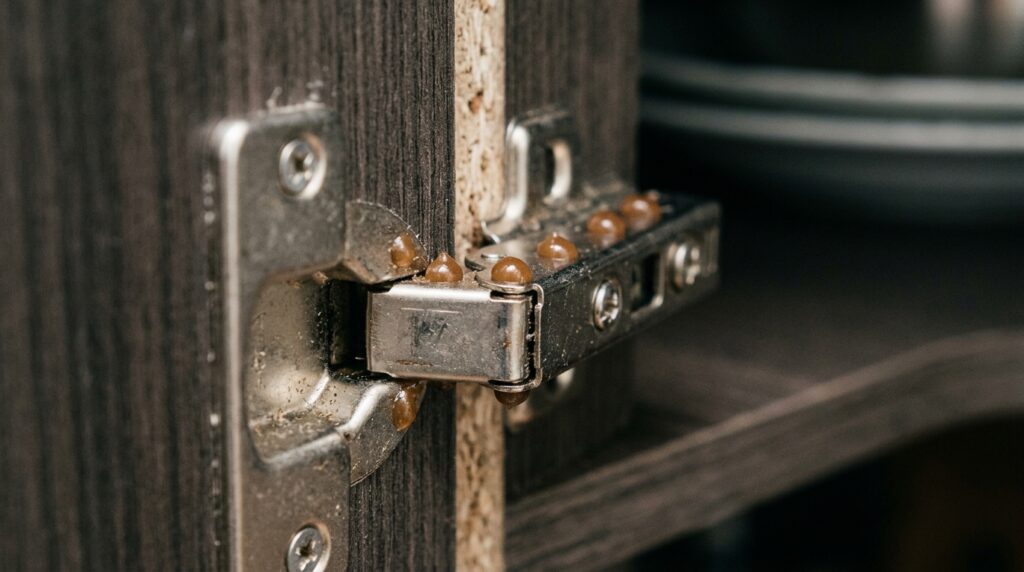
- Inside cabinet door hinges (especially lower cabinets near the stove)
- The void between the stove and the adjacent cabinet
- Under and behind the refrigerator motor
- The space between the wall and the back of lower cabinets (accessible from inside the cabinet)
- Under the sink, around the drain pipe and supply lines
- Inside the bathroom vanity, especially around the drain
- Electrical outlets on shared walls — roaches use the wiring runs as travel corridors
Step 3: Apply Gel Bait Systematically
Gel bait is the single most effective treatment for German cockroaches. In an apartment setting, it’s especially important because it works inside walls and tight spaces where sprays and bombs can’t reach.
Best option: Advion Cockroach Gel Bait
Application rules:
- Pea-sized dots only — large globs are less attractive and dry out faster
- Place every 6 inches in active areas, every 12 inches in secondary areas
- Target harborage, not open surfaces — inside hinges, along the back wall of cabinet interiors, under appliances
- Never apply near residual sprays or cleaning products — they repel roaches from the bait
- Replace every 2–3 weeks or when dried out
Apartment-specific placement:
- Inside every cabinet hinge in the kitchen (this is where they hide during the day)
- Along the back wall inside lower cabinets, especially the ones nearest the stove
- On the floor behind the refrigerator, along the back wall
- Along the back wall of the space under the sink, near where pipes enter the wall
- Inside the void between the stove and the cabinet — accessible by removing the broiler drawer
- In the bathroom: inside the vanity cabinet hinges and along the pipe penetration under the sink
In a typical apartment kitchen, you should place 20–40 bait dots on initial treatment. More is better than less in a heavy infestation.
Step 4: Add an IGR — The Apartment Game-Changer
An IGR (insect growth regulator) is the product most homeowners have never heard of — and the one that makes the biggest difference in apartment infestations.
IGRs don’t kill roaches directly. Instead, they mimic juvenile hormones and prevent nymphs (baby roaches) from maturing into reproductive adults. Roaches exposed to IGR become sterile or produce non-viable egg cases.
Why this matters in apartments: even if your unit is being continuously re-infested from a neighboring unit, an IGR dramatically slows the reproduction rate of the roaches entering your space. Combined with gel bait (which kills adults), the two products attack the colony from both ends.
Best option: Gentrol IGR Concentrate
How to use Gentrol:
- Mix per label instructions and apply with a hand sprayer to harborage areas (under sink, inside cabinet bases, around appliances)
- Apply to cracks and crevices — especially along the base of cabinets and around pipe penetrations
- Reapply every 30 days
- Can be used simultaneously with gel bait — apply IGR to surfaces, gel bait to tight spaces and hinges
Note: IGR is a slow-burn tool, not a fast knockdown. Give it 4–6 weeks to show its full effect on the population.
Step 5: Seal the Entry Points Into Your Unit
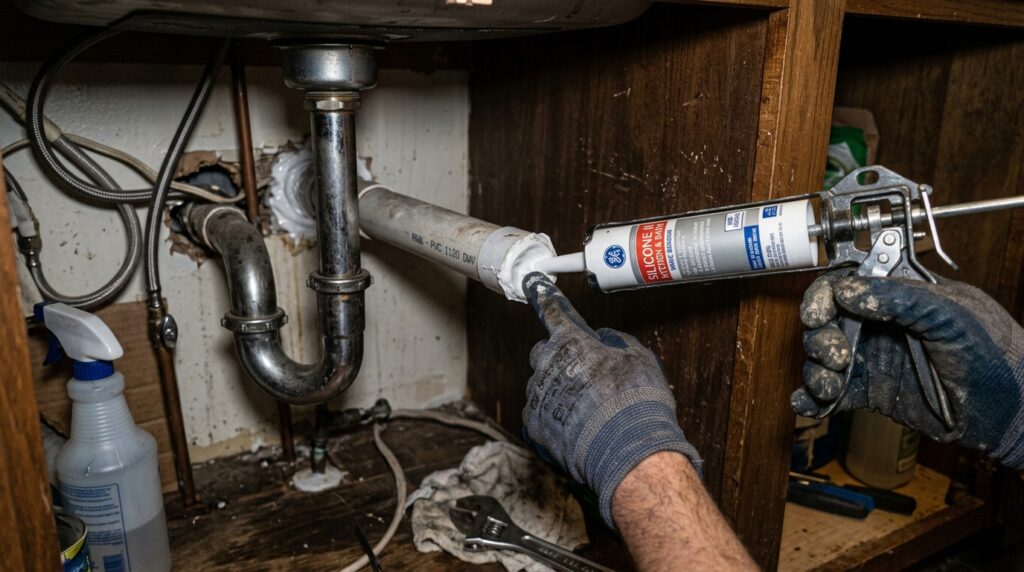
This step limits how many roaches can migrate from neighboring units into yours. It won’t solve a heavy infestation on its own, but it significantly reduces reinfestation pressure.
Where to seal:
- Pipe penetrations under every sink — caulk the gap between the pipe and the wall/floor
- Electrical outlets on shared walls — use outlet gaskets (foam inserts sold at hardware stores) inside the outlet cover plate
- The gap between the back of cabinets and the shared wall — caulk from inside the cabinet
- Around the refrigerator water line if present
- Any visible cracks along the baseboard on shared walls
Use food-safe silicone caulk for kitchen areas. For larger gaps (around pipes), use expanding foam first, then caulk over the top for a cleaner finish.
Step 6: Eliminate the Food and Water Supply
German roaches need water more than food — they can survive weeks without eating but only days without water. In apartments, the most common water sources are:
- Slow drips under the sink — even a slow drip is significant. Report to building management if you can’t fix it yourself.
- Condensation around pipes — especially cold water supply lines in summer
- The refrigerator drip pan — empty and clean it monthly
- Dirty dishes left in the sink overnight
Food discipline:
- All dry goods in sealed hard containers (roaches chew through cardboard and zip-lock bags)
- No cardboard boxes stored in kitchen cabinets — corrugated cardboard is prime egg-case territory
- Clean under the stove burners and the grease trap regularly
- Take garbage out daily, or use a can with a tight-sealing lid
When to Involve Building Management
If you’ve run consistent treatment for 4–6 weeks with professional-grade gel bait and IGR and still have significant activity, the problem is almost certainly coming from neighboring units or shared spaces (laundry room, trash room, utility corridors).
At this point, building management has both the authority and the legal obligation (in most US states) to address the infestation. Document the following before you contact them:
- Photos or video of roach activity with timestamps
- Records of your own treatment efforts (products used, dates)
- Dates you first noticed and reported the problem
Landlords in most states are required to maintain habitable conditions, which includes pest control for cockroaches. If management is unresponsive, your state’s tenant rights organization can advise on next steps. Most professional pest control companies that treat apartment buildings use commercial-grade products and treat multiple units simultaneously — which is significantly more effective than treating one unit in isolation.
Frequently Asked Questions
How long does it take to get rid of German cockroaches in an apartment?
With gel bait and IGR used consistently, most people see a major reduction in 2–4 weeks. Complete elimination takes 6–8 weeks to account for egg cases hatching. If the infestation is being continuously re-supplied from neighboring units, full resolution may require building-wide treatment.
Should I tell my landlord I have cockroaches?
Yes — and document that you did. In most US states, landlords are legally required to keep rental units free of pest infestations. Reporting puts them on notice and creates a paper trail. It also opens the door to building-wide treatment, which is the only way to address an infestation that spans multiple units. Trying to solve it entirely yourself without involving management is fighting the symptom, not the source.
Can I use a roach bomb (fogger) in my apartment?
No — especially not in an apartment. Foggers don’t penetrate the tight spaces where German roaches live, kill very few of them, and drive the colony into wall voids and neighboring units. Many apartment leases also prohibit foggers without management approval. Gel bait is consistently more effective and doesn’t spread the problem.
Why do I keep seeing roaches even after treating?
The most common reasons: bait was placed too sparsely, spray was used near the bait (repelling roaches from it), egg cases are still hatching (takes 3–4 weeks after adults are eliminated), or roaches are re-entering from neighboring units. If you’ve ruled out the first three, the problem is external — time to involve building management.
Final Thoughts
German cockroaches in an apartment require a more systematic approach than a house infestation — but the core strategy is the same: gel bait as the primary weapon, IGR to break the reproduction cycle, and sealing to reduce entry from neighboring units.
Be consistent. Replace bait before it dries out. Give the IGR time to work. And if the infestation is clearly coming from outside your unit, escalate to building management — that’s not giving up, it’s using the right tool for the scope of the problem.
For a broader guide covering all cockroach species and situations, see our complete guide on how to get rid of cockroaches in your home.