
This post contains affiliate links. If you buy through our links, we may earn a commission at no extra cost to you.
Cockroaches are hard to kill — but not impossible. This guide covers the exact products and methods that actually work, including what most people get wrong.
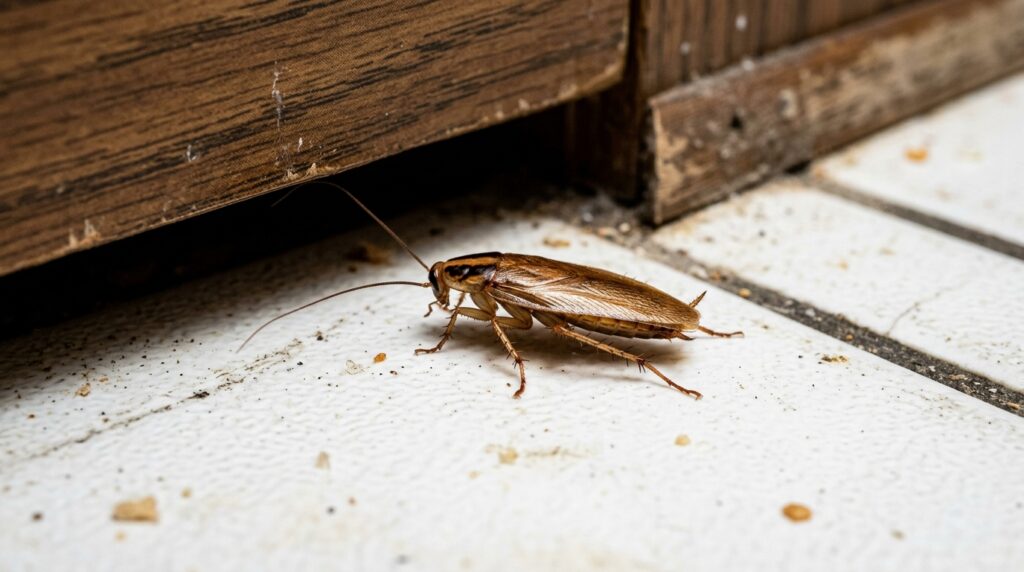
You turned on the kitchen light and saw it scatter. Fast, flat, and unmistakable. Now you’re wondering how many more are hiding where you can’t see them.
Here’s the honest answer: cockroaches are one of the hardest household pests to eliminate, but they’re far from impossible. The reason most DIY attempts fail isn’t the products — it’s the method. People spray the ones they see and call it done. The problem is that the ones you see are a small fraction of the population. The rest are in the walls, under the stove, and behind the refrigerator.
This guide covers how to get rid of cockroaches in your home the right way — using the same approach pest professionals use, with products you can buy today.
Quick answer:
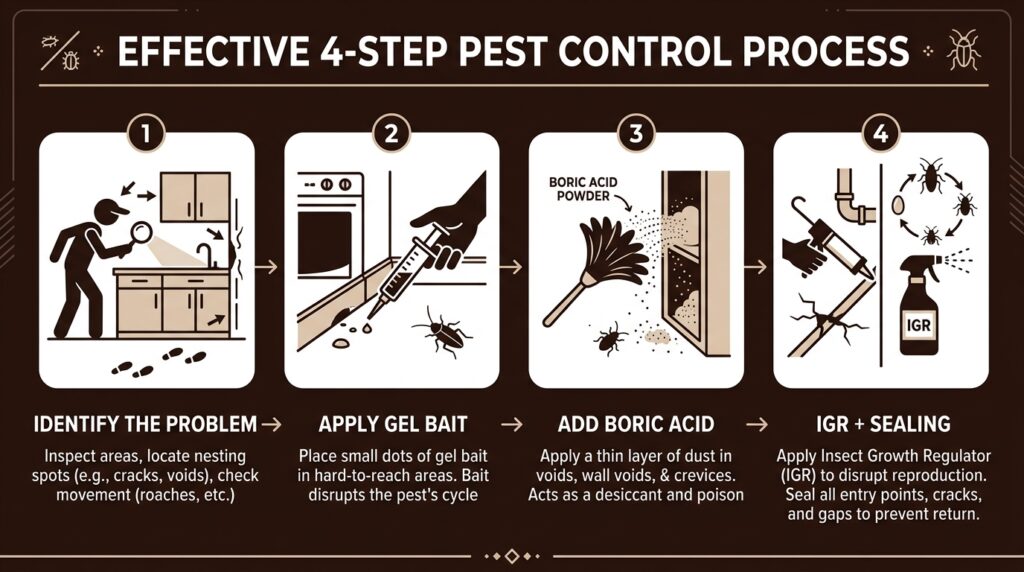
The fastest way to eliminate a cockroach infestation is gel bait (Advion or Combat Max) placed in small dots in dark, tight spaces where roaches travel. Gel bait kills the colony, not just the visible roaches. Combine with boric acid in wall voids and an IGR (insect growth regulator) to stop reproduction. Sprays alone don’t work — they scatter the population and make the problem harder to resolve.
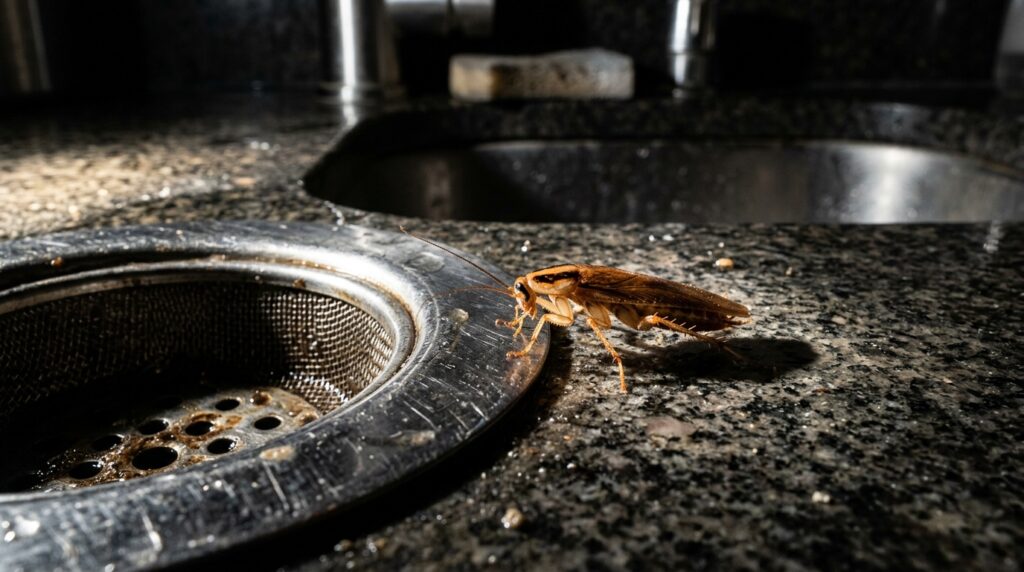
Step 1: Identify What Kind of Cockroach You Have
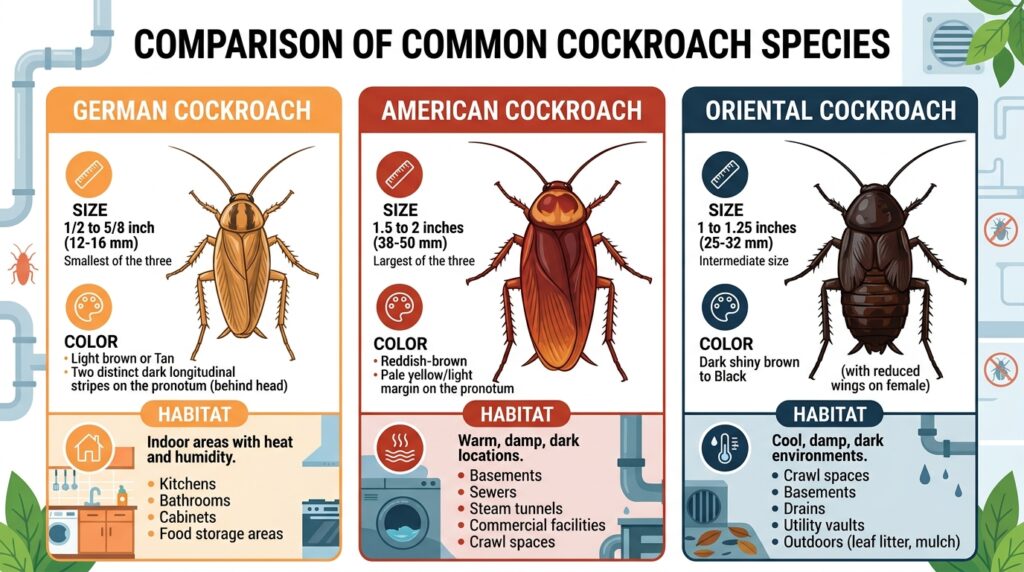
Different cockroach species live in different areas of your home and respond differently to treatments. Misidentifying the species is one of the top reasons DIY treatments fail.
German Cockroach (Blattella germanica)
- Size: 1/2 to 5/8 inch — small and fast
- Color: light brown with two dark parallel stripes behind the head
- Location: inside the home, always — kitchens, bathrooms, appliances
- Behavior: doesn’t fly; stays in tight, warm, humid spaces near food and water
- Most common indoor species in the US — and the hardest to eliminate
American Cockroach (Periplaneta americana)
- Size: 1.5 to 2 inches — large, reddish-brown
- Color: reddish-brown with a yellowish figure-8 pattern on the head
- Location: basements, sewers, crawlspaces — comes inside from outside
- Behavior: can fly; often seen near drains or entering through gaps at floor level
- Less of an infestation, more of an intrusion — easier to control
Oriental Cockroach (Blatta orientalis)
- Size: about 1 inch, dark brown to black
- Location: basements, crawlspaces, damp areas — loves cool, wet environments
- Behavior: slow-moving; cannot fly or climb smooth surfaces
If you’re seeing small roaches inside your kitchen cabinets or near appliances: you have German cockroaches. This guide focuses primarily on German cockroaches because they’re the most common, most prolific, and most treatment-resistant species.
Step 2: Understand Why Sprays Don’t Work
Most people reach for a can of Raid when they see a roach. It kills the one you spray, and then the problem seems to go away — for a few days. Then more appear.
Here’s why contact sprays fail against cockroach infestations:
- Sprays kill on contact but have minimal residual effect in the areas cockroaches actually live
- Cockroaches are cryptic — they hide in gaps, wall voids, and insulation where spray can’t reach
- Spray residues can make roaches avoid treated areas temporarily, driving them deeper into the structure
- German cockroaches reproduce extremely fast — a single female produces 30,000 offspring per year. You can’t spray your way ahead of that rate.
The professional approach is bait-based: get the roaches to carry the toxin back to the colony. That’s how you reach the ones you never see.
Step 3: Apply Gel Bait — The Most Effective Method
Gel bait is the closest thing to a professional-grade solution you can buy without a license. It works by attracting roaches to a food-based matrix that contains a slow-acting insecticide. The roach eats the bait, returns to the harborage, dies there, and is then eaten by other roaches — spreading the toxin through the colony.
Best gel baits
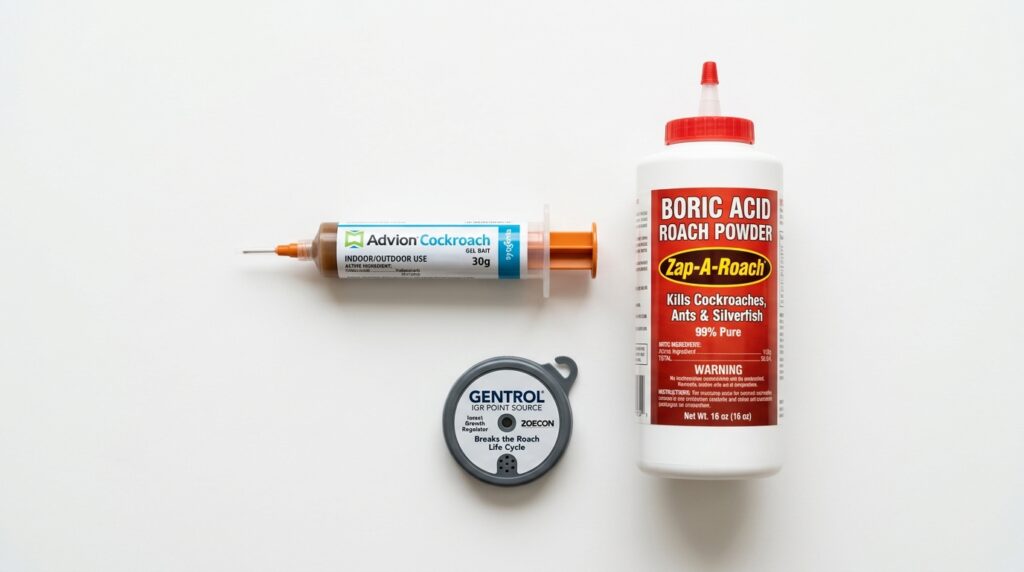
Advion Cockroach Gel Bait (B00AA8I29G) — top pick
Advion is the professional standard. The active ingredient is indoxacarb, which roaches metabolize into a more toxic compound — meaning it works even on bait-averse populations. Available in a 4-syringe pack, enough for a thorough treatment of an average-sized kitchen.
Amazon link: Syngenta 383920 Advion Cockroach Gel Bait 4 X 30 Gram Tubes Roach Control
Combat Max Roach Killing Gel (B004GPKI00)
Solid backup option with fipronil as the active ingredient. Slightly less effective on German cockroaches than Advion, but still significantly outperforms sprays. Good for alternating with Advion every few months to prevent resistance buildup.
Amazon link: Combat Max Roach Killing Gel, Indoor and Outdoor Use, 1 Syringe, 2.1 Oz
How to apply gel bait correctly
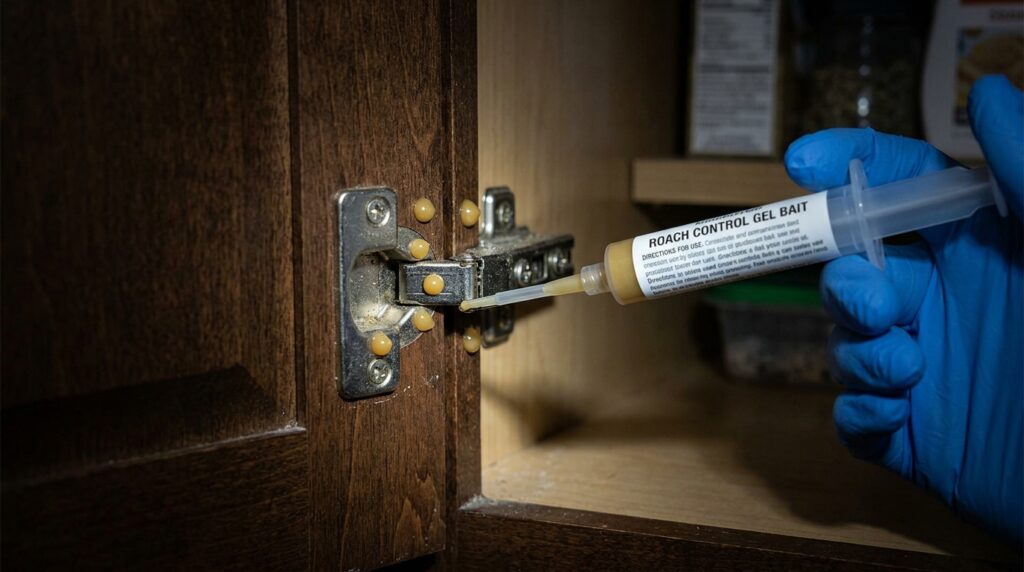
- Apply in tiny dots — pea-sized or smaller — not long lines or blobs. Smaller dots dry out slower and look more like natural food sources to roaches.
- Place bait in dark, tight spaces: inside cabinet hinges, under the sink, in the corner where the countertop meets the wall, behind the refrigerator, under the stove, inside electrical outlet boxes (with power off)
- Place every 6–12 inches in active areas
- Do NOT apply bait near areas where you’ve sprayed insecticide — the residue repels roaches from the bait
- Replace bait every 3 months or when it dries out
One critical mistake: people apply bait in visible areas because that’s where they’ve seen roaches. Roaches seen in the open during daylight are a sign of severe overcrowding — the real population is hidden. Bait placement must go into the tight, dark gaps.
Step 4: Use Boric Acid in Wall Voids and Hidden Areas
Boric acid has been used for cockroach control for over a century. When roaches walk through a fine layer of boric acid powder, it clings to their bodies and damages their exoskeleton, eventually killing them.
It’s not fast — it takes 72 hours or more to kill — but it’s highly effective in areas where you can’t easily place gel bait.
Harris Boric Acid Roach Powder (B000BWF3GM)
Food-grade boric acid with a puffer applicator. Apply a very thin, almost invisible layer — if you can see the powder, it’s too thick. Roaches avoid visible powder accumulations.
Amazon link: HARRIS Boric Acid Roach and Silverfish Killer Powder w/Lure for Insects (16oz)
Where to apply boric acid
- Under and behind the refrigerator and stove
- Inside wall voids — use the puffer to blow powder into gaps around pipes
- Under the dishwasher
- Inside the motor housing of the refrigerator (roaches love the warmth)
- Along the back of cabinet interiors, near the wall
Boric acid is low toxicity to humans and pets when used correctly — but keep it away from food prep surfaces and don’t apply where children or pets can contact it directly.
Step 5: Add an IGR to Stop Reproduction
An Insect Growth Regulator (IGR) doesn’t kill adult roaches. Instead, it disrupts the development of eggs and nymphs, preventing them from reaching reproductive maturity. Combined with gel bait (which kills adults), an IGR collapses the infestation from both ends.
Gentrol Point Source IGR (B00AA8HUEY)
Small discs that release a slow vapor of hydroprene over 90 days. Place one disc per 75 square feet in infested areas. No application required — just remove the backing and set in place.
IGRs are particularly important if you’re dealing with a heavy German cockroach infestation, where reproduction is outpacing your treatment. They don’t replace bait — they amplify it.
Safety Note: Using These Products Around Pets and Children
- Gel bait: keep out of reach of pets. Dogs are attracted to the food-based matrix. Apply only in enclosed spaces pets can’t access — inside cabinet hinges, behind appliances, inside outlets.
- Boric acid: low acute toxicity, but can cause irritation if ingested in quantity. Don’t apply on open surfaces where pets or children contact directly.
- IGR discs: very low toxicity. Safe for use in areas with pets and children when placed as directed.
- Avoid using spray insecticides in combination with gel bait — the repellent effect of sprays reduces bait uptake significantly.
Step 6: Seal Entry Points and Eliminate Harborage
Killing the current population without addressing entry points and harborage is like bailing a boat without fixing the hole.
Seal cracks and gaps
- Caulk gaps around pipes under sinks — German cockroaches enter through plumbing penetrations
- Seal gaps where the backsplash meets the countertop
- Seal gaps around the base of cabinets where they meet the wall
- Check the area behind the stove and refrigerator for utility gaps in the drywall
DAP Alex Plus Caulk (B00004RAXO) — paintable, flexible, easy to apply
Amazon link: DAP Alex Plus Acrylic Latex Caulk, White, 10.1 Oz, 12 Pack (7079818152)
Reduce harborage and food sources
- Fix any leaking pipes or dripping faucets — cockroaches need water more than food. A German cockroach dies in about 12 days without water vs. 40+ without food.
- Store food (including pet food) in sealed containers — glass or hard plastic
- Empty trash daily in infested kitchens
- Clean grease from stove drip pans and the sides of the oven — roaches feed on grease accumulation
- Remove cardboard boxes — roaches nest in corrugated cardboard
How Long Does It Take to Get Rid of Cockroaches?
With gel bait + boric acid + IGR applied correctly, most German cockroach infestations show a significant reduction in 1–2 weeks and are resolved in 4–8 weeks. Severe infestations or those that have been building for months may take 2–3 treatment cycles.
Signs the treatment is working:
- Dead roaches appearing in treated areas within 3–5 days
- Fewer live sightings over the first two weeks
- No new egg casings (oothecae) found after week 3
If you’re seeing no reduction after 2 weeks: check bait placement (it may be in the wrong spots), replace any dried-out bait, and make sure no spray residues are contaminating the bait areas.
Frequently Asked Questions
Why do I keep seeing cockroaches even after treatment?
Most likely because the treatment is reaching only the visible population, not the harborage. Roaches you see during the day are overcrowded — the hidden population is much larger. Make sure bait is placed inside cabinet hinges, behind appliances, and in wall void gaps, not on open surfaces.
Can cockroaches come back after you eliminate them?
Yes, if entry points aren’t sealed and conditions that attracted them (food, moisture, clutter) aren’t addressed. Cockroaches can re-enter from neighboring units in apartments, from drains, or from items brought into the home (grocery bags, used appliances, cardboard boxes).
Are cockroaches dangerous to health?
German cockroaches are a significant allergen source — their shed skins, droppings, and saliva trigger asthma and allergic reactions, particularly in children. They also mechanically transmit bacteria (Salmonella, E. coli) to food contact surfaces. This is a genuine health concern in infested kitchens, not alarmism.
Does killing one cockroach attract more?
Crushing a cockroach can release an alarm pheromone that attracts other roaches briefly — but this is a minor effect. More relevant: cockroaches produce aggregation pheromones in their feces that attract others to harborage areas. This is why removing old feces (cleaning) before treatment improves results.
Should I hire an exterminator or do it myself?
DIY with professional-grade products (Advion gel + boric acid + IGR) is effective for most infestations and costs $30–$60 total vs. $150–$400 for professional treatment. Consider calling a pro if: the infestation is building-wide (apartment), you’ve done two full treatment cycles with no improvement, or the infestation involves structural areas you can’t access.
The Approach That Actually Eliminates Cockroaches
The gap between failed DIY roach control and successful roach control almost always comes down to method, not product. Spray kills visible roaches and scatters the population. Bait kills the colony.
Apply Advion gel bait in small dots in tight, dark harborage areas. Add boric acid in wall voids and under appliances. Use an IGR to stop reproduction. Seal the gaps they’re entering through. And stop using sprays — they actively work against your treatment.
German cockroaches specifically require patience — a month of consistent treatment is normal. But with the right approach, you can resolve even a heavy infestation without a pest control company.
If you’re dealing with roaches in a specific room or situation, check our guide on why you have roaches in a clean house — it covers the most common sources people overlook.