
This post contains affiliate links. If you buy through our links, we may earn a commission at no extra cost to you.
Finding cockroaches despite keeping a clean house is more common than you think. The real causes have little to do with dirt — here’s what’s actually attracting them.
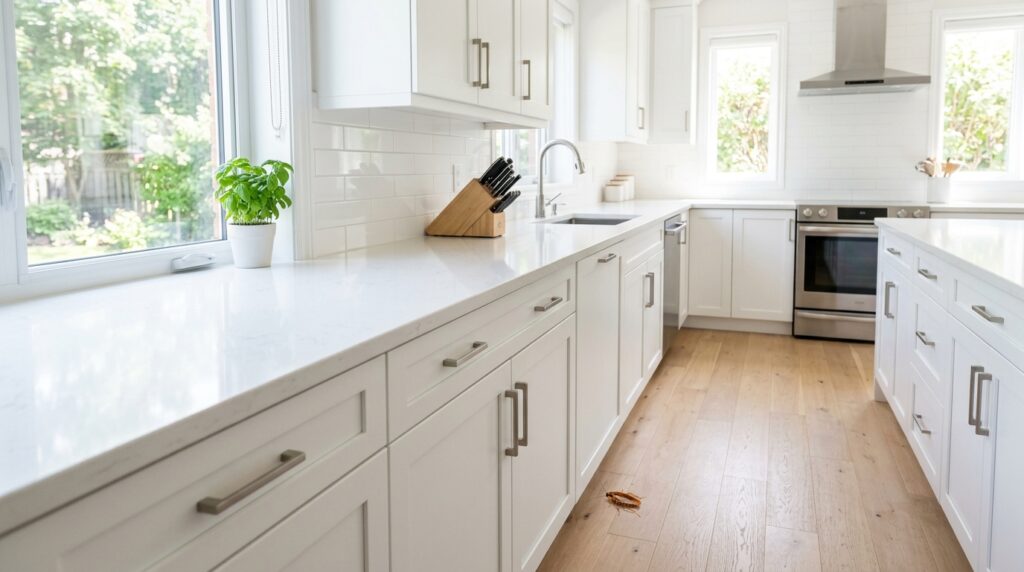
You scrub your counters. You take out the trash every day. You don’t leave dishes in the sink overnight. And yet — there they are.
Finding cockroaches in a clean house is genuinely confusing, and it leads a lot of people to the wrong conclusion: that they must be doing something wrong, or that their home isn’t actually as clean as they think.
Here’s the truth: cleanliness reduces cockroach risk, but it doesn’t eliminate it. Cockroaches are driven by three needs — water, warmth, and shelter. If your home provides any of these, it’s attractive to them regardless of how well you clean.
Quick answer:
The most common reasons for roaches in a clean home are: a dripping pipe or moisture source under the sink, entry through gaps around plumbing or building shared walls (apartments), roaches that arrived in grocery bags or cardboard boxes, or an infestation in a neighboring unit. None of these have anything to do with how clean you keep your surfaces.
Reason 1: You Have a Hidden Moisture Source
Water is the number one driver of cockroach presence — more than food. A German cockroach dies in about 12 days without water, but can survive 40+ days without food. If there’s a drip anywhere in your home, roaches will find it.
Common hidden moisture sources:
- Slow leak under the kitchen or bathroom sink — even a small drip creates enough moisture
- Condensation on cold pipes in a cabinet or basement
- Leaking refrigerator water line or drip pan beneath the fridge
- A/C condensation drain that’s slow or partially clogged
- Dishwasher door seal that lets steam escape into the cabinet below
- Moisture in the wall from a slow drain or supply line leak inside the wall
Check: open the cabinet under every sink and look for water stains, soft wood, or active drips. Pull the refrigerator out and check the floor underneath. If you find moisture, fix it — treatment alone won’t work if the attractant remains.
Reason 2: They’re Entering Through Gaps You Haven’t Found
German cockroaches can squeeze through a gap 1/16 of an inch — about the thickness of a dime. American cockroaches need a gap roughly the size of a quarter. Your home has dozens of these gaps, and most are invisible until you know what to look for.
Where roaches enter:
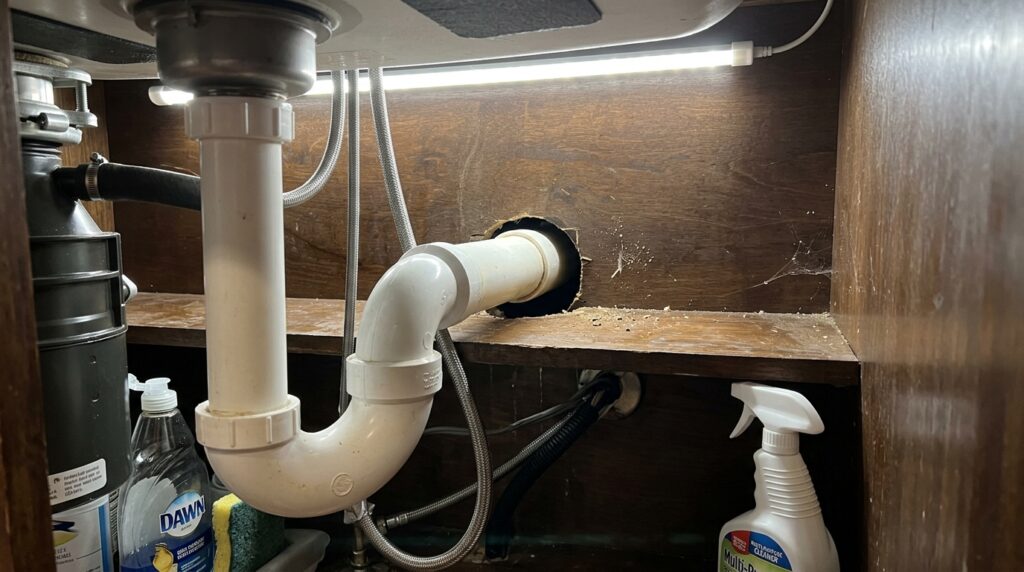
- Around pipes and conduit where they enter through the wall under sinks or behind appliances
- The gap between the countertop backsplash and the wall — a classic entry point in kitchens
- Gaps at the base of cabinets where they meet the floor
- Around electrical outlets and light switches on exterior or shared walls
- Through floor drains and sink drains (American cockroaches commonly enter via the sewer system)
- Gaps around the base of the toilet or bathtub where plumbing enters the floor
The fix: seal these with a paintable caulk. DAP Alex Plus (B00004RAXO) works well for most interior gaps — flexible, easy to apply, and dries in an hour.
Amazon link: DAP INC 18152 10.1 fl oz White Alex Plus Acrylic Latex Caulk with Silicone
Reason 3: They Came In With Something You Brought Home
One of the most common ways German cockroaches enter a clean home has nothing to do with the home itself — they hitchhike in.
Common hitchhike routes:
Grocery bags and produce
Grocery stores and warehouses often have cockroach populations. Roaches and their egg cases (oothecae) can hide in paper bags, cardboard packaging, and even inside corrugated box flaps. Transferring groceries to a clean bag or unpacking them at the door before bringing them inside reduces this risk.
Cardboard boxes
Corrugated cardboard is prime cockroach real estate — the flutes inside the cardboard are the perfect size for German cockroaches to nest in. Moving boxes, Amazon deliveries, and boxes stored in a garage or basement are all risk vectors. Switch to plastic bins for storage.
Used appliances and furniture
A secondhand refrigerator, microwave, or coffee maker can harbor a hidden German cockroach colony. Before bringing any used appliance home, inspect the motor housing, any enclosed spaces, and the bottom of the unit with a flashlight.
Bags and luggage after travel
Hotels and vacation rentals sometimes have roach populations. German cockroaches have been found in luggage. After travel, leave bags in the garage or outdoors briefly, and inspect before bringing inside.
Reason 4: They’re Coming From a Neighboring Unit
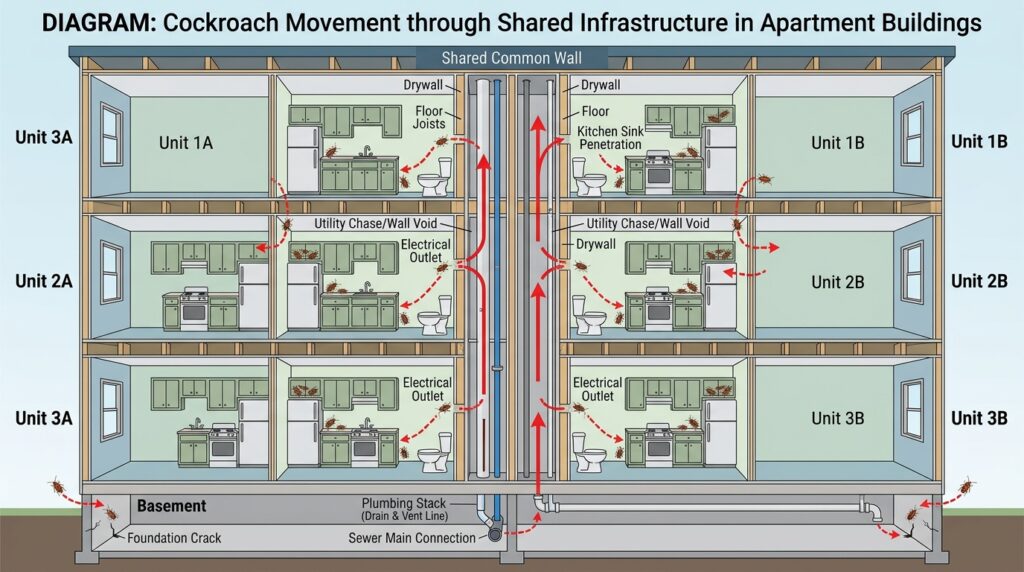
If you live in an apartment, condo, or townhouse, this is likely the most important factor. Cockroaches move freely between units through shared wall voids, plumbing chases, electrical conduits, and under doors.
A neighbor with an infestation will continuously seed your unit regardless of how clean you keep it or how thoroughly you treat. The roaches simply return through the shared walls.
What you can do:
- Report the issue to building management — in most jurisdictions, landlords are required to address pest infestations in multi-unit buildings
- Seal every gap around plumbing penetrations in your unit with caulk or steel wool
- Install door sweeps on your front door and any shared-wall doors
- Place gel bait (Advion, B00AA8I29G) continuously in high-risk areas — near plumbing, under the sink, behind the refrigerator — as ongoing population control
Amazon link: Syngenta 383920 Advion Cockroach Gel Bait 4 X 30 Gram Tubes Roach Control
Note: in apartment situations, individual unit treatment works but is temporary without building-wide action. Document everything and put requests to management in writing.
Reason 5: The Warmth of Your Appliances Is Attracting Them
Cockroaches are cold-blooded and thermophilic — they seek warmth. The motor housing of a refrigerator runs at 80–90°F constantly. The area behind a stove or oven is consistently warm. The inside of a cable box or game console is warm.
None of this has anything to do with food or cleanliness. A clean, well-maintained refrigerator is still attractive to cockroaches because of the heat it generates, not because of anything inside it.
Where roaches hide for warmth:
- The motor compartment at the bottom rear of the refrigerator
- Behind and under the stove, especially near the pilot light or igniter area
- Inside the motor housing of the dishwasher
- Behind the water heater
- Inside electronics with ventilation — cable boxes, gaming consoles, routers
If you pull your refrigerator out and find roach droppings (small, dark, pepper-like specks) or shed skins, that’s your primary harborage. Apply boric acid powder thinly to the floor area under the motor and place gel bait dots in the gap between the floor and the bottom panel of the fridge.
Reason 6: Pet Food and Water Bowls Left Out Overnight
Your kitchen surfaces may be spotless, but if your pet’s food bowl is left out at night, it’s a cockroach buffet. German cockroaches are most active between midnight and 4 AM — exactly when no one is watching.
The same applies to the water bowl. A bowl of water left out overnight provides the moisture cockroaches need to survive. This is one of the most overlooked sources in otherwise clean homes with pets.
The fix:
- Pick up pet food bowls at night and store food in sealed hard containers
- Empty water bowls at night if you don’t have a pet that needs overnight access
- If your pet needs overnight water, use a sealed dispenser style that doesn’t leave an open bowl
Reason 7: Your Recycling Bin
This one catches people off guard. You rinse your recyclables — but do you rinse them well enough? Residue inside a wine bottle, a soup can, or a cereal box is a significant food source for cockroaches. Recycling bins rarely get cleaned, and they accumulate residue over weeks.
If your recycling bin is stored inside or in a garage attached to the house, it’s a potential harborage. Rinse all recyclables thoroughly before binning them, and wash the bin itself monthly with hot water and dish soap.
Reason 8: The Building Has a History You Don’t Know About
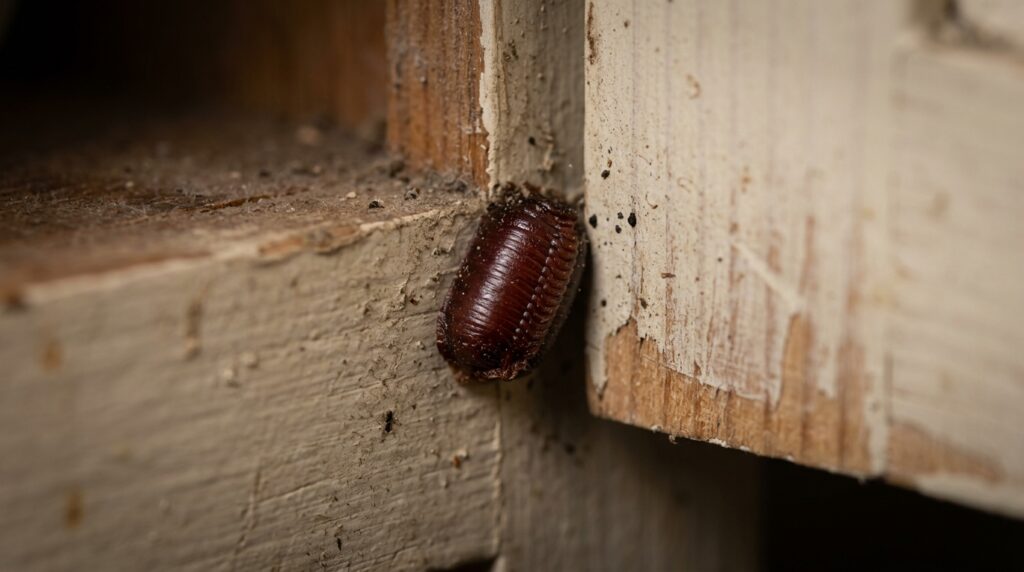
If you recently moved into a house or apartment, the previous occupants may have had an infestation that was never fully resolved. German cockroach egg cases (oothecae) can survive in wall voids and under appliances for months after an infestation appears to be gone. When conditions improve — new residents move in, food and warmth return — the eggs hatch.
If you moved in recently and started seeing roaches within a few weeks, this is likely the cause. A thorough treatment cycle (gel bait + boric acid + IGR) will resolve it, but expect it to take 4–8 weeks.
What to Do If You Have Roaches in a Clean House
The good news: a roach problem in a clean home is often easier to resolve than one where harborage and food sources are abundant. You’re already doing most of the prevention work. You mainly need to eliminate the entry points and the existing population.
The three-step approach:
1. Apply gel bait in harborage areas
Advion Cockroach Gel Bait (B00AA8I29G) in small pea-sized dots inside cabinet hinges, under the sink, behind the refrigerator, inside electrical outlet boxes. This targets the population at the source.
2. Add boric acid in wall voids and under appliances
Harris Boric Acid Roach Powder (B000BWF3GM) blown lightly into gaps around pipes and under the motor of the refrigerator. Thin layer — if you can see it, it’s too thick.
Amazon link: HARRIS Boric Acid Roach and Silverfish Killer Powder w/Lure for Insects (16oz)
3. Seal every gap
Caulk all plumbing penetrations, the backsplash gap, and base-of-cabinet gaps. This prevents re-entry from neighboring units or from outside.
For a full step-by-step treatment guide, see our post on how to get rid of cockroaches in your home.
Frequently Asked Questions
Does a clean house prevent cockroaches completely?
No — it reduces risk significantly, but doesn’t eliminate it. Cockroaches primarily need water and warmth, not food scraps on surfaces. A clean home with a dripping pipe or shared walls with an infested unit can still have roaches. Cleanliness is one layer of prevention, not a guarantee.
Can roaches come from a clean neighbor?
Yes. Cockroaches move between units regardless of conditions in either unit. An infestation in any part of a shared building can spread. The cleanliness of a neighbor’s unit doesn’t prevent roach movement through wall voids and plumbing chases.
Why do I only see one or two roaches?
One or two visible roaches during the day almost always means a larger hidden population. German cockroaches are nocturnal and stay hidden when populations are manageable. Seeing them during daylight suggests overcrowding in the harborage. For every roach you see, there are likely 10–20 you’re not seeing.
Do cockroaches mean my house is dirty?
No — this is the most persistent myth about cockroaches. Cockroaches are attracted to moisture, warmth, and shelter. They appear in hospitals, restaurant supply areas, and spotless homes for the same reason they appear in cluttered ones. Finding roaches says nothing about your hygiene habits.
What smell attracts cockroaches?
Cockroaches are drawn to fermentation odors (beer, wine, vinegar residue), grease, and the aggregation pheromones in their own droppings. They’re not particularly attracted to clean surfaces. The most attractive “smell” in a home is the warmth and humidity from a leaking pipe or appliance motor.
The Real Reason You Have Roaches — And the Fix
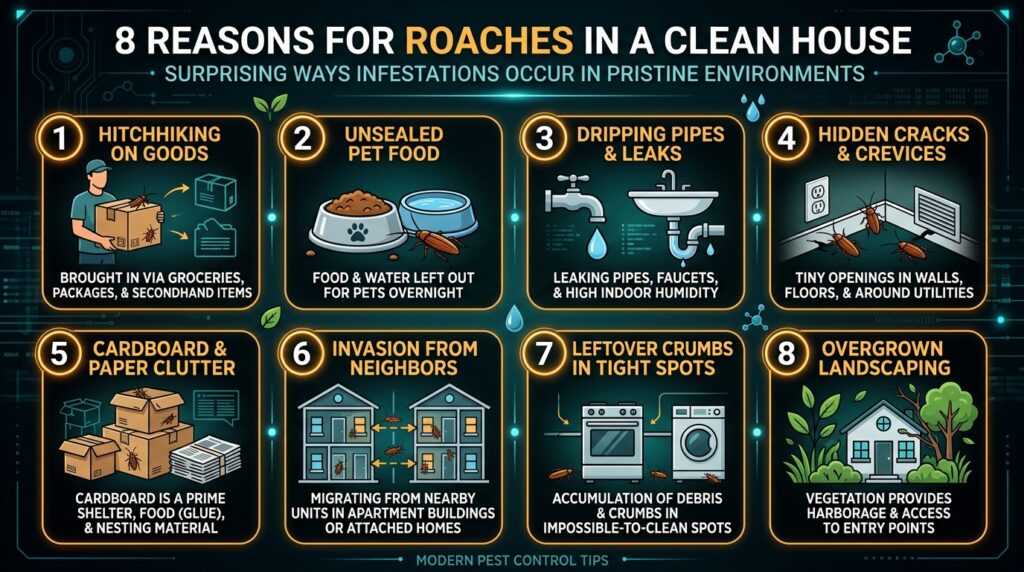
Cockroaches in a clean house are almost always explained by one of eight factors: hidden moisture, unsealed entry points, hitchhiking in with packages or groceries, shared walls in multi-unit buildings, appliance warmth, overnight pet food, recycling residue, or a building history of infestation.
None of these are about how clean you keep your home. Once you identify the actual cause, the fix is usually straightforward: remove the moisture source, seal the entry points, and apply gel bait to eliminate the existing population.
For the complete treatment protocol, check our guide on how to get rid of cockroaches in your home — it covers gel bait, boric acid, and IGR in detail.