
This post contains affiliate links. If you buy through our links, we may earn a commission at no extra cost to you.
Rats in your yard are never just a yard problem — they’re a house problem waiting to happen. Here’s how to eliminate them outside before they get in.
⭐ Our Top Picks for Outdoor Rat Control:
• Tomcat Rat Killer Bait Station (Refillable)
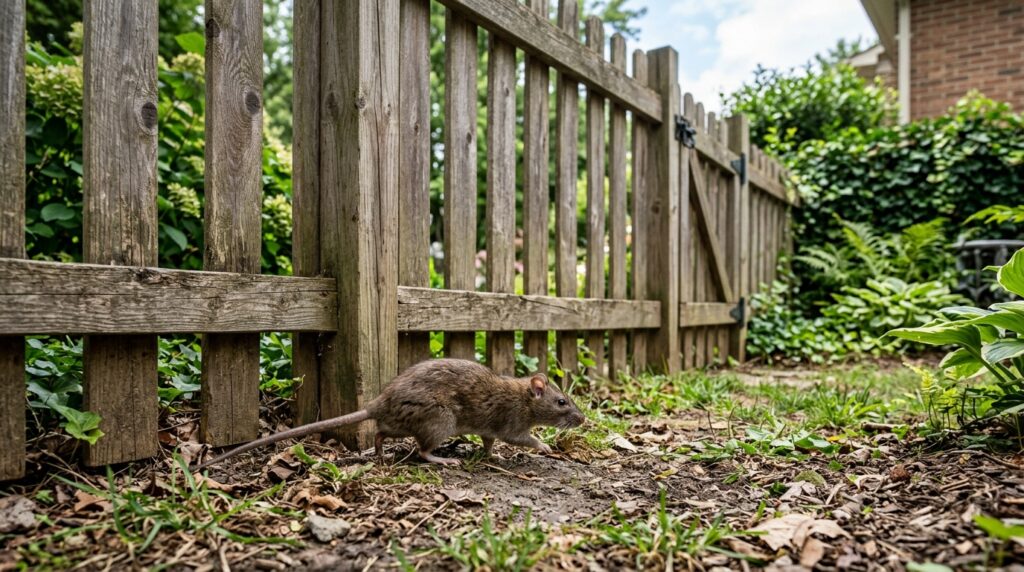
You’ve seen the signs. Burrow holes along the fence. Gnaw marks on the shed. Maybe you’ve spotted one at dusk, running along the base of the wall.
Here’s the thing most people don’t realize: rats don’t just live in your yard — they’re actively scouting your house for a way in. Norway rats (the most common yard species) can squeeze through a gap the size of a quarter. Once they’re inside, the problem gets ten times harder to fix.
The good news? Catching the problem outdoors is way easier and cheaper than dealing with an indoor infestation. This guide covers exactly how to get rid of rats in your yard — and seal your house at the same time, so the ones you don’t catch can’t move in.
Quick answer: The most effective outdoor rat control combines bait stations (placed near burrows or harborage areas) with snap traps, while simultaneously removing food sources and sealing potential entry points to your home. You won’t solve it with just one of these — you need all three running together.
Step 1: Confirm You’re Dealing With Rats (Not Mice)
Before you set a single trap, make sure you’re targeting the right pest. Rats and mice need different control strategies, and confusing the two wastes time and money.
Rats leave these signs in yards:
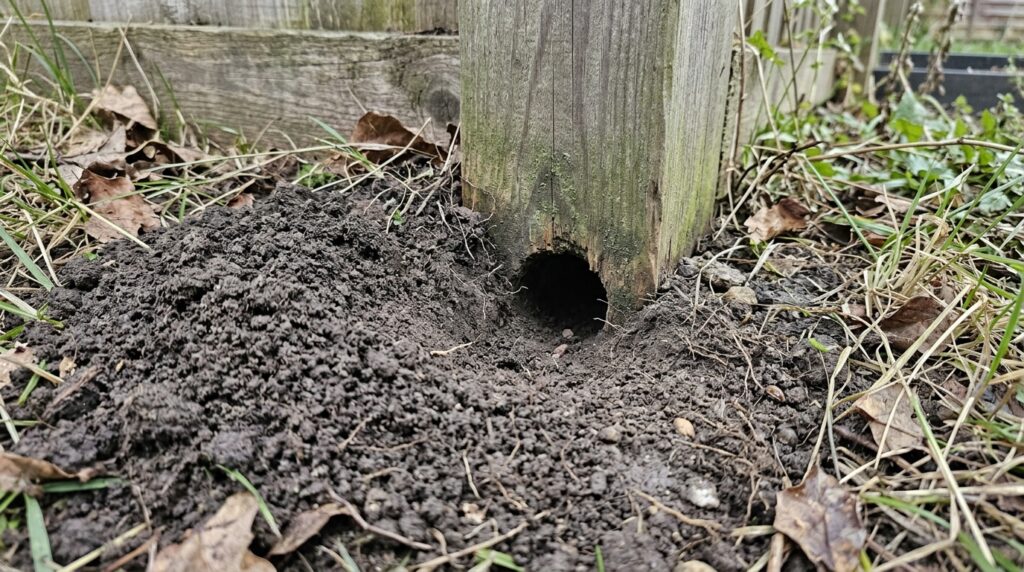
- Burrow holes: 2–3 inches wide, usually along fence lines, under decking, near compost bins, or at the base of walls. Burrows often have a clean entrance with loose dirt pushed to the side.
- Droppings: Rat droppings are 3/4 inch long, capsule-shaped, and dark brown. (Mouse droppings are tiny — about the size of a grain of rice.)
- Gnaw marks: On wood, plastic bins, hoses, or any stored materials. Rats have powerful teeth and will chew through a lot.
- Runways: Rats are creatures of habit. They follow the same routes every night, leaving grease marks along fence bases, walls, or through vegetation.
If burrows and droppings confirm you’re dealing with rats, proceed to the steps below.
Step 2: Remove Everything That’s Feeding Them
No control method works long-term if rats have an unlimited food supply in your yard. Before you even place a trap, you need to cut off what’s attracting them.
Food sources to eliminate immediately:
- Bird feeders: This is the #1 rat attractant in suburban yards. Seed on the ground = free buffet. Remove or switch to squirrel-proof feeders with catch trays, and stop feeding until the infestation is under control.
- Pet food left outside: Never leave cat or dog food out overnight. Feed pets indoors whenever possible, and always bring dishes in after meals.
- Compost bins: Open compost is essentially a rat restaurant. Switch to a sealed, rodent-proof compost bin or stop composting temporarily. Avoid adding meat, dairy, or cooked food to any outdoor compost.
- Fruit and vegetables: Pick up fallen fruit immediately. Harvest vegetables as soon as they’re ready — don’t let them sit on the vine or ground.
- Garbage cans: Rats can chew through thin plastic. Use heavy-duty bins with locking lids. Don’t put garbage out the night before pickup.
Harborage areas to clear:
- Stack woodpiles at least 18 inches off the ground and away from the house
- Remove overgrown vegetation along fence lines — rats use it as cover
- Clear debris piles, old equipment, and anything stored directly on the ground
- Keep grass short, especially around the perimeter of the yard
This step alone can significantly reduce the rat population over 2–4 weeks. Combined with trapping, it’s the foundation of the whole strategy.
Step 3: Set Bait Stations and Traps
Now that you’ve removed food sources, it’s time to actively reduce the population. Use both bait stations AND snap traps for the best results — baits work on the colony, traps catch individuals.
Bait Stations (Most Effective for Large Outdoor Populations)
Bait stations use rodenticide (rat poison) in a tamper-resistant plastic housing. They’re the most effective way to reduce a large outdoor rat colony, especially when burrows are present.
Best for yards: Tomcat Rat Killer Bait Station
- Place bait stations along fence lines, near burrow entrances, and in areas where you’ve seen runways
- Position them against a wall or solid structure — rats prefer to run with a wall on one side
- Check and refill every 7–10 days. If bait is being consumed quickly, you have a large population
- Keep away from children and pets — the tamper-resistant housing is designed to allow only rats to access the bait, but always place them in low-traffic areas
Important: Rats that consume bait will typically die within 4–7 days, often in their burrows or under cover. If you find dead rats in the yard, use gloves to remove them and dispose in a sealed bag. This is normal — it means the bait is working.
Snap Traps (Best for Targeted Placement)
Snap traps are an excellent no-poison option, especially useful near entry points to your house or where you don’t want to risk poison bait.
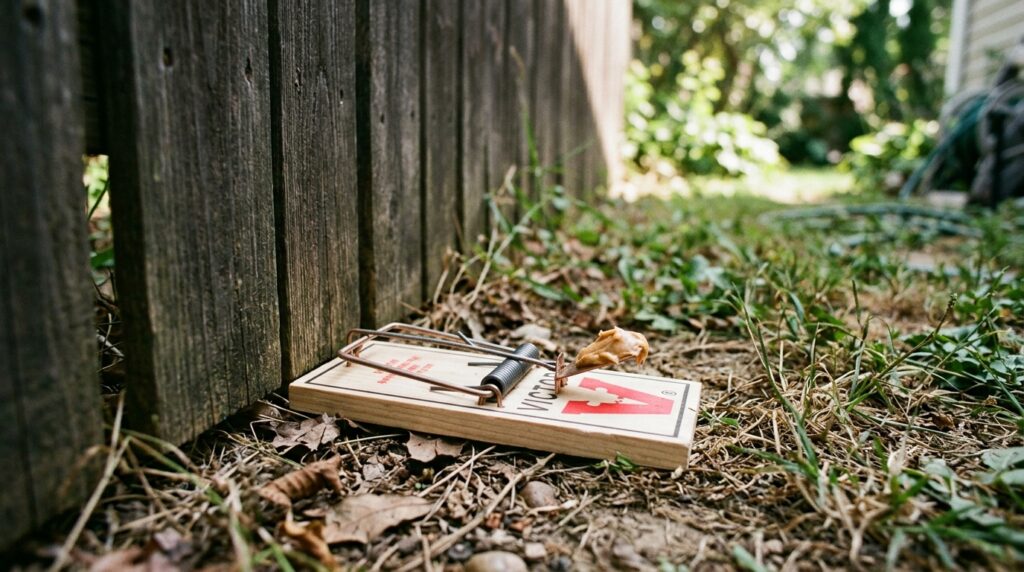
Best rat snap trap: Victor Easy Set Rat Trap
- Bait with peanut butter, chocolate, or nesting material (cotton balls, dental floss)
- Place along runways with the trigger facing the wall
- Set multiple traps in pairs — rats that jump over one will often trigger the second
- Check every 24 hours and reset after each catch
Step 4: Treat Active Burrows Directly
If you have active burrow holes (you can confirm they’re active by lightly filling the entrance with dirt — if it’s cleared again within 24 hours, rats are using it), treat them directly.
Methods for treating burrows:
- Place a snap trap or bait station directly at the burrow entrance. Rats entering and exiting will encounter the control immediately.
- Use burrow bait: Some rodenticide products like Ditrac Tracking Powder or pre-filled bait blocks can be placed directly into the burrow. Wear gloves and follow label instructions.
- Flood and collapse (non-chemical option): For burrows away from the house, pour water in to collapse the tunnel, then pack with soil. This disrupts the habitat and forces rats to relocate — less effective alone, but useful in combination with trapping.
Once you’re no longer seeing active burrowing after 2–3 weeks of treatment, the population is under control.
Step 5: Seal Your House Before They Move In
This step runs parallel to trapping — don’t wait until the yard is clear to start sealing. Rats are smart. When food disappears or traps start catching their colony mates, some will immediately start looking for shelter inside your house.
Where rats most commonly enter homes:
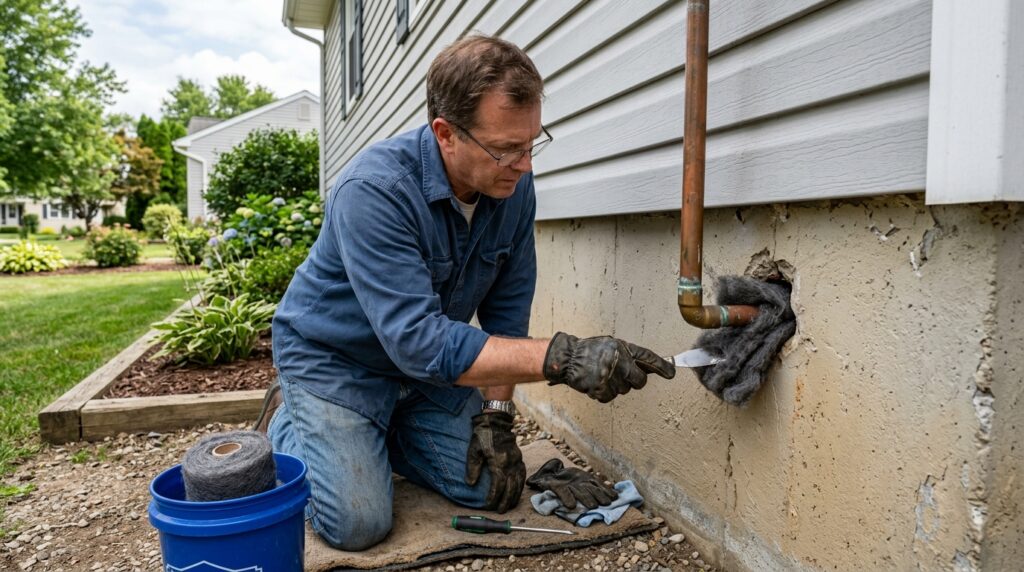
- Gaps around pipes and utility lines where they enter the wall (even a 1/4-inch gap is enough)
- Holes in the foundation, especially where concrete has cracked or settled
- Gaps under doors — especially garage doors and basement doors that don’t seal tightly
- Unscreened vents (attic vents, crawl space vents, dryer vents)
- Gaps where the roof meets the soffit or fascia board
What to seal with:
- Steel wool packed into small gaps (rats can’t chew through it) — secure with caulk so it doesn’t fall out
- Hardware cloth (1/4-inch mesh) for larger openings like vents and crawl space entries
- Concrete or mortar for foundation cracks
- Door sweeps for gaps under exterior doors
Do a full perimeter walk of your house and check every point where anything penetrates the wall or foundation. This is the step most people skip — don’t.
What to Expect: Week-by-Week Timeline
Days 1–5 (Setup):
Remove food sources. Place bait stations and snap traps. Seal obvious entry points on the house. Treat active burrows.
Days 5–14 (Active Treatment):
Check traps every 24–48 hours. Refill bait stations as needed. You may see increased activity as rats are stressed by reduced food and trapping — this is normal. Monitor for new burrow activity.
Days 14–21 (Population Decline):
Trap catches should slow down. Burrow activity should decrease. Do another perimeter walk on the house and seal any gaps you missed.
Day 21+ (Maintenance):
Keep bait stations active for another 2–4 weeks even after you stop seeing rats. Leave one or two snap traps in place as monitors. Once all activity has stopped for 3+ weeks, you can remove traps — but keep bait stations refillable and check them monthly.
Frequently Asked Questions
How many rats do I have if I see one during the day?
Rats are primarily nocturnal. If you see a rat in daylight, it usually means the colony is large and competition for food and space is pushing individuals out at unusual times. A single daytime sighting suggests a population of at least 10–20 rats nearby. Start trapping immediately.
Can I get rid of yard rats myself, or do I need an exterminator?
DIY works well for most yard infestations if you follow the full strategy: remove food sources, use bait stations and traps simultaneously, treat burrows, and seal entry points. Where exterminators add value is in large-scale infestations (many burrow systems), access to commercial-grade products not sold to the public, and when rats have already entered the house structure.
Is rodenticide bait safe around my dogs and cats?
Tamper-resistant bait stations significantly reduce (but don’t eliminate) the risk to pets. The bigger risk is secondary poisoning — a pet eating a dead or dying rat that consumed rodenticide. If you have outdoor pets, snap traps or live traps are a safer option. If you use bait, place stations in areas your pets can’t access and promptly remove any dead rats from the yard.
What’s the fastest way rats can enter my house from the yard?
Rats can enter in hours once they identify a gap. The most common fast routes are gaps around pipes at ground level, cracks in the foundation, and under poorly-sealed garage doors. Norway rats are also good climbers — they can access the roof line via tree branches that touch the house and enter through roof vents or gaps in the soffit. Trim tree branches at least 6 feet away from the roofline.
Final Thoughts
Getting rid of rats in your yard isn’t a one-step fix — it’s a system. Remove the food, eliminate the harborage, trap and bait the active population, treat the burrows, and seal your house so that any survivors can’t move in. Run all of these simultaneously rather than sequentially.
Most homeowners see significant improvement within 2–3 weeks. The key is to stay consistent with checking traps and refilling bait stations — rats are prolific breeders, and a colony can bounce back fast if you let your guard down.
Already dealing with rats inside? Check out our guide on how to get rid of mice and rats in your house for the indoor side of the problem.